
From the rainforests of Cambodia and Malaysia to the reefs of Raja Ampat and the shores of Con Dao, ten Southeast Asian resorts where regenerative tourism is not a philosophy but a practice, and where staying is itself an act of conservation.

June and July come with a succession of reminders in World Environment Day, World Oceans Day, World Rainforest Day, and World Nature Conservation Day, each one a different angle on the same question: what does the way we live cost, and who is paying for it?
Travel is rarely exempt from that reckoning. There are destinations that simply take from the reef, from the forest, and from the community living at the edge of the postcard, leaving behind little more than footprints in the sand and revenue in the till. The concept of regenerative tourism, a conviction that travel can actively restore and strengthen the places it touches more than merely minimise the harm it does, has since moved further from fringe philosophy toward operational reality, and the distance between aspiration and evidence has narrowed at a small but growing number of properties across Southeast Asia.
Earlier this year, at the Sustainable Bar Summit held at the Rosewood Phnom Penh, Sokleap Ngon, co-founder and director of Smiling Gecko Cambodia, described what the association set out to build in the years after the Khmer Rouge left parts of the country in ruin: shelter, vocational training, and opportunity for impoverished communities, expanded over time into a 150-hectare campus that today includes farms, workshops, a school, and a resort called the Farmhouse Resort & Spa where the guest experience is almost a byproduct of something far larger. He described a model of hospitality where the focus is on land and community, and the resort is simply how that commitment sustains itself.
Across Southeast Asia, where luxury travel is notably more affordable than its Western equivalents but with an environmental and social cost that never appears on the folio, how many resorts are genuinely doing something different: Protecting instead of exploiting, restoring instead of depleting, and employing instead of displacing? These ten resorts have entangled their conservation missions and the guest experience so seamlessly that one cannot exist without the other.
Farmhouse Resort & Spa

Farmhouse Resort & Spa did not begin as a resort. It began as a response: Swiss photographer Hannes Schmid, confronted by the depth of rural poverty in Cambodia, established Smiling Gecko Cambodia with Cambodian lawyer Sokleap Ngon in 2014 on 150 hectares of land north of Phnom Penh, building schools, vocational workshops, and organic farms before the bungalows came. Today the campus employs nearly 400 people, operates a bilingual school and kindergarten for disadvantaged children, and runs 30 hectares of organic agriculture that supplies the resort’s kitchen directly. Every room rate flows back into the project. Staying here is not an act of charity so much as participation in one of the most quietly radical models of hospitality in Southeast Asia, where the resort exists to serve the community, and the community makes the resort worth visiting.
Shinta Mani Wild

Bill Bensley and his partners acquired this 350-hectare river valley in southern Cambodia not to develop it, but to keep it intact. The Cardamom Rainforest is one of the last unfragmented rainforests in Southeast Asia and home to 54 IUCN Red List species, among them sun bears, clouded leopards, and pileated gibbons, all under sustained threat from poaching, logging, and encroachment. Shinta Mani Wild funds the Wildlife Alliance‘s armed ranger patrols directly through room revenues, operates an on-site ranger station and camera trap network, and invites guests to join anti-poaching patrols through the forest. Two-thirds of its 120 staff are drawn from local villages, many trained through the Shinta Mani Foundation‘s hospitality school. The tented camp is elevated above the river to leave the forest floor untouched. Being here truly means being on the front lines.
The Datai Langkawi

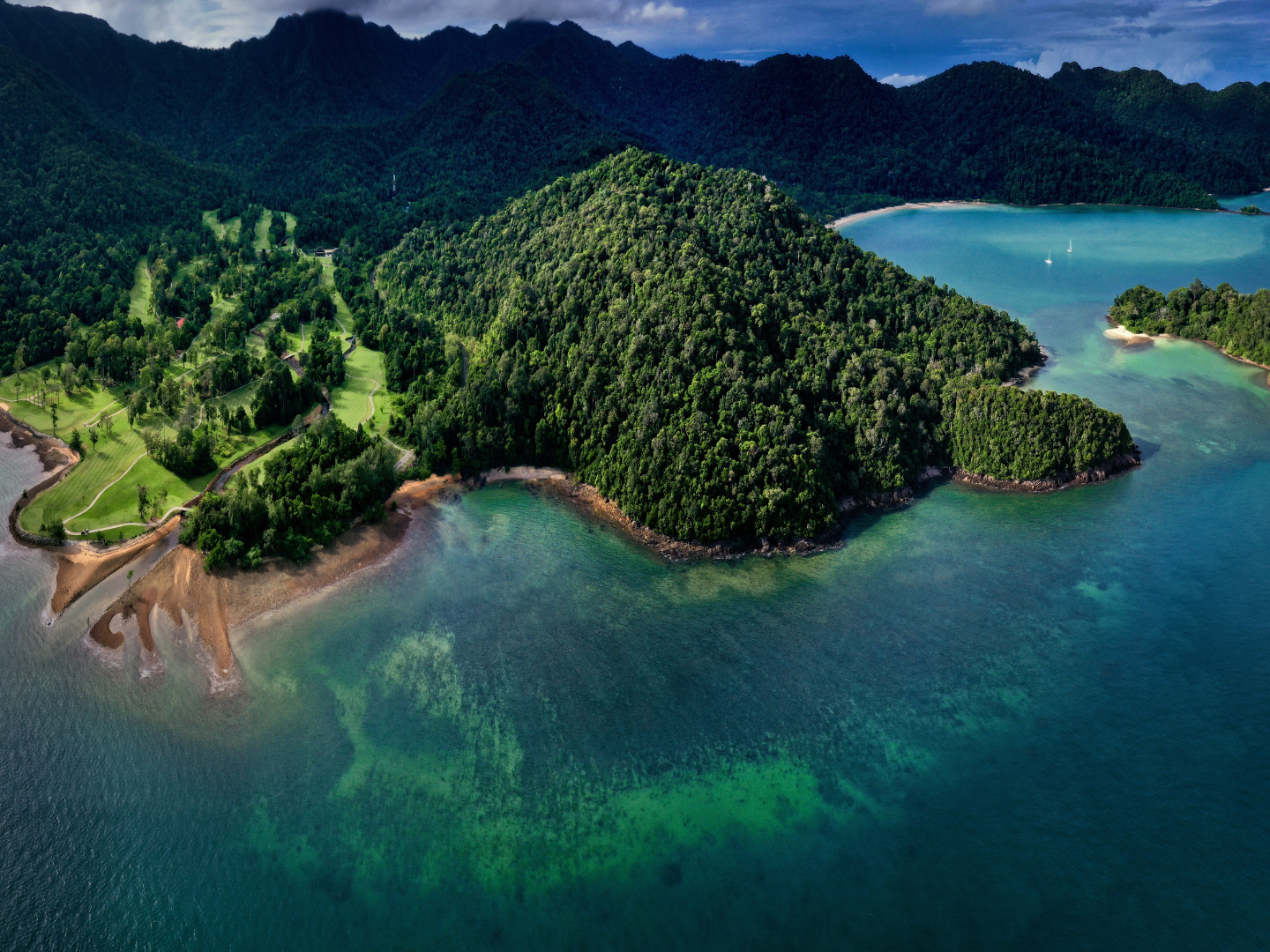
Situated within a 10-million-year-old rainforest at the base of Machinchang, Langkawi’s oldest mountain and a UNESCO Global Geopark, The Datai has treated its natural surroundings with reverence and responsibility since it opened more than three decades ago. The Datai Pledge, formalised in 2020, structures this commitment across four pillars: operations and community, marine life and sustainable fishing, rainforest and wildlife conservation, and environmental education for the island’s youth. The resort employs resident naturalists and researchers to ensure its conservation work is evidence-based and measurable, partners with marine biologist Dr. Louisa Ponnampalam on endangered marine mammal protection, and has set a goal of carbon neutrality. Guests can plant trees, adopt coral, and join guided rainforest walks that double as ecological education. It is one of the few luxury properties anywhere that treats its sustainability director’s role as vital to its operations .
Nihi Sumba

Before the resort had a name, its founders Claude and Petra Graves had already spent years living alongside the Sumbanese, digging wells and addressing the island’s most basic needs. The Sumba Foundation, established in 2001, now covers a 176-square-kilometre area of West Sumba and has improved the lives of tens of thousands of people through clean water access, malaria control, nutrition programmes, and education. Nihi Sumba is today the largest employer on the island, and when Chris Burch took over in 2012, he covered all administrative costs of the Foundation so that 100 percent of guest donations go directly to programme funding for marine conservation, vocational training, and small-scale entrepreneurship.
Nay Palad Hideaway

Rebuilt after Super Typhoon Odette devastated the island in 2021, Nay Palad Hideaway sits between two marine ecosystems: the Pacific Ocean on one side and six square kilometres of ancient mangrove forest on the other. The resort actively monitors and protects those mangroves, replanting alongside local government where needed, and has worked with local fishing communities to reduce and eventually end dynamite fishing in the surrounding waters, a practice that had caused years of reef damage. An underwater Coral Nursery Unit, developed in partnership with Mindanao State University and the Zoological Society of London’s Philippines programme, anchors the resort’s reef restoration work, and guests can participate in fish dome installations that provide new habitat for marine life. The island supports over 265 plant species, 85 fauna species, and three endangered turtle species, and the name Nay Palad, meaning mother’s hands, is itself a reference to a community empowerment project in Cebu supporting women artisans.
Six Senses Con Dao

Each year between March and October, the beach at Six Senses Con Dao transforms into a nesting sanctuary, when green sea turtles return to its protected shoreline to lay their eggs. The resort’s “Let’s Get Cracking” Incubation Centre, established in partnership with Con Dao National Park in 2018, has released over 30,000 hatchlings into the ocean with an 82 percent hatch success rate, a figure that has made it a reference point for marine turtle conservation across Southeast Asia. In December 2024, an olive ridley sea turtle, classified as threatened on the IUCN Red List, chose the resort’s beach as her nesting site for the first time, a milestone that the resort’s team celebrated as an ecological signal of restoration. Active marine rescue, nest monitoring, and guest education are all part of daily operations. The Con Dao archipelago is Vietnam’s most significant sea turtle habitat, and the resort’s 1.24 miles of protected shoreline is among the reasons it has remained so.
Desa Potato Head

In a destination where hospitality’s environmental record is so controversial, Desa Potato Head has spent over a decade building an identity that rebukes the rest of the island. What began as a beach club fronted by a facade of 6,000 recycled wooden window shutters has evolved into a 226-room creative village that sends less than 3% of its waste to landfill, down from the hospitality industry norm of around 50%. The Waste Lab converts plastic pulled from Bali’s waterways into furniture and design objects, cooking oil into candles, and foam offcuts into building panels. In 2024, Desa Potato Head opened the Community Waste Project with several competitor businesses, creating what is believed to be the first collective closed-loop waste facility in Indonesia. In 2017, the property became the first hospitality company in Asia to achieve carbon neutrality, and also won the World’s 50 Best Hotels Eco Hotel Award in 2025.
Four Seasons Tented Camp Golden Triangle

Situated at the confluence of Thailand, Laos, and Myanmar on land once synonymous with the opium trade, the Four Seasons Tented Camp has spent twenty years building a different legacy. Its relationship with the Golden Triangle Asian Elephant Foundation is structural to the property’s identity: the Foundation, established in 2005, rescues elephants from Thailand’s city streets and provides them with lifelong care under trained mahouts, with all administration costs covered by the Camp. More than 20 elephants have been rescued under this partnership, and guests engage with them through ethical, no-riding encounters guided by the mahouts who have built lifelong bonds with each animal. The Tented Camp has earned a Global Spirit Award for excellence in elephant welfare, and its commitment to local Lahu hill-tribe communities, artisans, and cultural preservation runs alongside the wildlife work as an equally sustained practice.
Misool

Misool began not with a vision of luxury but with an act of outrage. Dive guide Andy Miners, confronted with the devastation of reef bombing and shark finning across southern Raja Ampat, raised capital from the diving community to establish a no-take zone that would give depleted fish populations the chance to recover. Since 2025, the zone has expanded into the 300,000-acre Misool Marine Reserve, roughly twice the size of Singapore, patrolled daily by Misool’s own ranger teams with support from the Indonesian Marine Police. All extractive practices are prohibited within its bounds. The resort itself is built from reclaimed tropical hardwood, runs on locally sourced organic produce, and charges each visiting diver a conservation levy that flows directly to the Misool Foundation. The reefs have responded: biomass and coral cover have both increased measurably, and sharks, once hunted to near-absence, are now regularly encountered on every dive.
Bawah Reserve

Reaching Bawah Reserve requires intention: a flight to Batam or Tanjung Pinang, then a seaplane or speedboat into some of the least-visited waters in Southeast Asia. Guests are greeted by a private sanctuary spread across six islands, thirteen beaches, and three lagoons, built from natural materials and surrounded by a 1,000-hectare marine protected zone whose coral and fish populations are actively monitored by resident marine biologists. The Anambas Foundation, established in 2018, runs parallel programmes in marine conservation and community development in nearby villages, including coral restoration, turtle egg protection (having rescued over 24,000 eggs to date), and women’s economic empowerment through traditional batik craft training. Guests can join reef restoration dives, adopt coral, and participate in turtle tagging alongside the Foundation’s teams. The resort diverts 40 percent of its waste to support the local economy.
What Remains
The resorts on this list are not united by a price point or an aesthetic. They are united by a question they have each chosen to take seriously: what does this place owe to the land it sits on, and to the people who were here before it arrived? The answers vary: a ranger station in the Cardamom Mountains, a turtle incubation centre on a Vietnamese shoreline, a waste laboratory in Seminyak, a foundation that has outlasted multiple owners on an island in eastern Indonesia; the commitment behind them is all the same. These places have decided that the guest experience and the health of the surrounding environment are not competing priorities. They are the same thing.
Sokleap Ngon was not speaking about hotels when he took the stage in Phnom Penh. But what he described is a place that exists to serve the land and the community around it, and happens to be worth visiting because of it. That is, to me, the most honest definition of responsible travel we have encountered. The resorts on this list are, in their different ways, trying to live up to something like it. Where you stay is never a neutral decision. At the right address, it can mean something more than a holiday.
Image credits: The Datai Langkawi, Farmhouse Resort & Spa, Shinta Mani Wild, Nihi Sumba, Nay Palad Hideaway, Six Senses Con Dao, Desa Potato Head, Four Seasons Hotels & Resorts, Misool, Bawah Reserve.
From the table to the world beyond, Nacre brings you dining, travel, and lifestyle experiences worth savouring. Explore more with us on Instagram (@nacre.asia).

Leave a Reply