
A first-timer’s guide to a city Malaysians underestimate and international visitors underdiscover, from Gaya Street’s Friday night market to the highlands beneath Mount Kinabalu.

There I was at a corner table in Little Sulap, a warung-style cafe on the street between Atkinson Clock Tower and Gaya Street, barely holding on to a live sago worm that was still moving after I bit off its tail, while a table of locals watched with patient encouragement.
That is the thing about Kota Kinabalu that most people who have never visited do not know, and most people who have been here are continuously discovering: the city is more than just a transit point you pass through on the way to Mount Kinabalu, or the ferry port you use to reach the luxury resorts on Gaya Island. It is a city worth exploring on its own terms—in the Friday night market spilling across Gaya Street, in the sea of dried cucumbers hanging in bags by the Anjung Kinabalu Handicraft Market, in the murals that cover the entire sides of buildings in an explosion of colour and local iconography, in the oldest surviving structure in a city almost entirely erased by the Second World War.
Getting to Kota Kinabalu
Kota Kinabalu International Airport (BKI) is served by direct flights from Kuala Lumpur on both AirAsia and Malaysia Airlines, with multiple daily departures from KLIA and KLIA2. The flight takes approximately 3 hours, and in fact further than Bangkok and almost the distance to Bali, making it far enough to feel more like an overseas trip than a domestic hop, yet still short enough to make a five or six-day visit entirely sensible without feeling rushed.
Direct connections also operate from Singapore, Taipei, and several Chinese cities, making Kota Kinabalu more regionally accessible than it suggests. Despite being classified a domestic destination from the peninsula, Malaysians should pack their passports to go through immigration in Sabah.

The airport is situated about 9 kilometres from the city centre, or a 15 to 20-minute drive depending on traffic. Grab is reliably available at the arrival hall, and private transfers are available from most hotels and resorts.
The most favourable window to visit Kota Kinabalu is between March and October, when rainfall is lower and Mount Kinabalu is more frequently visible from the city and the highlands. The end of May also brings the Kaamatan harvest festival, where the entire state comes alive.
A car is not necessary for navigating the city centre, where everything worth doing on foot is within walking distance and Grab covers the urban area reliably for everything that falls outside a comfortable walk. For visitors planning to venture out to Kundasang, to Kota Belud, or to the beaches south of Tanjung Aru, a rental car arranged in advance is the most practical option.
Where to Stay

The most practical base for a first-timer exploring Kota Kinabalu on foot is Hyatt Centric Kota Kinabalu on Jalan Haji Saman, a Kengo Kuma-designed building that sits within a 15-minute walk from every city-centre destination. The hotel’s location along the main artery of the city means that returning for a rest or a shower in the middle of the day costs nothing in terms of time or effort. And in the advent of underpacking because you underestimated the scorching heat of the Bornean sun, Suria Sabah shopping mall is just across the road for comfortable indoor shopping.

The staff at Hyatt Centric Kota Kinabalu are knowledgable and eager to share recommendations on their favourite restaurants and activities in the city, be it the local seafood grill or a cosy corner to experience the grotesque wriggle of a live sago worm, all the while steering guests away from potential scams.
The hotel’s rooftop bar, ON23, also doubles as a useful orientation point in Kota Kinabalu for a new arrival. With views from the 23rd floor stretching across the South China Sea to the Tunku Abdul Rahman Marine Park islands and the hills beyond the city, you get an immediate lay of the land you are about to spend a few days exploring in every direction.
READ ALSO: Hyatt Centric Kota Kinabalu Review: I Was There, So I Went Everywhere
Eat & Drink
Sabahan cuisine shares references points with flavour profiles most Malaysians are familiar with, but international visitors will certainly be wowed by the colours, aromas and funk of the regional food traditions. Where the flavours diverge is in the spice register being noticeably gentler than peninsular cooking, and the use of indigenous botanicals unique to Borneo. Centuries-old traditions come to life in the fermentation and preservation of ingredients like bambangan or Sabah’s wild mango, tuhau wild ginger for gentle heat with a floral top note, and in the rice wine culture of the Kadazan-Dusun people expressed in lihing and montoku.
Local Cuisine
Perhaps the most authentic introduction to indigenous Sabahan food available in the city centre is Little Sulap on the street between Atkinson Tower and Gaya Street, where the menu covers the range of traditional preparations in a setting entirely without self-consciousness about being a tourist destination. From the ginuring fish rice platter with bambangan condiments, to the explosive juiciness of a live sago worm and the hinava raw fish salad when fresh catch is available, this haunt just around the corner from the Hyatt Centric makes for a thrilling experience that I personally will be talking about for years.

For everyday eating, seek out the local coffee shops or kopitiams. Yee Fung Laksa is the most famous, a Sarawak-style laksa with a light, sour-spicy broth that has drawn queues since 1984, though ask any local and they’ll tell you it’s more tourist landmark than best-kept secret these days. Seng Hing Coffee Shop, is where you find Tuaran mee stir-fried with local rice wine and a Tom Yam noodle soup regulars have been ordering for decades. Keng Wan Hing rounds it out for breakfast with a bakery counter of polo buns, curry puffs, and char siew pau that locals queue for.

Fresh Seafood
Kota Kinabalu, and Sabah as a whole, is known for its consistently excellent fresh seafood. The local consensus points way from the waterfront tourist strips, and toward KK Garden Seafood in the Luyang neighbourhood, a no-frills operation focused on the quality of the catch, sourced daily and priced fairly.
But if Luyang is too heavy of a journey to make, the Filipino Market along the waterfront becomes a grilled seafood destination by evening, with vendors firing charcoal grills along the waterfront and selling by weight to a crowd that is predominantly local, loud and smoky amidst the social energy of the boardwalk.
Sabah in A Glass
For a more drinkable introduction to Sabahan ingredients in a contemporary context, the rooftop bar ON23 Sky Bar at Hyatt Centric has a signature cocktail programme called the Borneo Collection that incorporates Lihing rice wine, Tenom coffee, bambangan, and tuhau as primary building blocks.
Sabah’s mixology scene is still in its infancy, with most bar-goers opting for a draft beer over a “complicated” drink, but the fire that burns with lead mixologist Alvin Angkal promises significant leaps to come. Not to be missed are Borneo’s magnificent sunsets, best viewed from above the city like at ON23, if the large crowds at the waterfront are a deterrent to you. The sun descends half past six most days, and vanishes almost instantly if you do not pay close attention to it, so it’s best to secure your frontrow seats at the bar early, with a drink in hand.

Coffee & Cafés
Over the past several years, Gaya Street and its surrounding lanes has developed into something of a café corridor, with a concentration of independent coffee shops that make for an easy cafe-hopping afternoon.

Woo! is a visually striking third-wave cafe with an industrial aesthetic that serves excellent coffees and pastries, perfect for a lazy weekend brunch. Mizumizu on Gaya Street is smaller and quieter, more focused on the brew than the bread. Both are worth a visit between sights as a refuge from the heat, and both are evidence that Kota Kinabalu’s coffee scene is quickly gaining steam.

Street Life & Markets
Gaya Street—also known as the city’s Chinatown—is the oldest commercial thoroughfare, transforms into a night market every Friday and Saturday with never-ending rows of grilled seafood, steamed dim sum, sweets and treats that draw long lines of people from all walks of life. This is where everyone in town gather at the end of the work week, hanging out with picnic setups while being entertained by buskers. This is more or less the epitome of the local lifestyle, and did you really visit Kota Kinabalu if you didn’t at least stroll through the market? Come Sunday morning, the street is home to an entirely different market: fresh produce, household goods, souvenirs and handicraft. It gets hot rather early in the day so bring a face mist to keep yourself refreshed.


Along the waterfront, the Anjung Kinabalu Handicraft Market is open daily with beadwork, textiles, pearl accessories that Sabah is renowned for, and a dried seafood corner running to sea cucumbers of startling size, some closer to grotesque than adorable. For something more substantively Sabahan than a generic souvenir, get a pack of dried cuttlefish or anchovies to go—best to pack it properly lest your baggage smelling oceanic when you arrive home.

Art, Culture & History
Kota Kinabalu went through an art renaissance of sorts in recent years, with the local government and tourism board commissioning larger-format murals to add vibrancy and interest to its ageing landscape. One of the most spectacular pieces is the on Wisma Sabah across from Suria Sabah, an eagle in vivid teal and coral and gold surrounded by endemic species and traditional motifs that reward more than one look. Another striking design is further down by Gaya Street, the Dreamer by CelcomDigi in its bright blue and yellow hues that promote both art and technology in the same breath.

A short climb from Little Sulap, Signal Hill is a lush forested area with a well-maintained hiking trail that opens up to sweeping views of the entire city, short of a rooftop bar or a boat, up a series of wooden staircases through jungle canopy. The observatory tower at the top was under renovation, so the best views are from the road on the way up. Go early before the heat makes the decision for you, and treat the café at the bottom as a reward for your hard work. You deserve it.

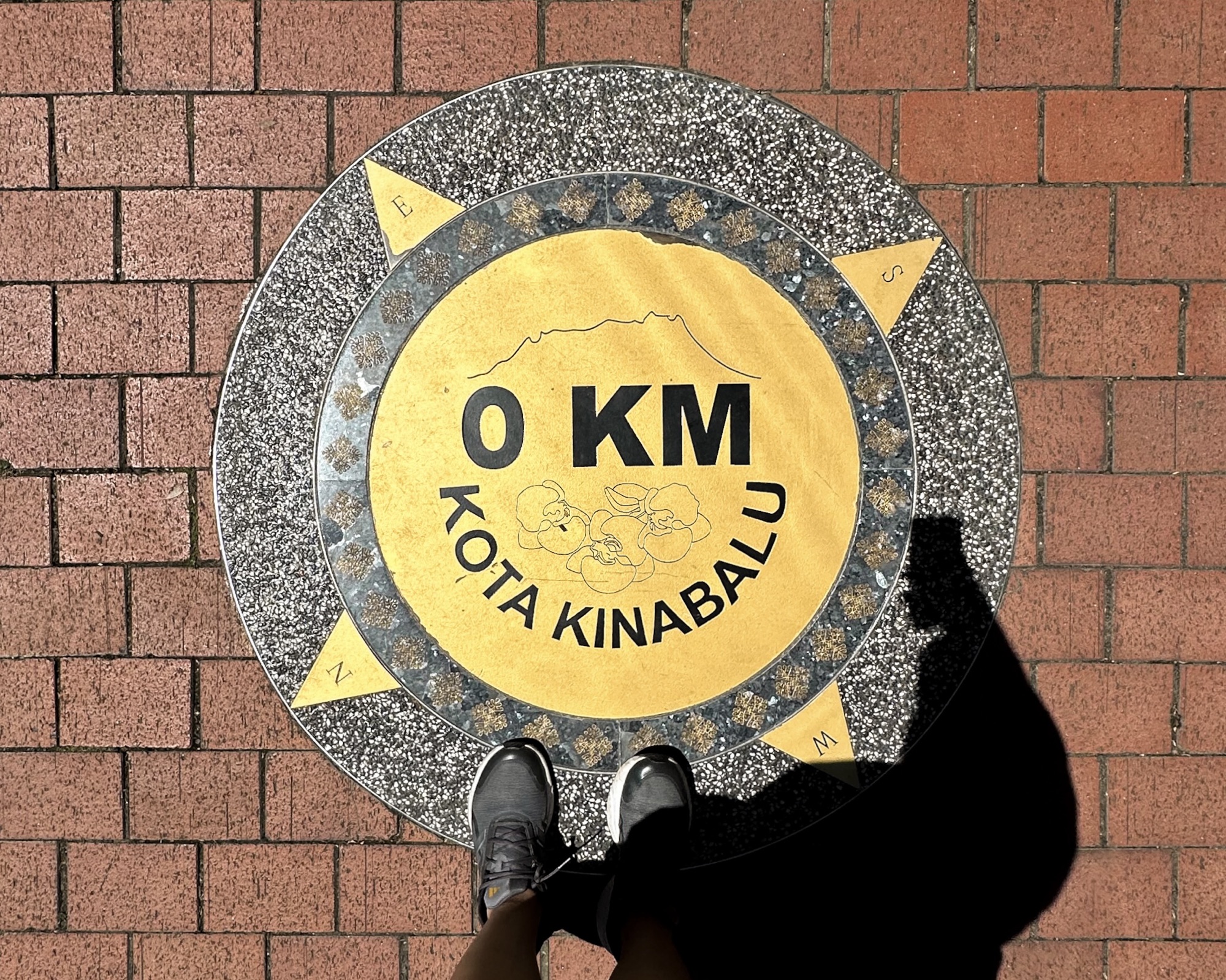
The Atkinson Clock Tower, built in 1905, is the oldest surviving structure in a city almost entirely destroyed during the Second World War, and standing in front of it for a few minutes subconsciously transports you to a version of the city that no longer exists. Make a stop at the Sabah Tourism Board headquarters and snap a photo with the 0KM Sabah landmark as evidence of your visit.

The Sabah Museum on Jalan Muzium houses Kadazan-Dusun and Murut artefacts, ceremonial objects and traditional dress, and material from all over Sabah, including harrowing traces of the island’s wartime history. Spend a couple of hours to cover it comfortably.
Further inland in Luyang, Foh Sang Art Street and commercial centre is a nascent gallery district finding its footing and its audience, worth the detour for travellers curious about where Sabahan contemporary art is headed. More murals line the heritage shophouses at Foh Sang, and you can find old school bakeries and kopitiams here.
Nature & Beyond the City
One of Kota Kinabalu’s most appreciated qualities is how much is within a day’s reach: islands visible from the rooftop bar, highlands beneath the mountain, and idyllic coastline to the south.
Five islands make up the Tunku Abdul Rahman Marine Park: Gaya, Manukan, Mamutik, Sapi, and Sulug, reachable from Jesselton Point in within minutes, the pier itself located within stone’s throw of the Hyatt Centric. Gaya Island is developed and resort-heavy, while Mamutik and Sulug are near-empty and better for snorkelling, the coral around both relatively healthy and well-suited to a casual morning in the water. Ferries run through the morning with last return around five, in time for sunset drinks at the bar.

For a different climate experience all together, Kundasang is two hours by car through the Crocker Range, the landscape shifting completely along the way up a mountain road. It’s known for strawberry farms and the Desa Dairy Farm, its mountain-backed pastures among the most photographed scenes in Sabah, and the fresh milk sold straight off the farm is worth the stop on its own. The road passes the Kinabalu Park entrance, where non-climbers can access the lower trails and cloud forest on a day permit. If you’re in Kota Kinabalu for an extended stay beyond a typical weekend, worth considering a day trip out to the highlands.


Kota Belud‘s Tamu Besar, an hour north, is one of the most authentic indigenous market experiences within reach of the city, produce and livestock and craft traded where it doesn’t dress itself up for visitors.

Tanjung Aru, twenty minutes south, is known for its sunsets and its unpretentious, locally-used beach, the food stalls that appear in the evening for a casual sunset soirée even if by yourself. In the opposite direction toward Tuaran, the coastline gets quieter and more untouched for a true sense of Borneo’s beauty.

A Few Days Well Spent
Kota Kinabalu adjusts your expectations on day one and keeps them evolving after. Five or six days is about right: the city centre properly covered, one day on the islands, a clear morning up in Kundasang, seafood at Garden, a coffee at Woo! on a quiet Saturday, a sunset dissolving behind Gaya Island from a rooftop. The sago worm is optional but recommended, at least once, for the story if nothing else. It does not need to be a stopover on the way to somewhere else. Book the three-hour flight from KL like you would for anywhere else, and let the place speak for itself.
Editorial Note: This guide was produced following a hosted stay at Hyatt Centric Kota Kinabalu. Nacre retains full editorial independence.
From the table to the world beyond, Nacre brings you dining, travel, and lifestyle experiences worth savouring. Explore more with us on Instagram (@nacre.asia).

Leave a Reply