
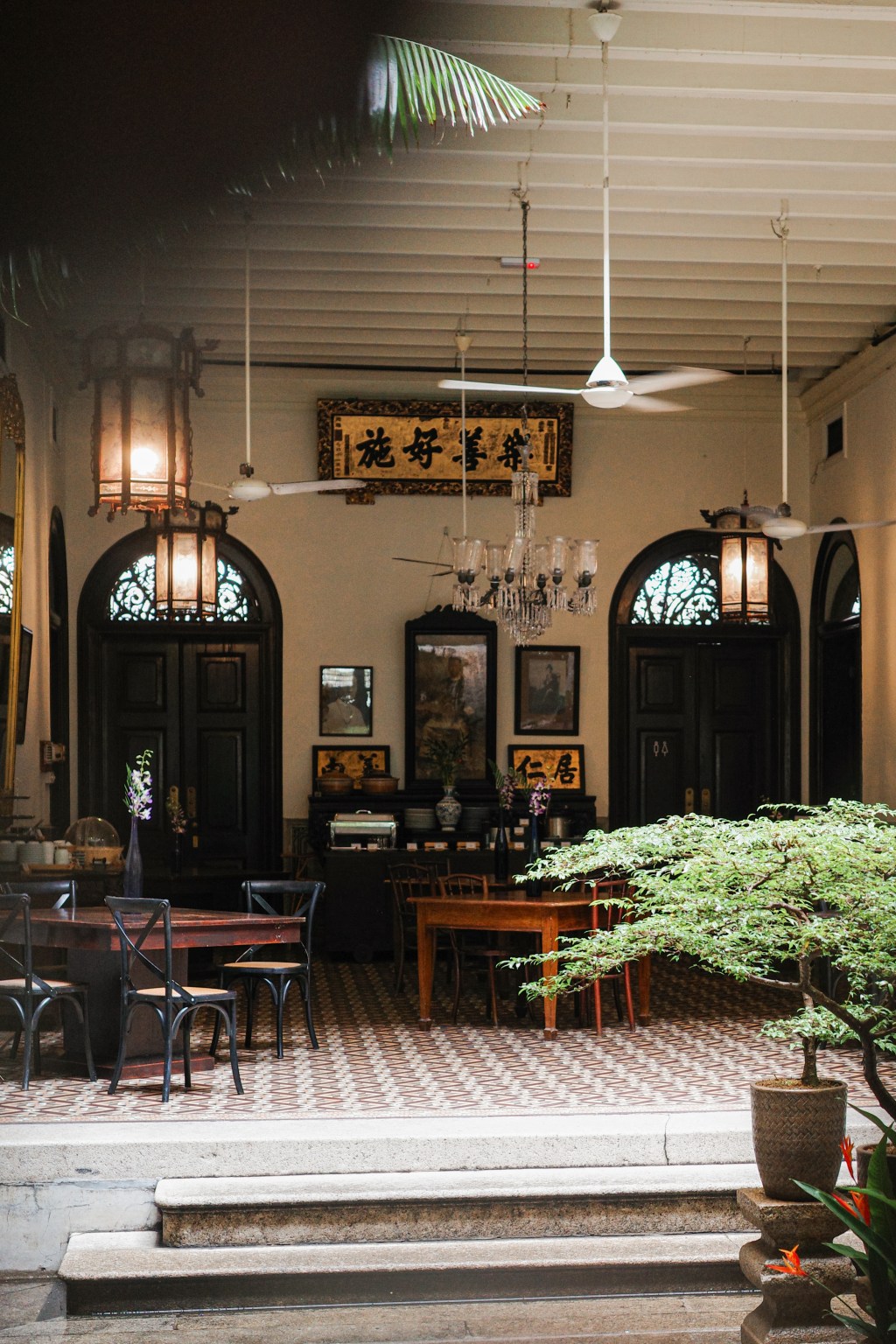
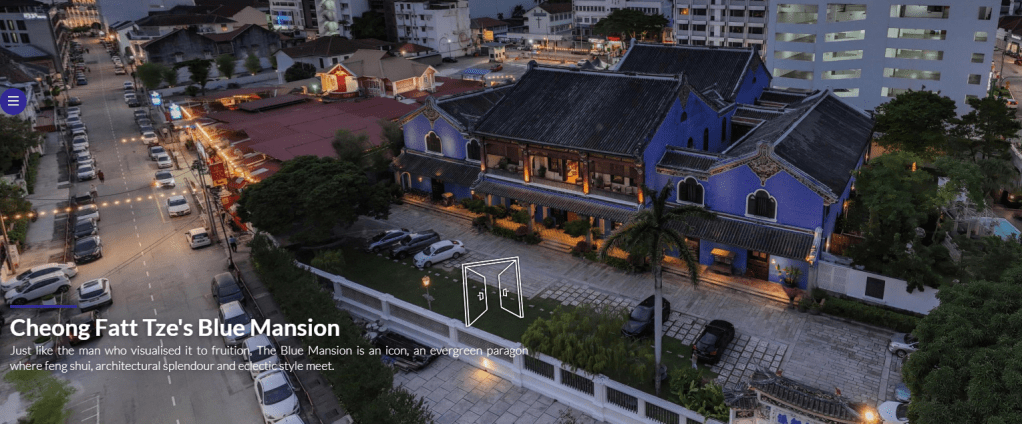
Standing proudly in the heart of Georgetown, Penang, the Cheong Fatt Tze Mansion, more commonly known as the Blue Mansion, embodies a rich history of cultural heritage, architectural mastery, and personal legacy. Once the home of the influential Cheong Fatt Tze, this historic mansion is now a boutique hotel, offering guests a unique opportunity to immerse themselves in the grandeur of a bygone era. This indigo-blue gem of Penang, now a UNESCO World Heritage site, is as much a symbol of Penang’s diverse history as it is of the life and influence of its original owner. The mansion’s survival and revival is also attributed to the dedication of those who later worked tirelessly to preserve it.
Cheong Fatt Tze: The Man Behind the Mansion
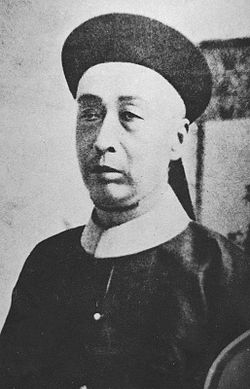
Cheong Fatt Tze, a figure often referred to as the “Rockefeller of the East,” was one of the most prominent and successful businessmen of his era. Born into a poor family in Guangdong, China, Cheong’s journey to prosperity took him across Southeast Asia, where he amassed considerable wealth through tin mining, shipping, rubber plantations, and banking. As a diplomat for the Qing Dynasty and an awarded first class Mandarin, Cheong left an indelible mark on the region. The mansion he built in Penang in the 1890s reflects his status and deep connection to Chinese culture, standing as a testament to his remarkable life.
Political Influence and National Legacy
Beyond his business acumen, Cheong Fatt Tze played a significant role in China’s political affairs during a time of great upheaval. In the twilight of the Qing Dynasty, he loaned money he earned from his ventures across Southeast Asia (known as Nanyang) to support the faltering government. However, Cheong’s influence extended beyond the old regime.
While in Penang, Cheong provided refuge to revolutionary leader Sun Yat Sen, who was instrumental in the fall of the Qing Dynasty and the rise of modern China. Cheong not only offered Sun shelter during his time in Penang but also provided financial support to promote the Chinese Nationalist movement after 1911. His involvement in these pivotal moments in Chinese history demonstrated his visionary approach, bridging both tradition and the future of his homeland.
Architectural Grandeur: East Meets West
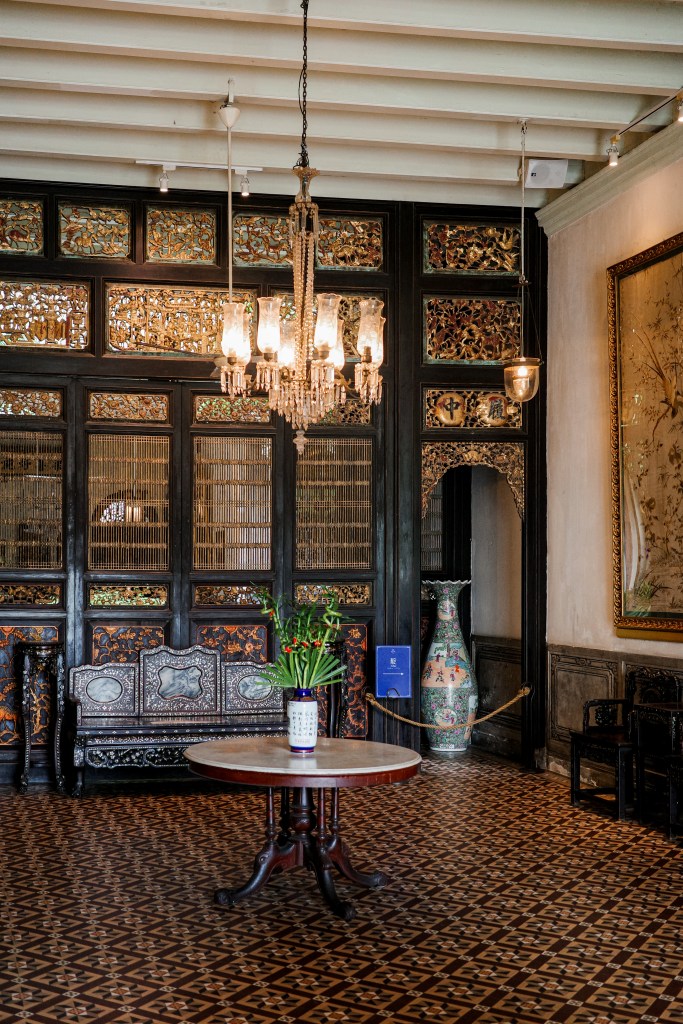
The mansion is an architectural marvel that fuses traditional Chinese principles with European influences. Its indigo exterior, made from natural limewash and mixed with indigo blue dye, makes it a striking landmark. Inside, the mansion features intricate Chinese wood carvings, porcelain tiles, and cast-iron balustrades imported and manufactured by the MacFarlane & Co. foundry in Scotland, all aligned with traditional feng shui principles to ensure balance and prosperity.
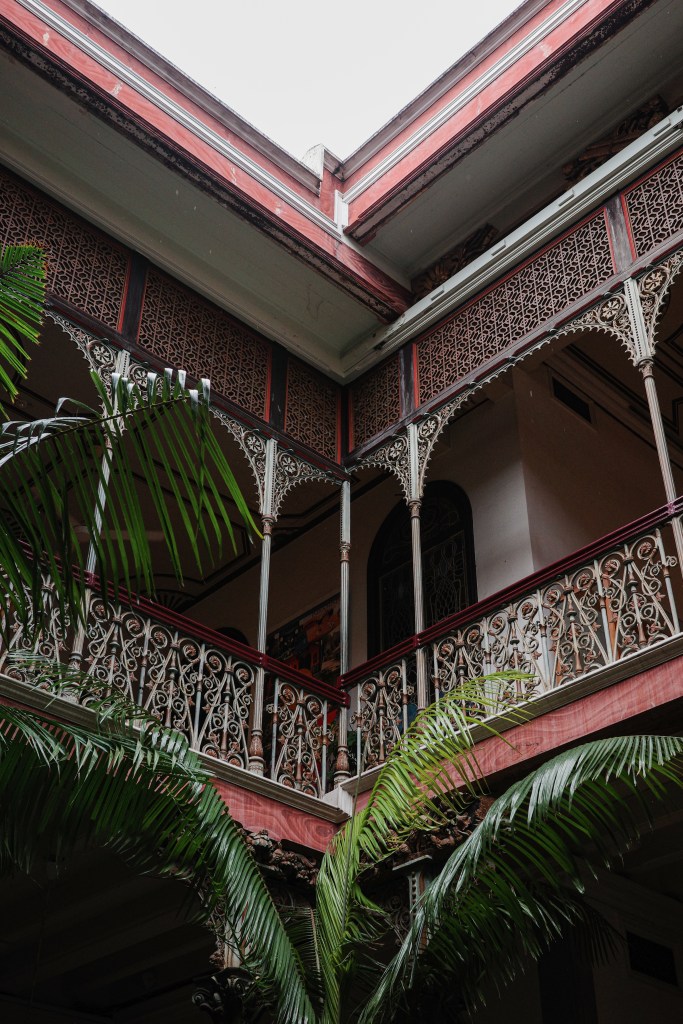
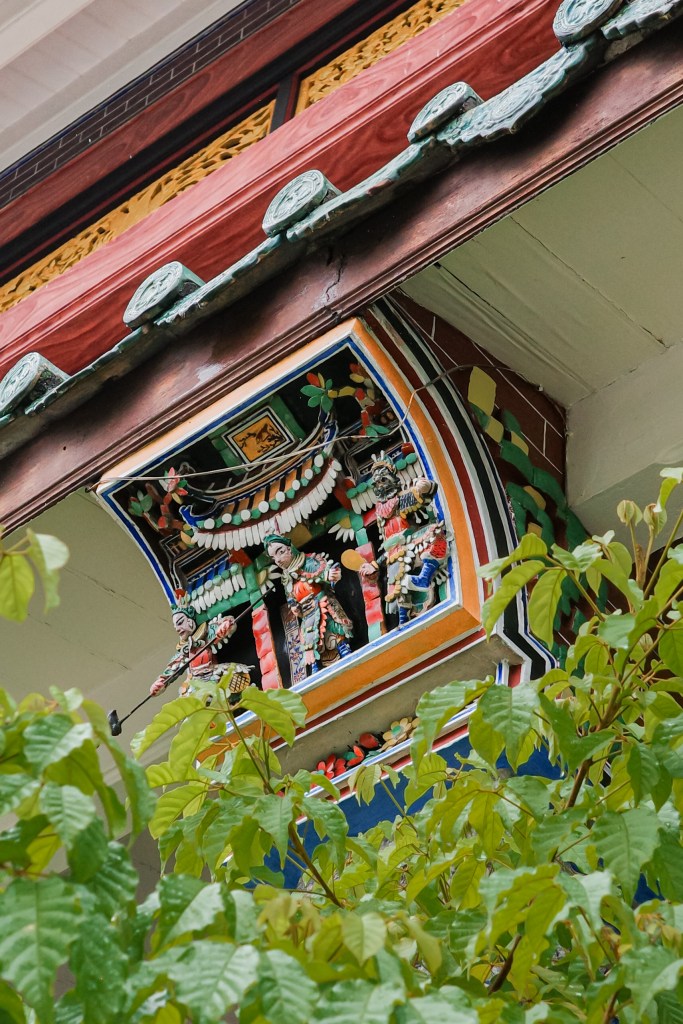
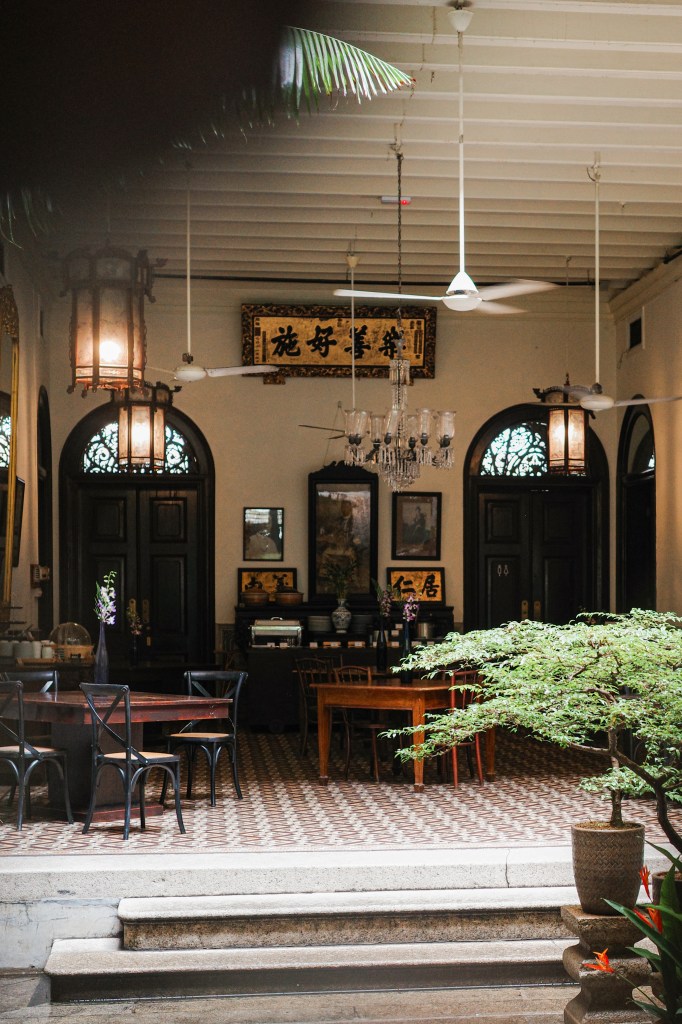
ABOVE (Left) Intricate iron works on pillars imported from Glasgow; (Center) Decoration of figurines from Chinese tales made of colourful porcelain bowl cuttings known as Jian Nian (meaning cut and paste); (Right) A facade of the fusion East-Meets-West interior
Life Within the Mansion: The Wives of Cheong Fatt Tze
Cheong Fatt Tze had eight wives, and it was the seventh, Tan Tay Po, who held a special place in his heart. During his lifetime, Wives 3, 6, and 7 resided in the mansion, with Tan playing a particularly significant role in the mansion’s history. Her resourcefulness ensured the survival of the mansion during World War II and the post-war period. Faced with economic hardship, she rented out parts of the grand mansion to merchants, small families, and small businesses, transforming it into a patchwork of life and livelihood. Open fire stoves were placed on the mansion’s wooden floors for cooking, and wet laundry was hung on the exquisite gilded wood-carved screens, hastening the deterioration of the once-luxurious home.

The Restoration Effort: Mr. and Mrs. Loh’s Vision
By the 1990s, the mansion had fallen into disrepair, a shadow of its former glory. It was then that architects Mr. and Mrs. Loh stepped in, purchasing the mansion during an auction and embarking on an ambitious restoration project. Their goal was not just to preserve the building but to restore it with the authenticity and integrity it deserved.
What made their restoration work stand out was their commitment to using only original materials. They sought out traditional craftsmen from China, as local artisans no longer had the skills required for such intricate conservation work. Gilded wood carvings throughout the house were carefully cleaned using specialized acid to remove years of dirt and decay. Their painstaking efforts brought the mansion back to life, allowing its rich history to shine through.
A Catalyst for Heritage Conservation
The revival of the Blue Mansion sparked something far larger than the restoration of a single building. The efforts of Mr. and Mrs. Low became a catalyst for Penang’s broader heritage conservation movement. Their success in restoring the Blue Mansion inspired many Penangites to take pride in their city’s architectural legacy, leading to the preservation of numerous other heritage buildings. Ultimately, these efforts helped Penang secure its status as a UNESCO World Heritage Site in 2008.
The Blue Mansion Today: A Symbol of Preservation
Today, the Cheong Fatt Tze Mansion is a living museum and a boutique hotel, offering visitors a chance to experience its opulent yet history-rich interiors. The Blue Mansion offers 18 spacious and exclusive rooms, each set around the serene inner courtyards of this meticulously restored 130-year-old heritage property. Every room is uniquely designed and intricately furnished, reflecting the passions and history of the great Cheong Fatt Tze, as well as the vision of the mansion’s current custodians.
Depending on the room category, guests can experience different aspects of the mansion during their stay. From the oriental garden and pool, open courtyards, and intricate cast ironwork to the luxury of a private jacuzzi, each room offers a distinct glimpse into the mansion’s grandeur.
Step back into Penang’s illustrious past and feel at home within the exclusivity of the compound. With George Town’s vibrant streets unfolding just beyond the doorstep, guests have the freedom to explore at their leisure and return to the comfort and tranquility of the mansion for a well-deserved rest.
For those seeking ultimate privacy, The Blue Mansion also offers its Townhouses — two standalone, meticulously restored 100-year-old shophouses in inner-city George Town, providing complete seclusion alongside the benefits of The Blue Mansion’s renowned hospitality.
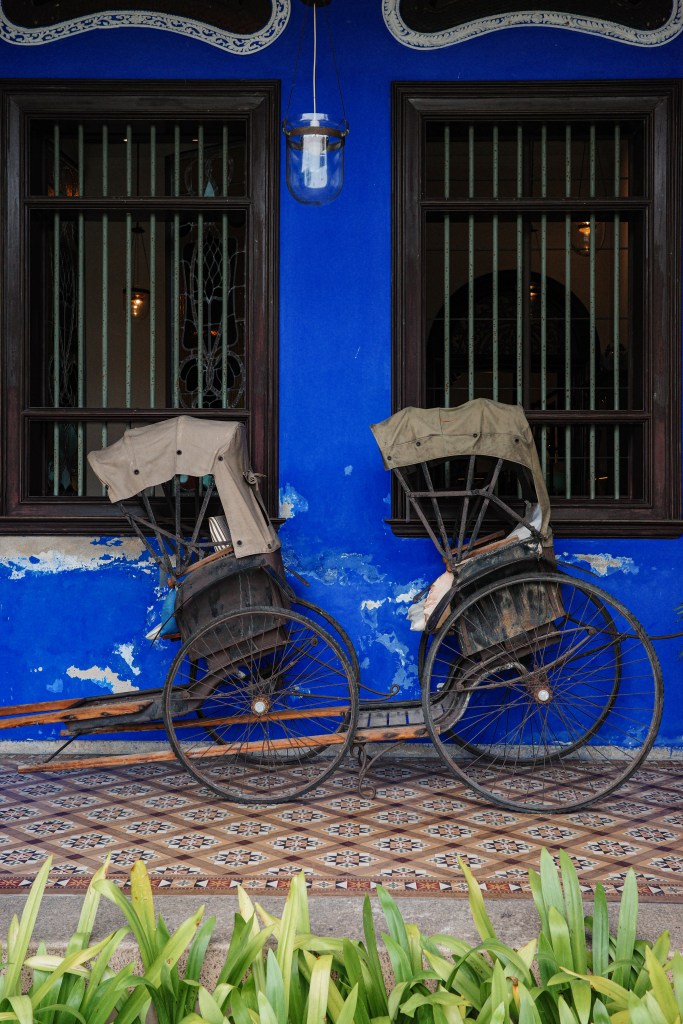
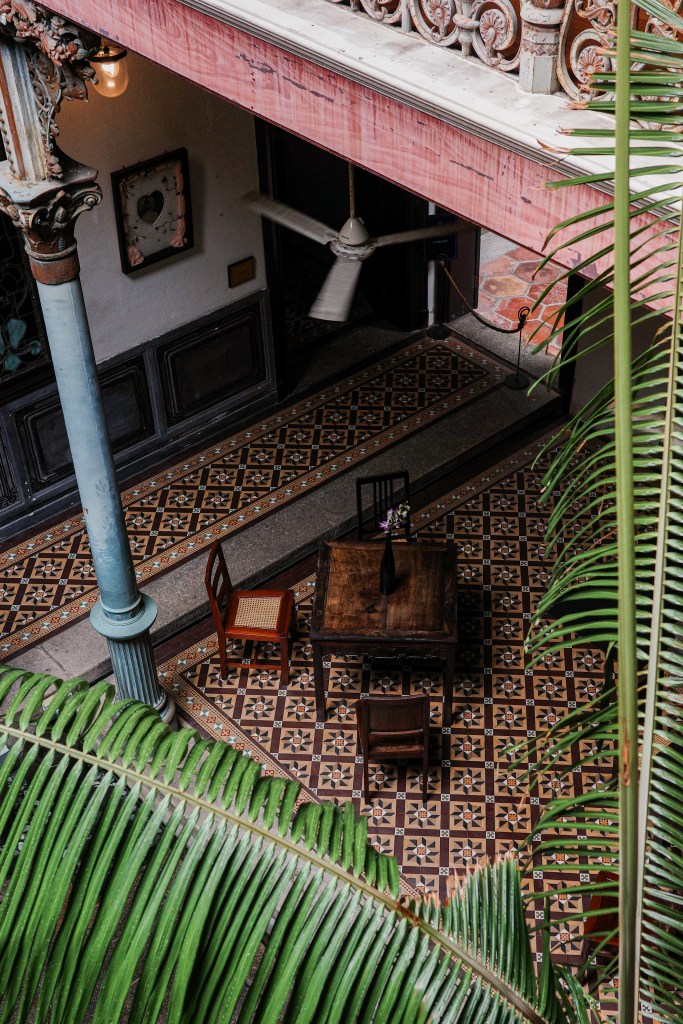
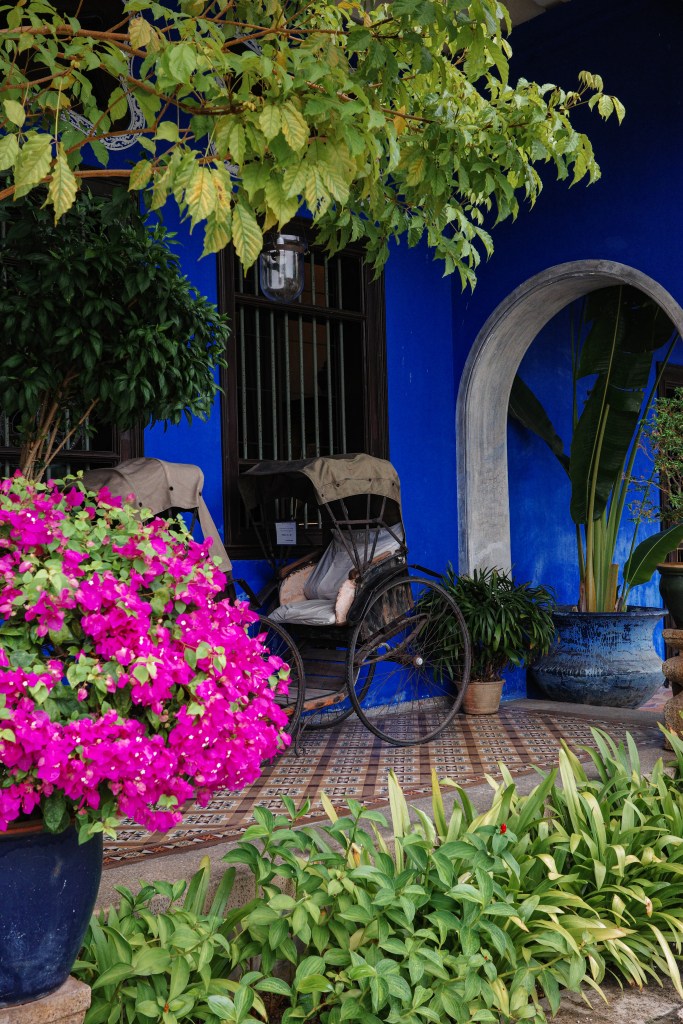
ABOVE Photos of the Blue Mansion’s facade and interior design
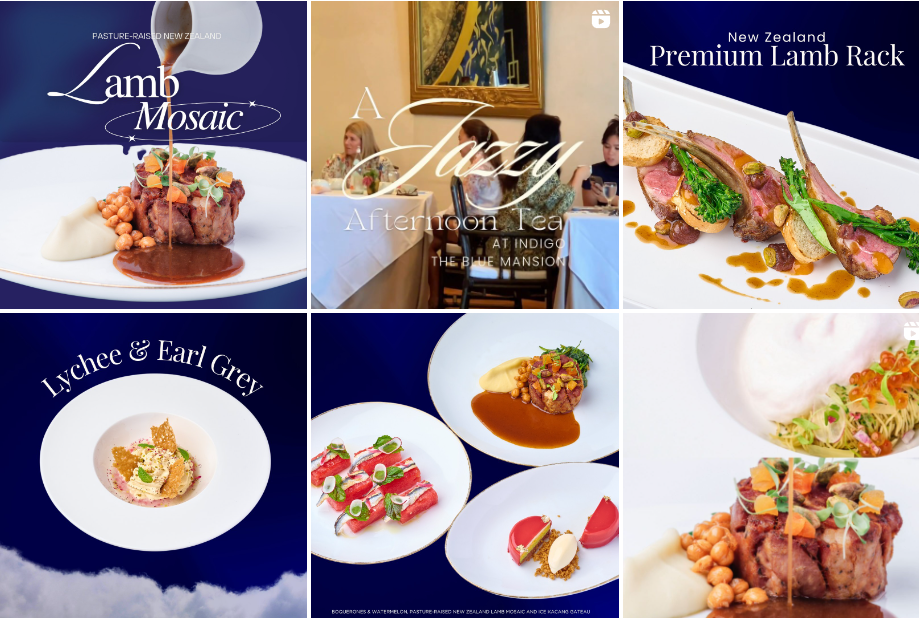
The Blue Mansion also houses their in-house fine dining restaurant – Indigo on the first floor, Indigo restaurant draws inspiration from Cheong Fatt Tze himself, offering a seamless fusion of East and West, reflected not only in its ambiance but also in its cuisine.
The menu strikes a perfect harmony of flavors and expert techniques, embodying the evolving culinary vision of Chef Jack. Influenced by his Penang upbringing, international kitchen experiences, and travels around the world, each dish tells a story of global discovery. The interior design is thoughtfully curated to complement and elevate the dining experience, making Indigo a must-visit destination in Penang’s culinary scene.
Indigo welcomes guests daily for lunch, dinner, and private events.
Guided tours (11.00AM & 3.30PM; 2 sessions daily) lead visitors through the mansion’s exquisite features, showcasing everything from hand-painted porcelain tiles to intricately carved timber panels, each reflecting the rich history of a bygone era. Audio-guided tours are also available for a more flexible experience.
For a truly special visit, the author highly recommends attending the person who revived the Blue Mansion, Mrs. Loh’s tour, available exclusively on Friday mornings. The author had the pleasure of a tour led by Terry during the second session on Friday, which was equally remarkable. The execution of story telling, narration and attention to detail and engagement with the crowd was top-tier. Terry also guides the second Saturday session, providing another opportunity to enjoy her insights.
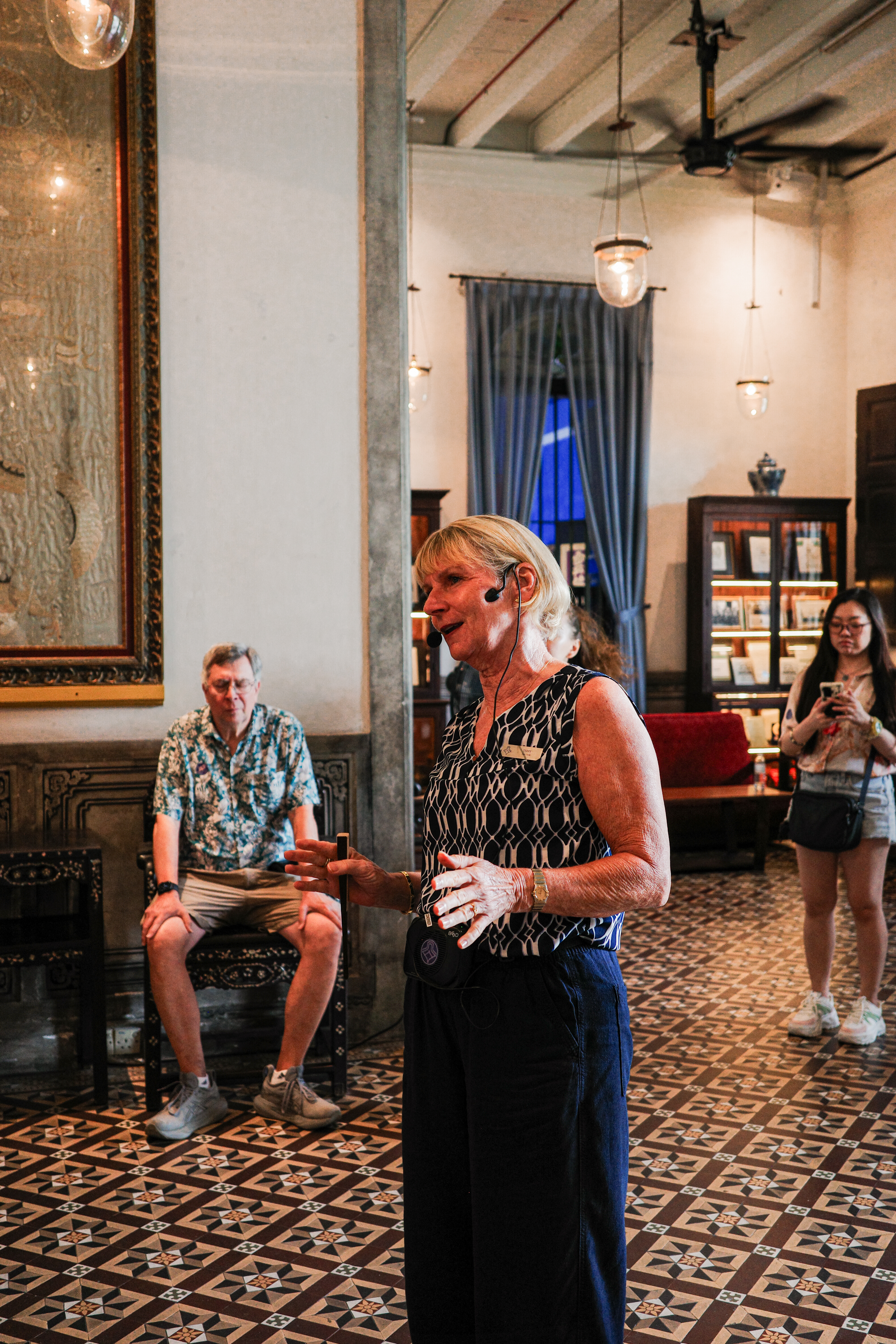
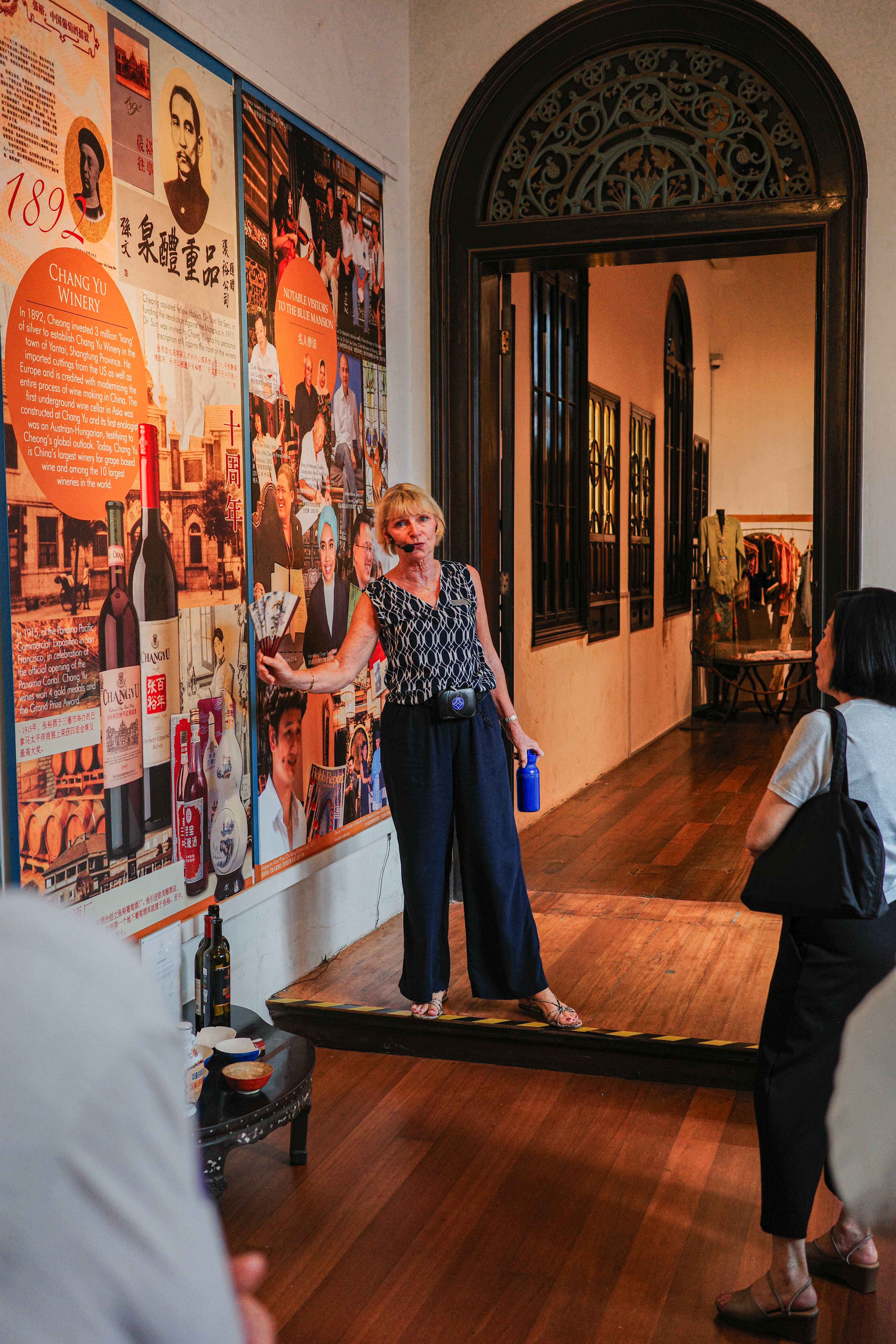
ABOVE Terry giving her tour around the mansion
A Living Legacy of Cultural Heritage
The story of the Blue Mansion is one of resilience, vision, and the power of preservation. From Cheong Fatt Tze’s legacy to Tan Tay Po’s efforts to sustain the mansion, and finally to Mr. and Mrs. Low’s remarkable restoration, the mansion remains a testament to Penang’s vibrant history. Today, it stands as both a reminder of Penang’s past and a beacon of its commitment to preserving its cultural heritage for future generations. The Blue Mansion is more than a relic of history; it is a symbol of the enduring spirit of Penang.
Note: Establishments that are mentioned in this article are not sponsored.


 Nacre.
Leave a comment