A deeply immersive heritage stay in Cheong Fatt Tze’s restored estate, and why The Qing Suites might just be Penang’s most emotionally complete luxury experience.
Nacre Impressions:
Cheong Fatt Tze – The Qing Suites
Mood
Quietly immersive and cinematic. The property is a heritage sanctuary in the heart of George Town where time slows to a restorative pulse.
Spaces
A beautifully restored heritage annex anchored in feng shui. The central courtyard acts as the emotional core, while suites are designed for inhabitation rather than mere display.
People
Highly personal, anticipatory hospitality defined by the hotel’s ultra-boutique scale. Staff recognise and remember guests instinctively.
Taste
From courtyard breakfasts and afternoon tea, to fine dining at Indigo and alfresco lunches at Cafe Mangga, dining within the Cheong Fatt Tze estate is built with a sense of place.
Verdict
The Qing Suites is a destination stay that rewards the curious and attuned. By offering less noise, they offer a far more profound luxury, making it one of Penang’s most considered hospitality experiences.
Best For
Romatic getaways, cultural aesthetes, history enthusiasts, and travellers seeking a final, reflective reset at the conclusion of a Penang journey.
George Town is not the easiest city to navigate. Streets spill into one another without forewarning, the heat arrives before orientation, and the senses are immediately engaged by colour, sound, and smell. It is a city that is best experience through movement, through eating widely and walking often, through absorbing layer after layer of history and daily life.
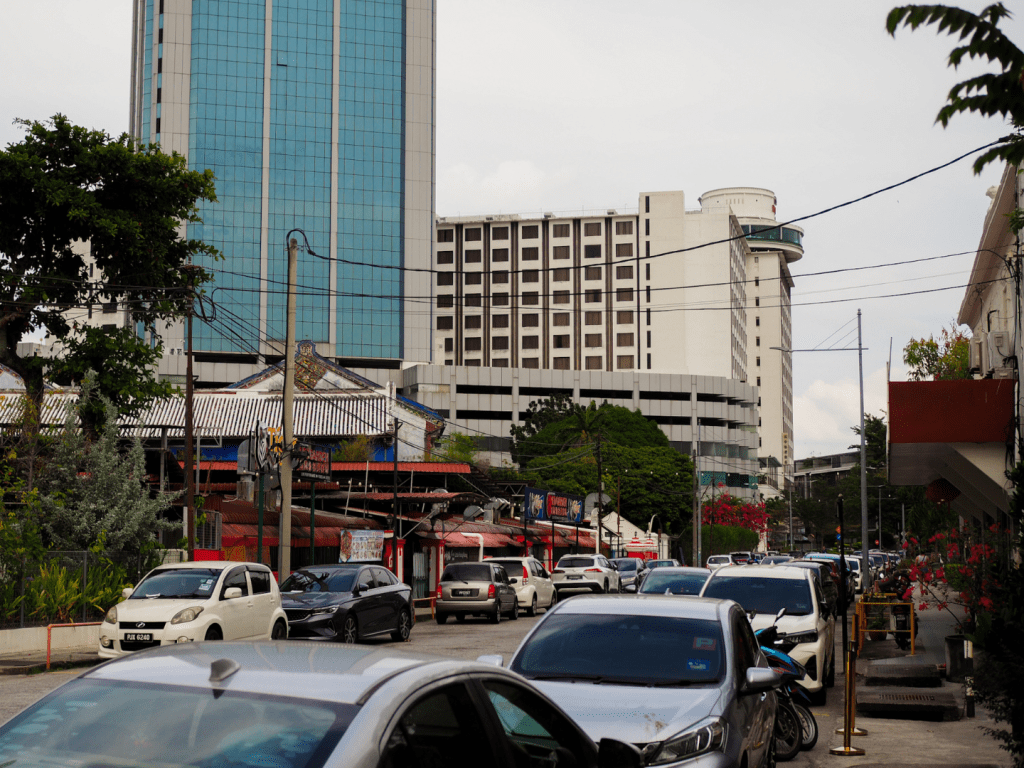
On a Monday afternoon in early January, the drive into Leith Street was calmer than expected, but the vitality of the city remained strong. And then, almost without announcement, the blue appeared.
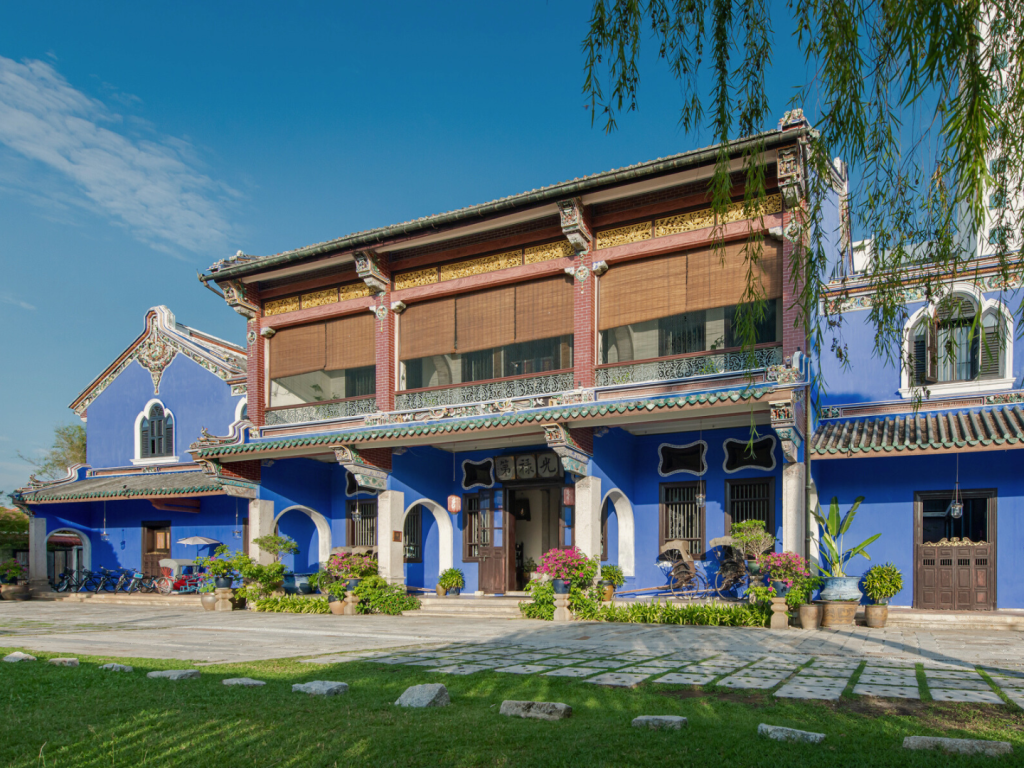
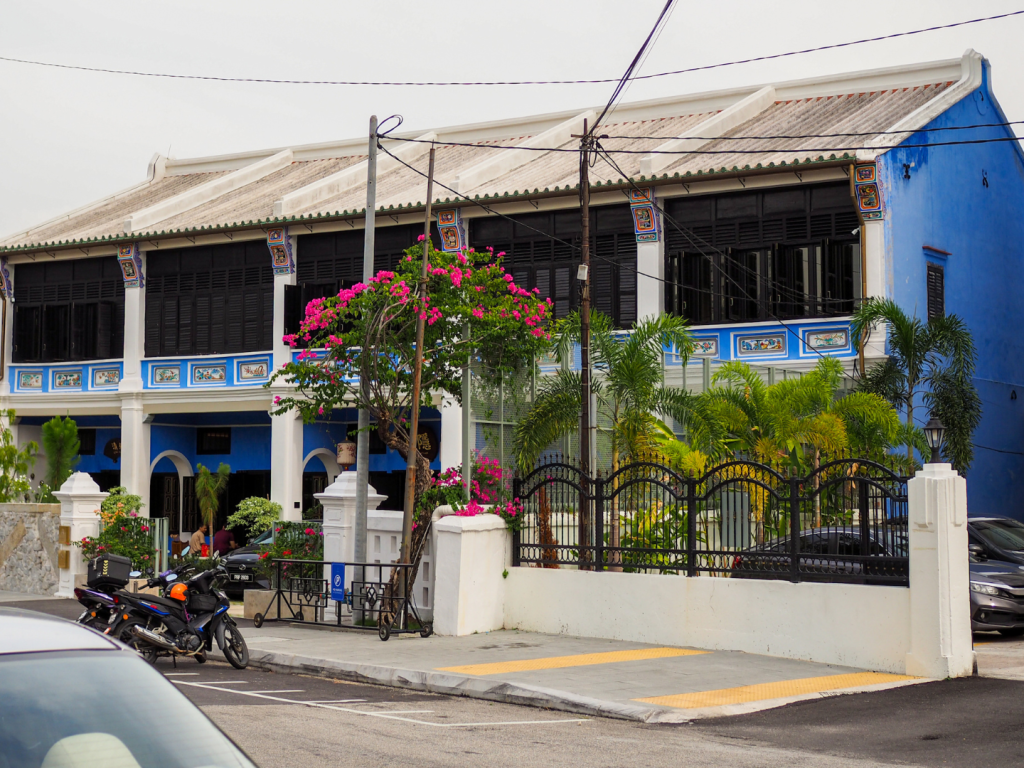
The Cheong Fatt Tze Blue Mansion has long occupied a place of authority in George Town’s streetscape, instantly recognisable and heavy with cultural memory. I had visited some years ago as most people do, guided through its courtyards with a respectful distance reserved for places of historical consequence. This time, however, I was being dropped off directly across the road, at the newly restored annex now known as Cheong Fatt Tze — The Qing Suites.
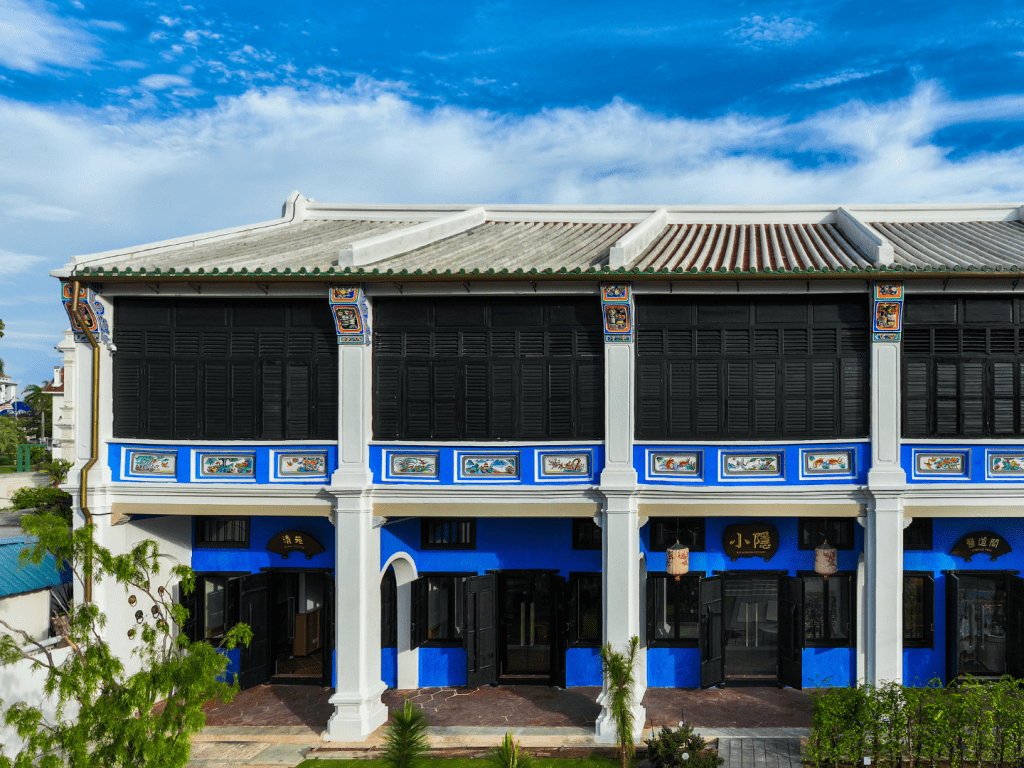
More than a century ago, this row of terrace houses served as the Mansion’s servants’ quarters, where the domestic machinery of the estate once oscillated behind the grandeur of the main residence. In December 2025, following years of careful restoration, the annex reopened as The Qing Suites, marking a physical and philosophical reunification of Cheong Fatt Tze’s estate. What was once five connected houses built in 1904 has been reintegrated into the world of the Mansion, now housing just thirteen tastefully appointed suites. Its ultra-boutique scale immediately explains the degree of attentiveness that defines a stay.
I had already decided upon arrival that I would not be leaving the property. In a city celebrated for its vibrant street food and storied art, such a decision felt delightfully wanton—an act of rebellion against the pull of the streets in favor of the estate’s gravity. The Qing Suites made me a bad tourist in Penang, not by means of neglect or disinterest, but through invitation.
The tranquillity and exclusivity of the space rendered the outside world unnecessary, and for a Malaysian traveller who has returned to Penang many times, having already absorbed much of what the island offers, this felt more like a luxury earned.
READ ALSO: Introducing The Qing Suites, the Latest Chapter in Cheong Fatt Tze’s Hospitality Story
Being Expected
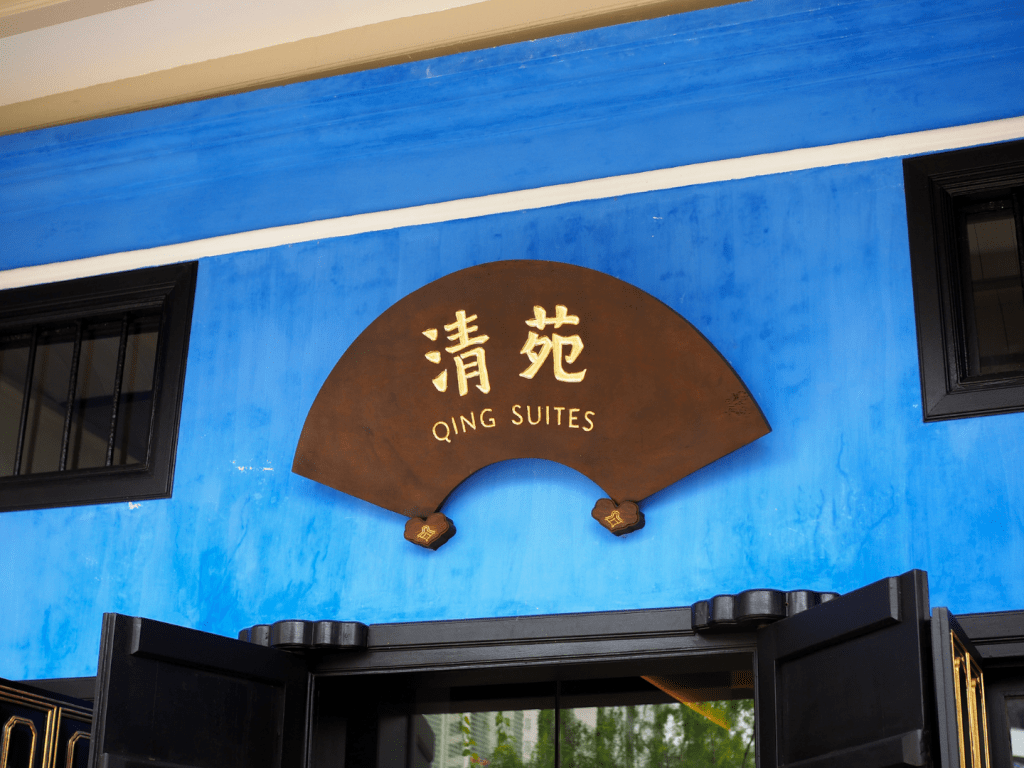
The reception is accessed through traditional double doors set within a narrow five-foot way, a familiar architectural gesture in heritage Penang. At the threshold sits a raised concrete barrier typical of old Chinese homes, meant to be stepped over and never on, a small but telling reminder that this is a space that puts custom over contemporary convenience.
Guests are greeted as expected arrivals. Names are known. Luggage is handled without instruction. When rooms are not yet ready, the assurance that everything will be taken care of is made known. While I waited, I explored the immediate neighbourhood where George Town asserts itself through its colonial façades, shoplots, heat; and of course, nutmeg trees.
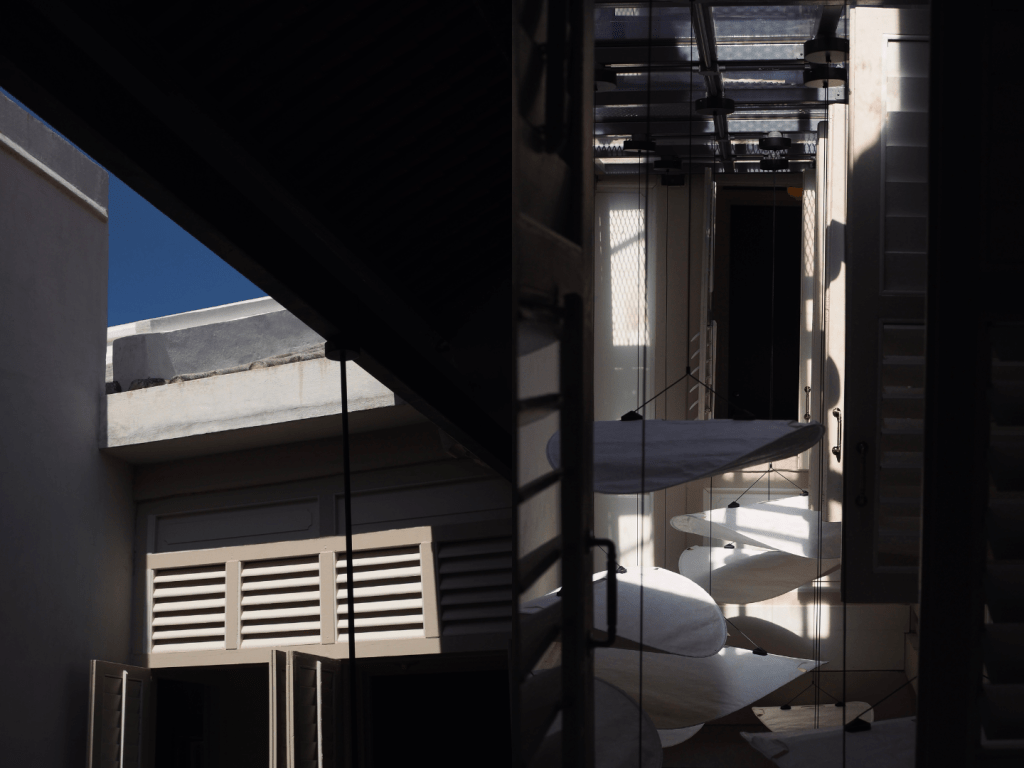
Traversing the building reinforces its residential origins. An open lift, the kind more commonly found in private homes than hotels, carries guests upward. Softly shaped lamps hang overhead and slatted windows open onto the courtyard below. Like the Mansion across the street, the annex is deeply informed by feng shui principles, with the courtyard as the building’s lungs and open roofs welcoming light, air, and movement as natural regulators of space.
Zhong Hua — A Terrace Suite
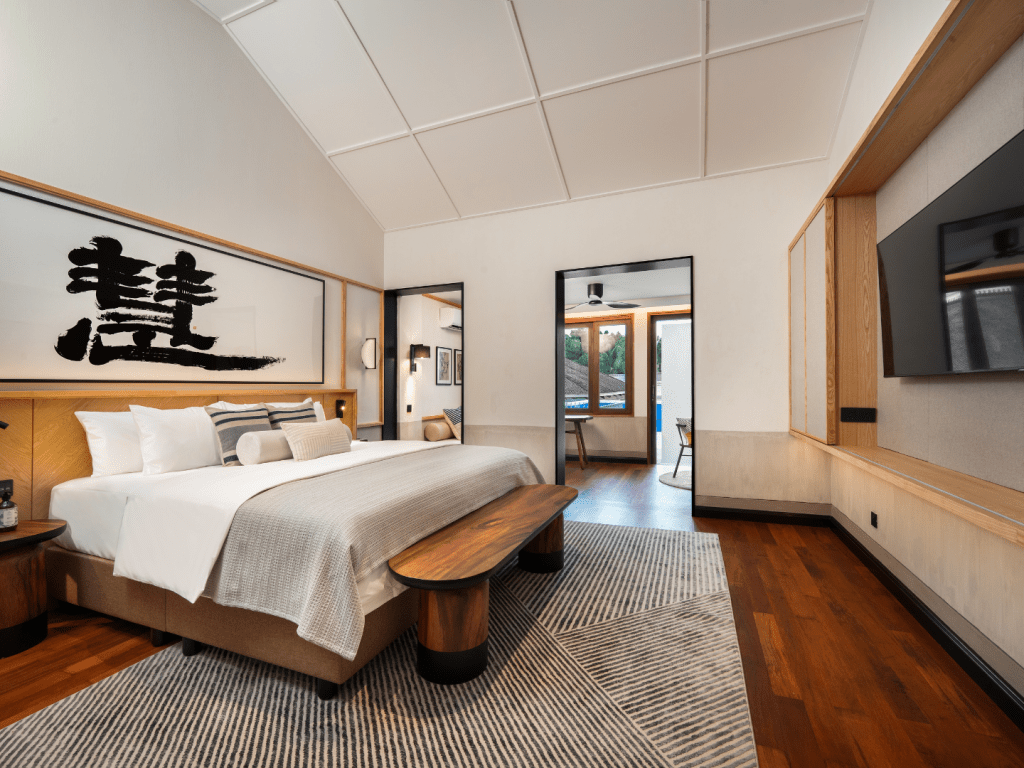
The guestrooms at The Qing Suites are named and not numbered, each bearing its Chinese characters rendered in commissioned calligraphy above the bed. Zhong Hua, my Terrace Suite located at the rear of the building, opens modestly before revealing a vaulted chamber defined by the building’s original roof structure. Scent arrives before scale: a composed fragrance that sits somewhere between modern and nostalgic. Silence follows closely behind, broken by only footsteps and a sigh of letting go.
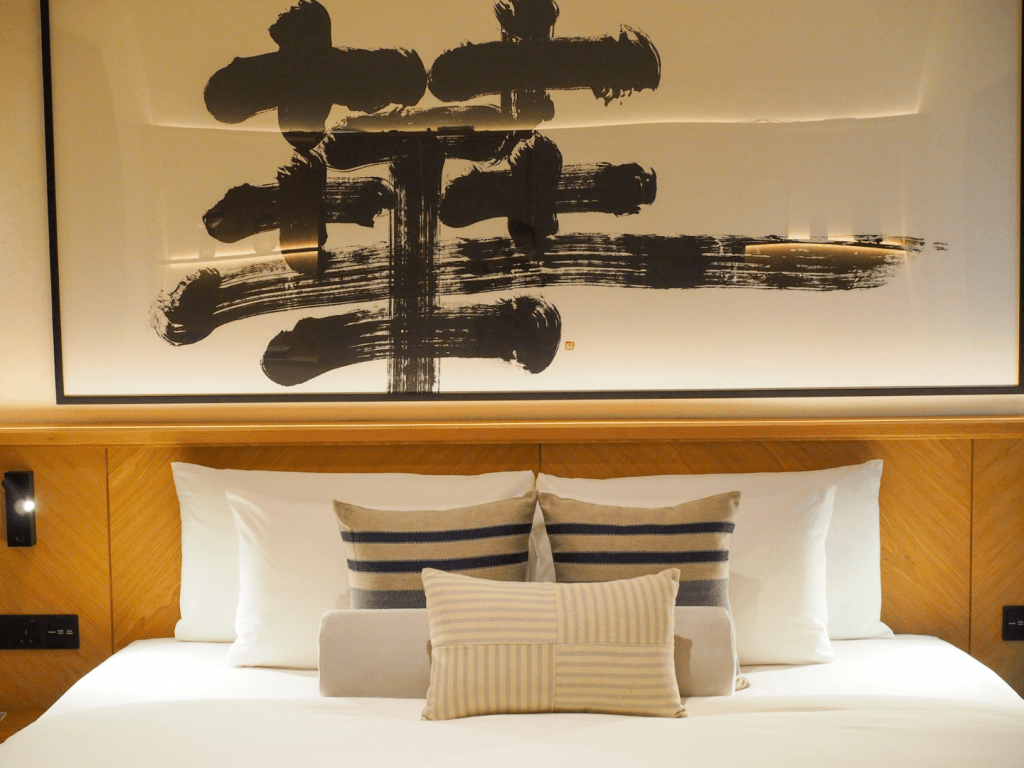
Despite the expansiveness of the room with its vertical height, it feels enclosed and intimate, designed to be inhabited rather than admired. The sleeping area centers the space with an expansive bed and woodwork by local artisans at Dads Wood, while a dedicated living and working zone allows the room to function beyond rest alone. Storage is generous and practical, from a wardrobe large enough to open a full-sized suitcase with ease, to shelving that reveals itself only when needed. The enormous television remains hidden until called upon, lighting is indirect. softened, and intuitively controlled.
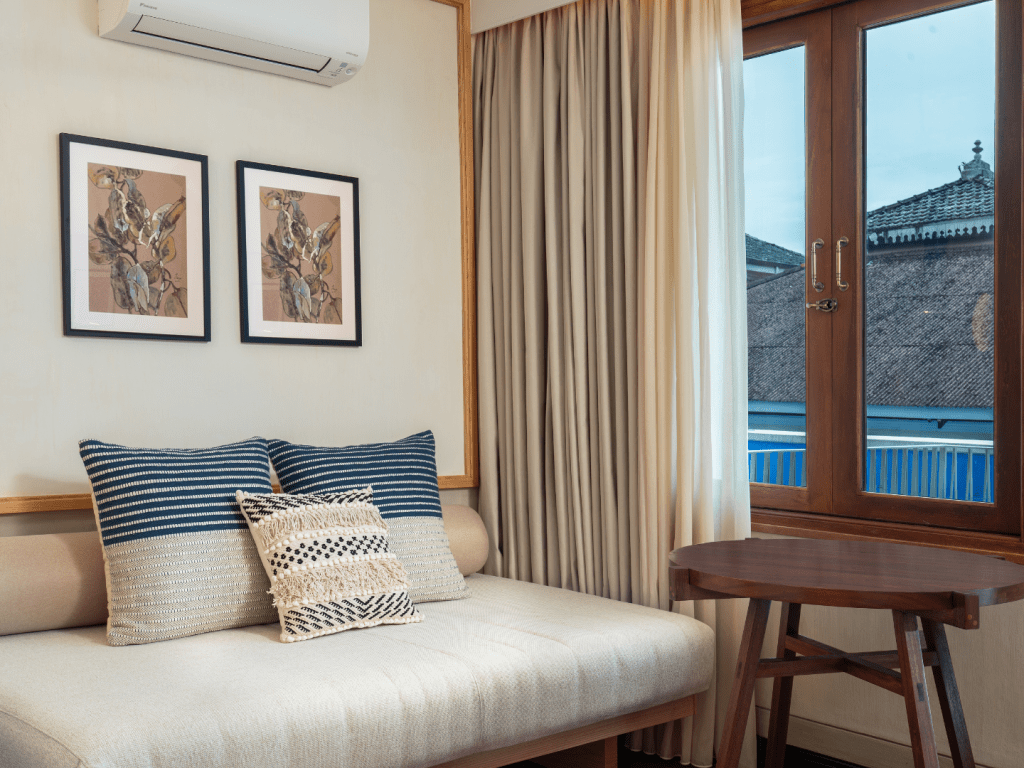
A daybed, positioned to receive shifting light through sheer curtains, quickly becomes a highlight. Its tactile upholstery, paired with the firm cushions, creates a physical sense of ease that encourages luxuriating. There is something about the proportions and textures here that makes the suite feel less like a hotel room and more like a place to live, even briefly.
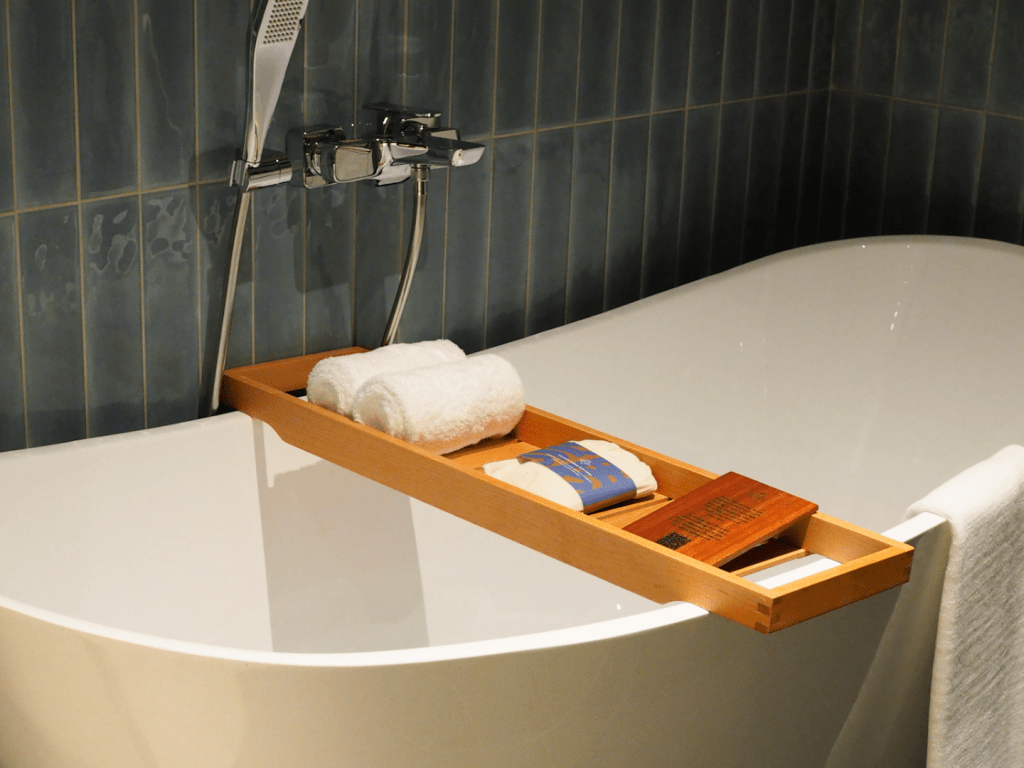
The bathroom, a private extension of the suite’s sanctuary, centers on a deep, freestanding tub designed for the slow passge of time. In a depature from conventional bath salts, The Qing Suites provides artisanal herbal soaks from its spa, intended to be steeped like tea and turning a simple soak into a fragrant, medicinal ritual. Even the more pragmantic elements are handled with grace; the water pressure unwavering and the seamless pitch of the flooring ensures invisible but efficient drainage.
Luxury here is expressed through the smallest details. Bath towels are generously sized and plush. Complimentary snacks and drinks in the minibar are moreish and generous. A thoughtful turndown that tidies up tangled cables and messy workspaces. The kettle, beautifully weighted and thoughtfully designed, is the kind of object guests grow fond enough of to ask about at checkout. Hidden beneath traditional aesthetics lies contemporary technology that functions quietly and efficiently without fuss.
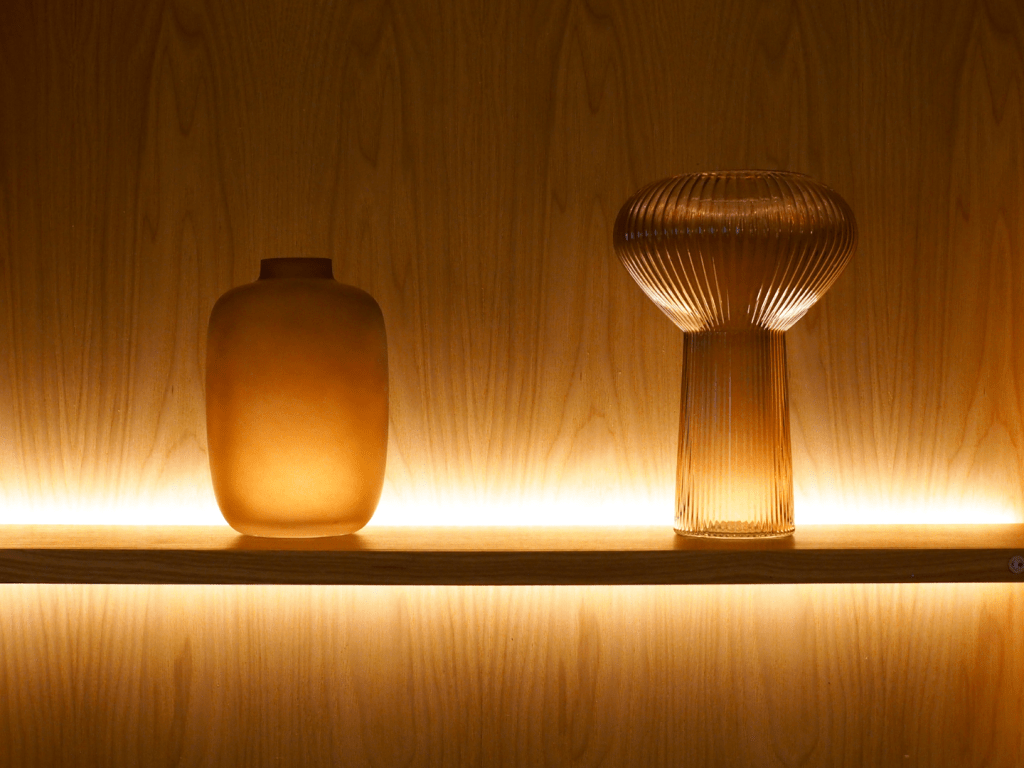
Restoration Through Wellness
Afternoons at The Qing Suites are spent staying in, resting, soaking, and allowing the body to recalibrate. With blackout curtains drawn, the suite becomes fully insulated from the outside world, and time stretches through materials, layout, and the absence of visual noise.
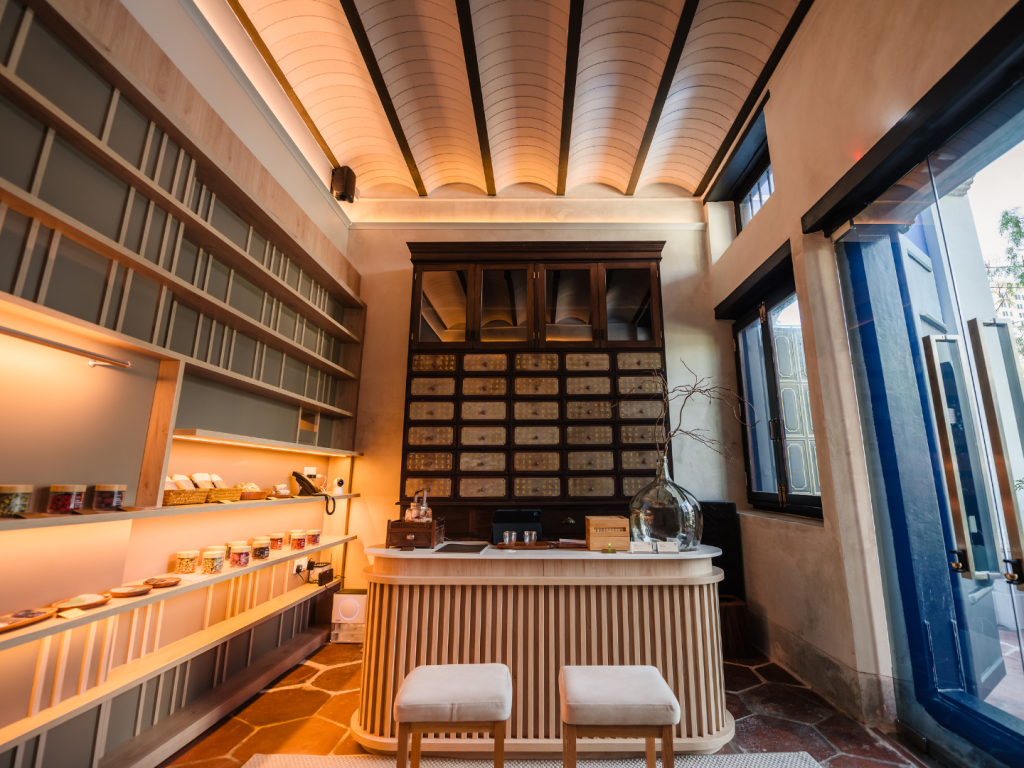
Virtue TCM at The Qing Suites, the hotel’s Traditional Chinese Medicine spa, extends its philosophy of balance and longevity. Rooted in classical practices, it is currently the only TCM spa housed within a heritage hotel in Southeast Asia, and it fits in naturally with the legacy of Cheong Fatt Tze himself. Treatments here focus on function over indulgence, addressing imbalance with skilled hands and ingredients.
The consultation yields an unseen map of one’s constitution and the experience a slow restoration of the senses. Qi Rebalance moves through gua sha, cupping, and acupuncture. The work is firm and purposeful, where each needle and herb acts as a key to a long-locked door. When it ends, the effects are tangible and enduring, less about immediate relaxation than sustained lightness and clarity.
READ ALSO: Experience A Qi Rebalance at Virtue TCM at The Qing Suites
Staying In
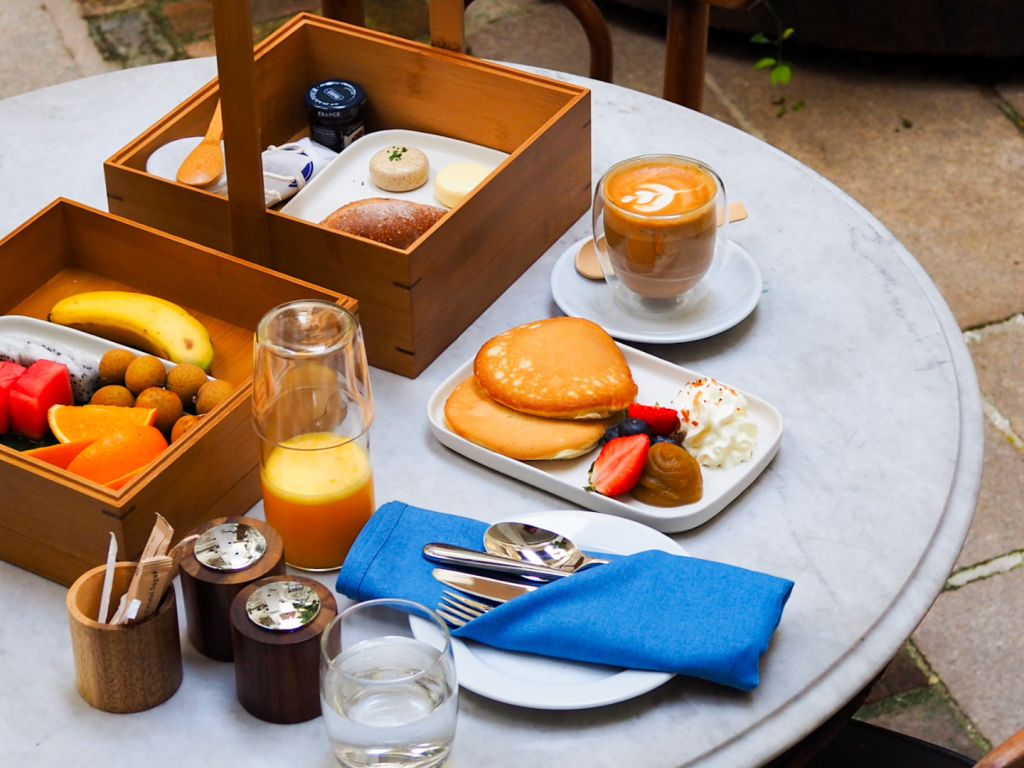
In the morning, breakfast is served either in the courtyard, where light filters down from open sky and discreet fans keep the air moving, or in-suite for those who prefer to wake slowly. Orders arrive without the friction of confirmation; selections are made via a simple card left at turndown. Names and room numbers are unnecessary. My choices of coconut pancakes and herbal duck noodle soup were both comforting and set the tone for the days ahead. Also on the table were fresh bread, compound butters, tropical fruit and some of the best coffee on the island.
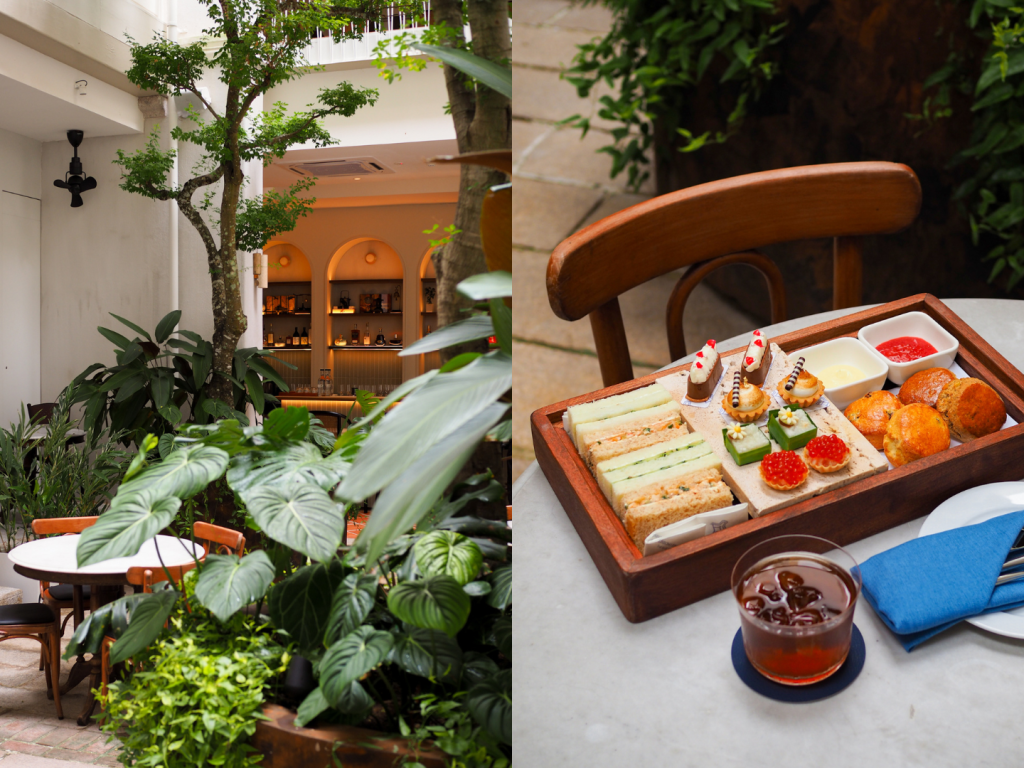
Daylight hours are equally charming where tea returns guests to the courtyard once more beneath the open sky. The service arrives complete with two of each bite and no sense of economising. The butter scone stands out immediately: fragrant, tender, and exceptionally moist, with a richness that is matched by few others. Savoury elements are equally thoughtful—the shrimp sandwich delicate and well-seasoned, the tuna and ikura tartlet offering clean salinity without heaviness. Cold-brewed aged pu’erh is refreshing and grounding. What begins as a moment becomes an hour.
It is during these solitary moments that the ultra-boutique scale of the property is most apparent, offering a level of calm and exclusivity that larger hotels, regardless of luxury, struggle to replicate.
Service throughout the stay operates at just the right distance. Staff remember guests after a single encounter, practitioners recognise faces days after treatments, and movements remain unobtrusive. Everything is carried out as the guest has been anticipated.
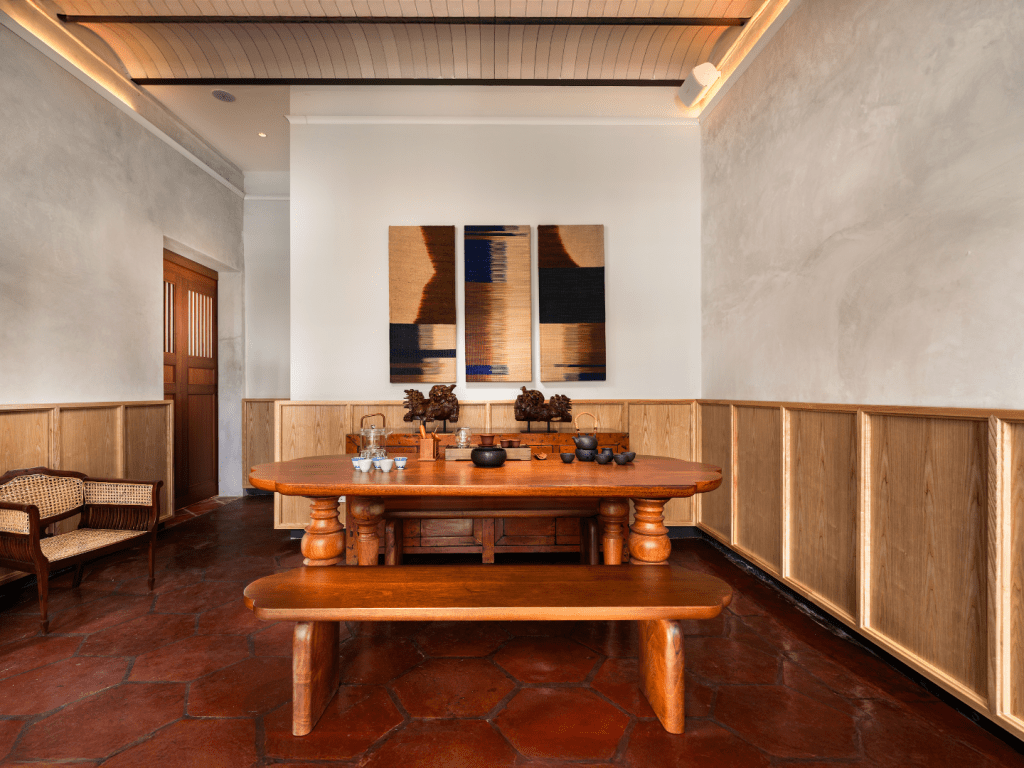
At any point during the stay, guests may reserve a Chinese tea ceremony in the Tranquility Room, a quiet ritual that offers something beyond refreshment. Conducted in collaboration with Ten Yee Tea, the experience is as much a point of human connection as it is ceremonial. It was here, over carefully brewed leaves and thoughtful dialogue, that the inner workings of the property revealed themselves more fully—stories about design decisions, guest habits, and even the unexpectedly popular kettles that many end up purchasing to take home.
A Sense of Place
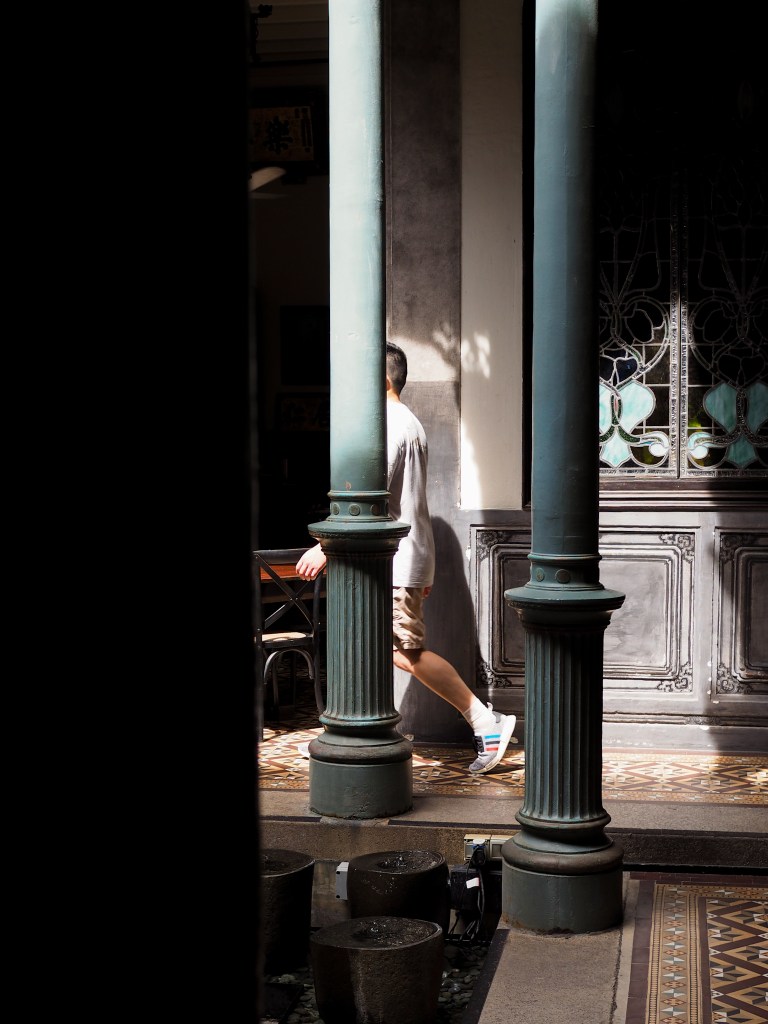
Guests of The Qing Suites are offered a complimentary guided tour of the Blue Mansion, an experience that adds depth and texture to the stay. Learning about the “Rockefeller of the East’s” life, the restoration process, the feng shui principles embedded in the architecture, and the eventual reunification of the annex with the main house contextualises the space being inhabited as a living structure more than relic.
READ ALSO: The Blue Mansion, Georgetown: Architectural Gem, Boutique Hotel, and Cultural Legacy
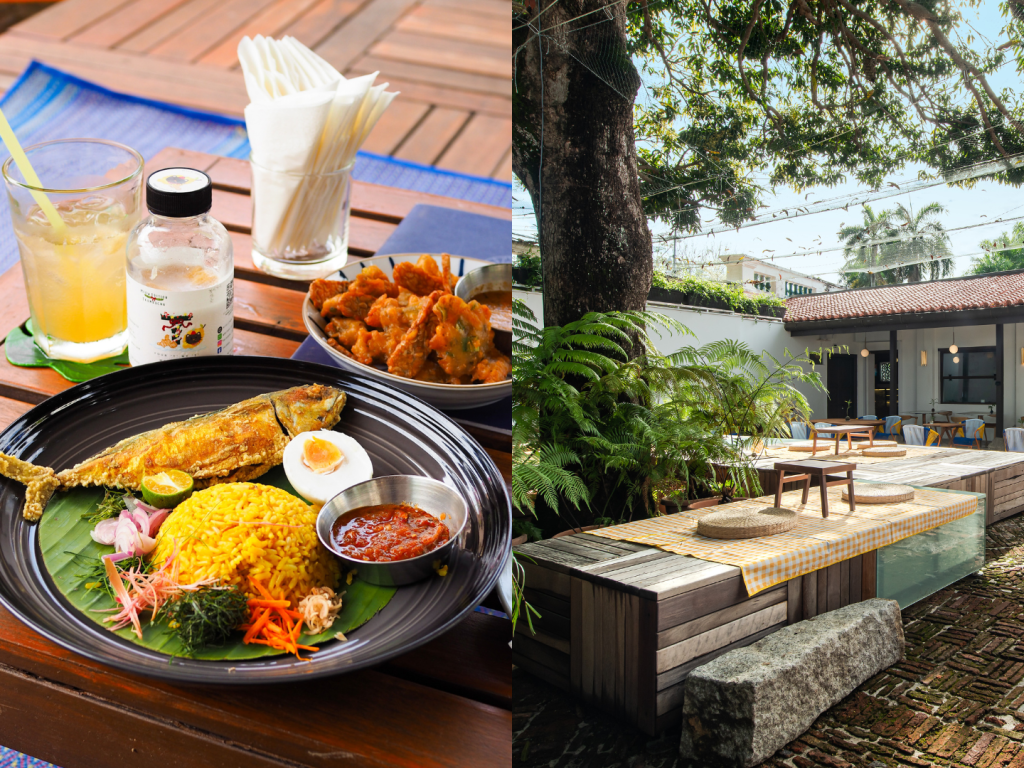
Under the mango tree, lunch at Café Mangga leans into simplicity, a casual counterpoint to the estate’s more formal spaces. The menu favours light, well-balanced plates suited to Penang’s heat—corn fritters that arrive crisp at the edges and soft within, herbaceous nasi ulam brightened by citrus and fresh greens, and fried mackerel cooked cleanly without heaviness. Drinks are cooling and gently restorative; a ginger kombucha here feels like the natural choice.
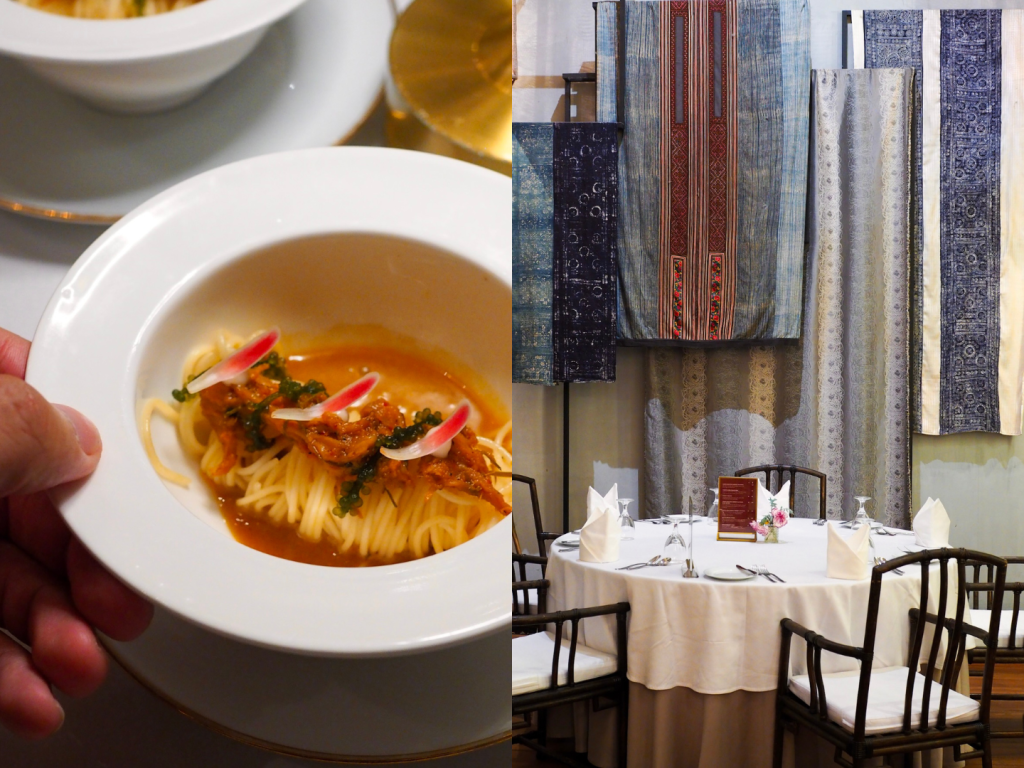
Evenings move naturally between the courtyard, the bar, and dinner at Indigo across the road, where heritage continues at the table rather than on display. The estate’s culinary flagship extends the narrative of place through flavour, interpretation, and restraint, allowing the day to conclude without rupture. Bread arrives warm, paired with black olive loaf and a preserved radish butter that immediately recalibrates expectations—deeply savoury, quietly addictive. Courses lean into familiarity without excess, and mains satisfy without fatigue. Even when conversation takes precedence, certain elements in food and service live on in memory.
READ ALSO: An Evening at Indigo: Fine Dining at The Blue Mansion, Penang
Before Leaving
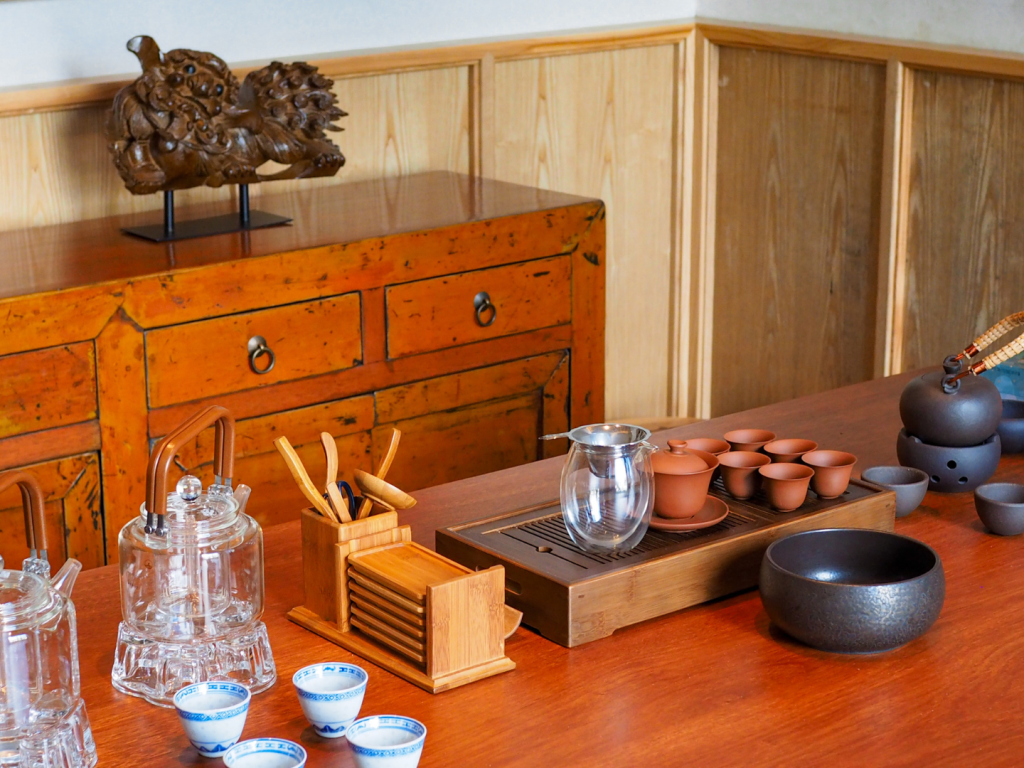
My departure at The Qing Suites was a long one, a slow untethering from my two-night residence over a cup of freshly brewed Shou Mei White Tea with Anna. Stepping back onto Leith Street, the city resumes its pace. The Qing Suites does not attempt to cater to every traveller, nor should it.
This is not a hotel for packed itineraries, hurried sightseeing, or families seeking constant engagement. It is designed for cultural aesthetes, history enthusiasts, wellness seekers, and travellers who understand the value of stillness. It is the rare instance of a property truly earning the “sanctuary” moniker.
For first-time visitors to Penang, the ideal rhythm may be to immerse oneself fully in the city’s energy before concluding the journey here, using The Qing Suites as a reflective pause rather than a base. For those returning to the island, especially Malaysian travellers who have already absorbed much of what Penang offers, this stay represents a different kind of luxury altogether.
Within the reunited world of Cheong Fatt Tze — The Qing Suites, being a bad tourist is not a failure of curiosity. It is a conscious choice to stay in, to absorb Penang in retrospect, and to step back into the world restored.
Elevate Your Experience:
- The Best Sleep: Request a Terrace Suite or Garden Suite. These rooms in the rear are the most shielded from the morning hum of Leith Street.
- The Ritual: Schedule your TCM session for late afternoon. The post-treatment “lightness” perfectly matches the cooling blue hour in the courtyard.
- Editor’s Choice: Post-spa, skip the city walk. Head straight to the courtyard for a cold-brewed aged pu’erh to extend the zen into evening.
Nacre Notes: The Qing Suites
Originally built in 1904 as the servants’ quarters for Cheong Fatt Tze’s mansion, these five terrace houses have been unified and restored as The Qing Suites. This 13-suite sanctuary marks the architectural and philosophical reunification of the estate, offering a seamless blend of heritage aesthetics and modern wellness.
Location
9, Lebuh Leith, 10200 George Town, Pulau Pinang (Maps)
30-40 minute drive from Penang International Airport (PEN)
Rooms
Signature Suites: 44-46 sqm with Mansion view
Garden Suites: 60-67 sqm with private garden
Terrace Suites: 48-51 sqm with shared terrace
Facilities
Virtue TCM at The Qing Suites
Qing Lounge
Pool at the Oriental Garden
Dining
In-room dining
The Qing Courtyard
The Qing Bar
Indigo
Cafe Mangga
Booking & Reservations
Direct booking: Reservations can be made via cheongfatttzemansion.com
Contact: +604 262 0006 / reservations@cheongfatttzemansion.com
Visuals: Images courtesy of Cheong Fatt Tze – The Qing Suites, and Bryan Yap for Nacre.
Editorial Note: This stay and its dining experiences were hosted by Cheong Fatt Tze – The Qing Suites. Nacre retains full editorial independence, and all reflections in this review are the author’s own.
Curious how a Nacre Experience article is formed?
From The Editor: What Makes An Experience Worth Sharing
From the table to the world beyond, Nacre brings you dining, travel, and lifestyle experiences worth savouring. Explore more with us on Instagram (@nacre.asia).


 Nacre.
Leave a comment