In early January, I had the most marvelous two-nights staying at The Qing Suites, the restored annex of the famous Blue Mansion which welcomed its first guests last December. As part of the experience, I was invited to dine at the mansion’s signature restaurant, Indigo, for a five-course festive menu served on its final night.
Dinner at Indigo felt less like a highlight to be anticipated, and more like a natural extension of the stay itself. Having long admired the restaurant from afar, this was an evening I had quietly looked forward to for years, not because of a specific menu, but because of the space it occupies within the Mansion. The draw here has always been the setting—the chance to inhabit a dining room shaped by history, rather than simply dine within it.
READ ALSO: Introducing The Qing Suites, the Latest Chapter in Cheong Fatt Tze’s Hospitality Story
The First Steps In
I arrived at Indigo a little past eight in the evening, following a quiet tipple at The Qing Bar. By then, the mansion had already settled into night. Light was kept deliberately low, allowing darkness to pool gently through the courtyard and into the dining room.
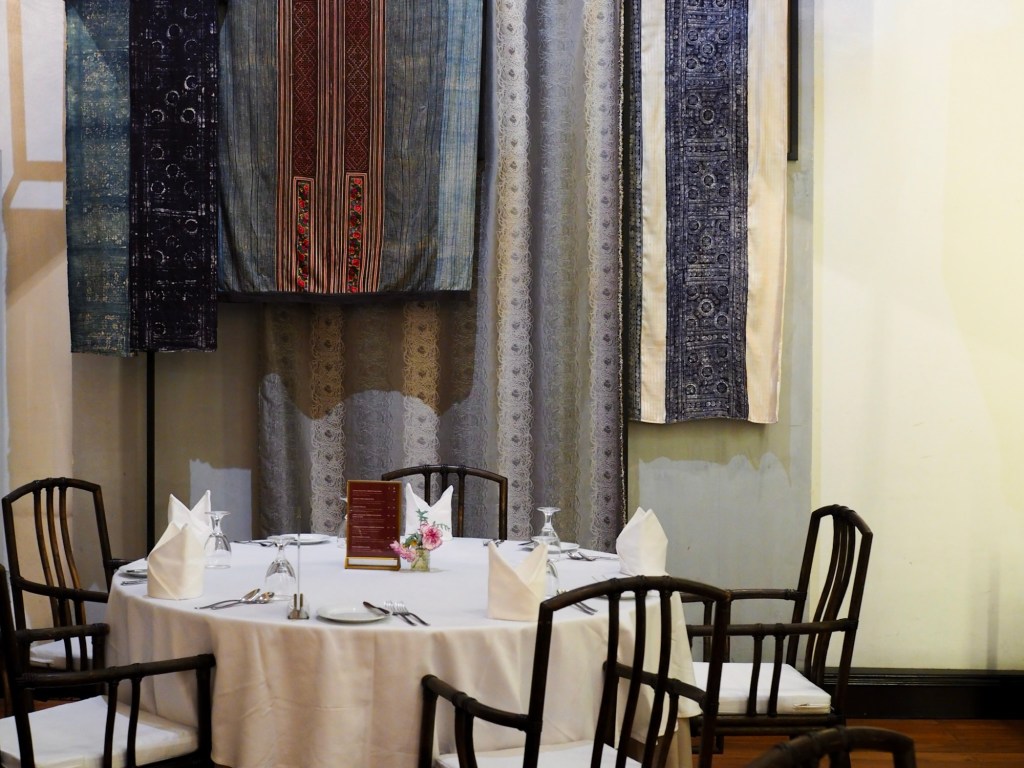
Despite its fine dining credentials, the atmosphere felt relaxed and lived-in rather than hushed or reverential. Stepping in from Penang’s humidity, the air-conditioned dining room was certainly a relief.
We were seated at a table towards the centre of the room and welcomed by Arip, whose gregarious presence immediately set expectation for the evening. Warm, confident, and gently teasing, he introduced the Dinner Menu (RM328++) with confidence, noting that it was the final night of the festive run and that it had been well received.
The room was full that evening. Roughly a dozen tables of two to four, with one longer table hosting a larger group, where conversation filled the space in whispers.
Within The Blue Mansion
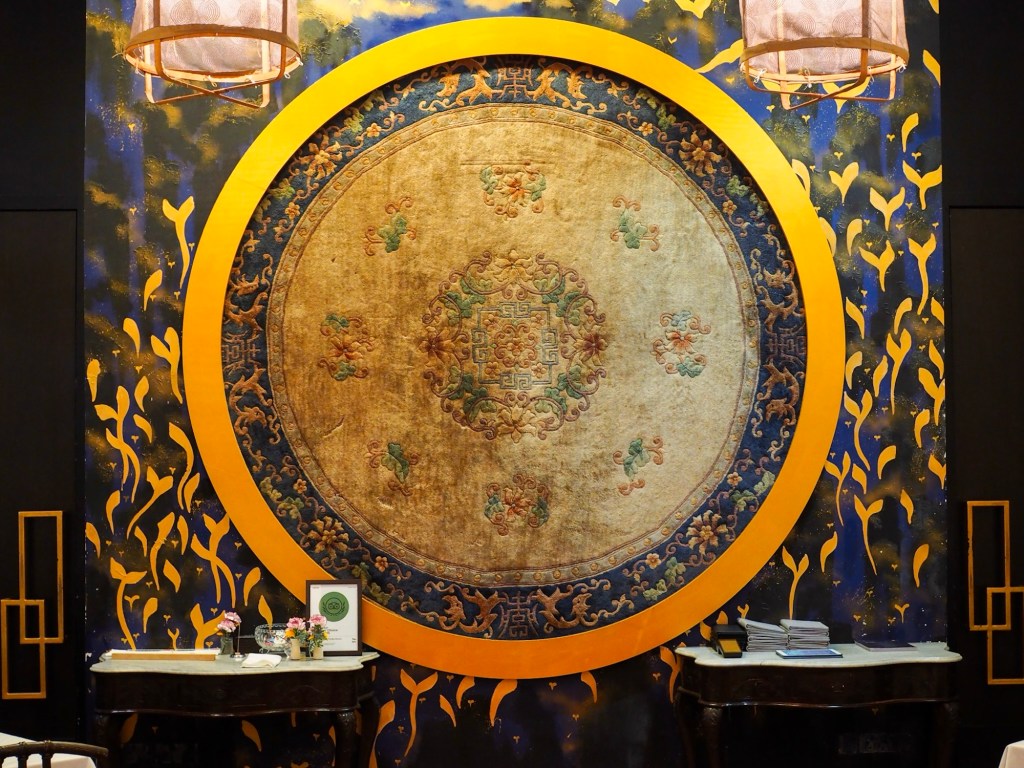
Set within Cheong Fatt Tze – The Blue Mansion, Indigo has long occupied its position in Penang’s dining landscape. Not simply as a fine dining restaurant, but as a space where food, history, architecture and time converge.
Staying true to the man of the house’s story, this is a restaurant born from a marriage between East and West. The kitchen is currently helmed by Chef Kim Hock Su, of one-Michelin-starred Au Jardin fame, and the menu is a culmination of his Penang heritage and experiences across the globe.
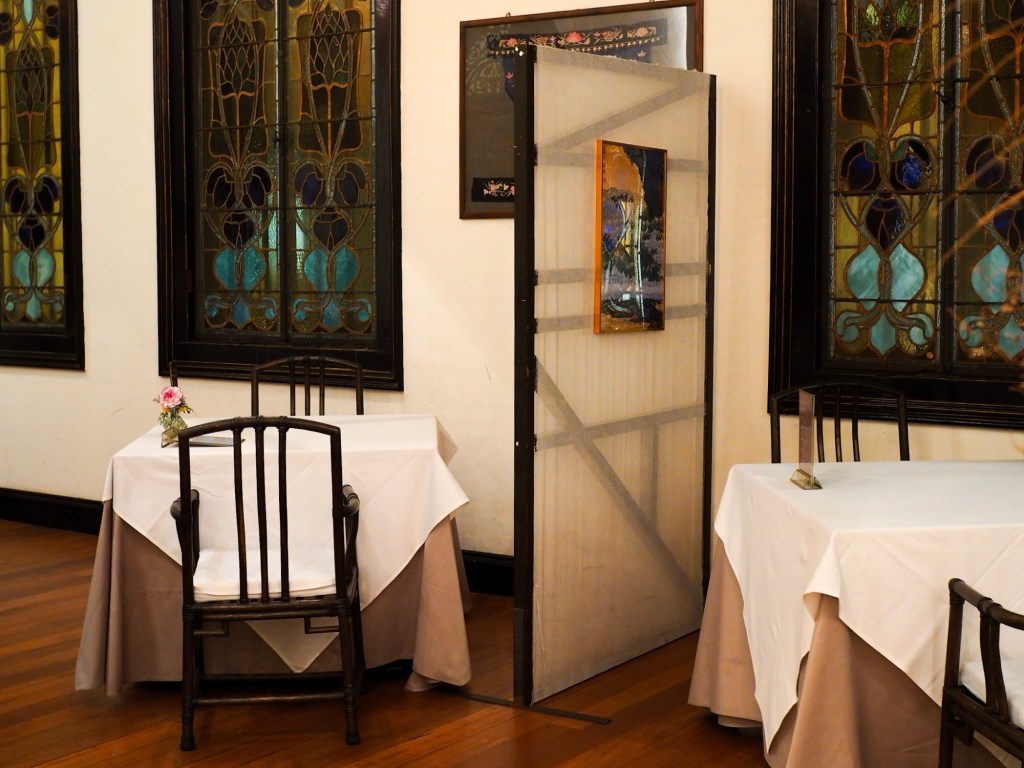
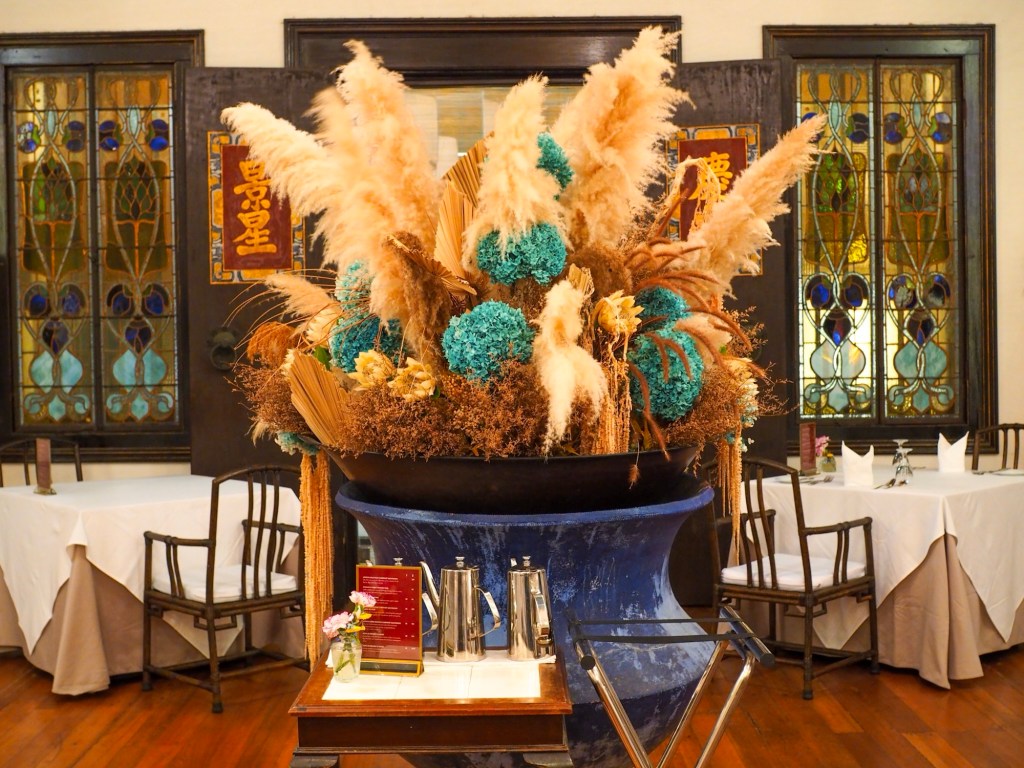
The dining room itself felt like an extension of the mansion’s restoration ethos. Indigo’s interiors mirror the architectural language of the house: art nouveau-inspired windows sit alongside Chinese porcelain carvings and British geometric tiles, all governed by the principles of feng shui. Architect Laurence Loh, who led the restoration of the Blue Mansion, designed Indigo as a continuation of that dialogue.
Contemporary interventions by local artists, designers, and architects appear quietly throughout the space, revealing themselves gradually as the eye adjusts through lighting and proportion, while the high ceilings and clever spatial divisions lend an airiness.
READ ALSO: The Blue Mansion, Georgetown: Architectural Gem, Boutique Hotel, and Cultural Legacy
Changyu Wines
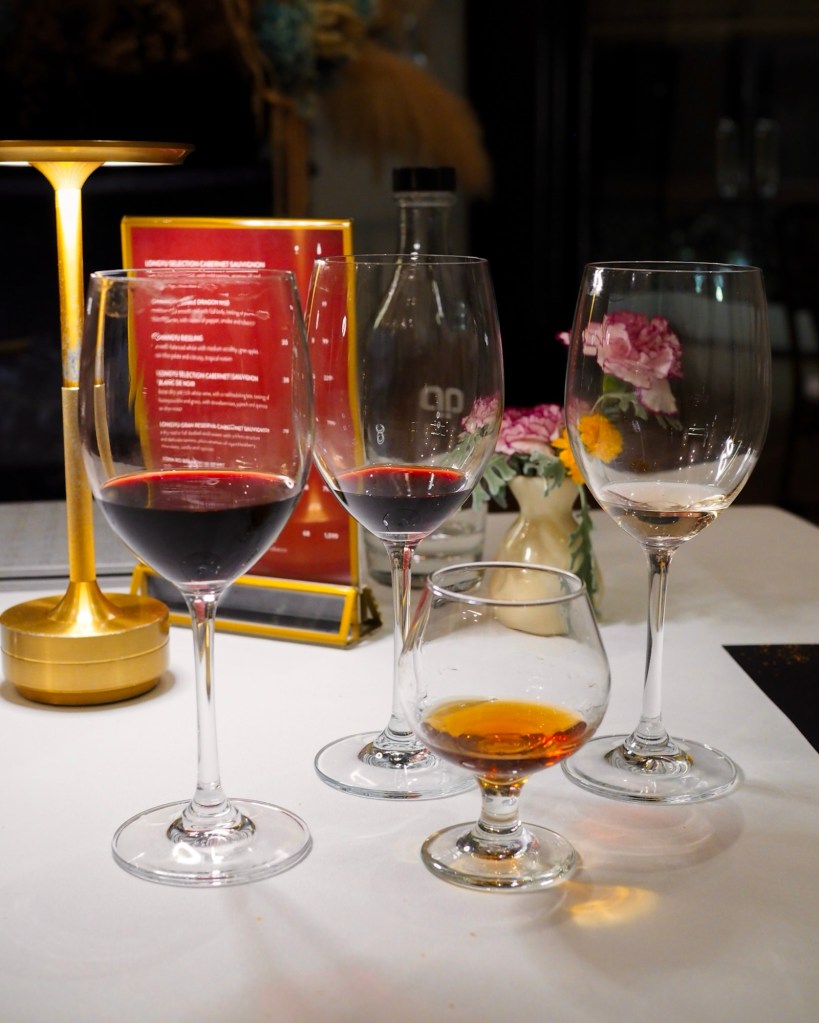
In his lifetime, Cheong Fatt Tze developed a deep appreciation for European wines, which eventually led him to found the first winery in China. What began as an import of American and European grapevines more than a century ago has since evolved into China’s largest and oldest wine producer, Changyu.
I opted to have the Changyu wine pairing (RM198++) with dinner that evening, comprising whites, reds and brandy. In this context, the pairing felt less like an optional indulgence and more like a continuation of the house’s history, linking the table back to the man behind it.
Indigo, along with The Bar at the Blue Mansion, remains the only place in Malaysia where these wines are served.
Dinner Begins
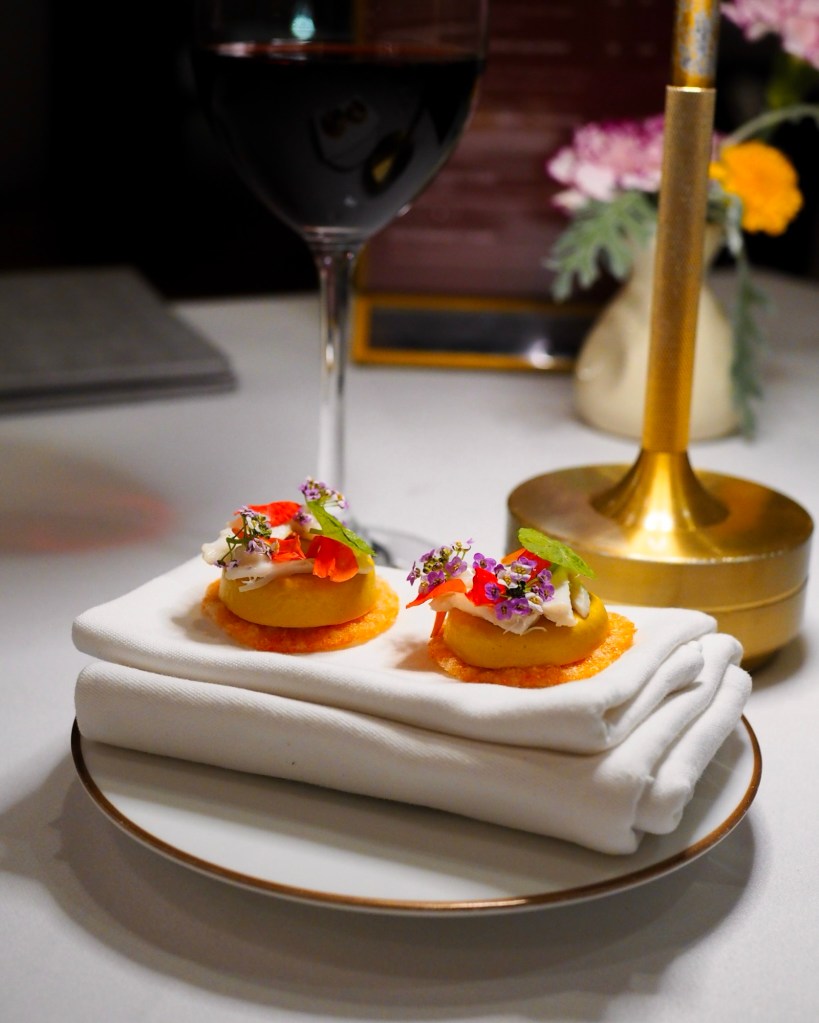
Dinner began with a pouring of wine, and the amuse bouche inspired by Penang’s otak-otak—a steamed fish custard served cold on crunchy sago crackers, topped with crab meat, pegaga leaf and edible flowers. The botanicals on top were more than decorative, contributing herbal and almost medicinal flavours that complimented the seafood components. I have to admit the chill of the otak-otak was rather surprising on first bite.
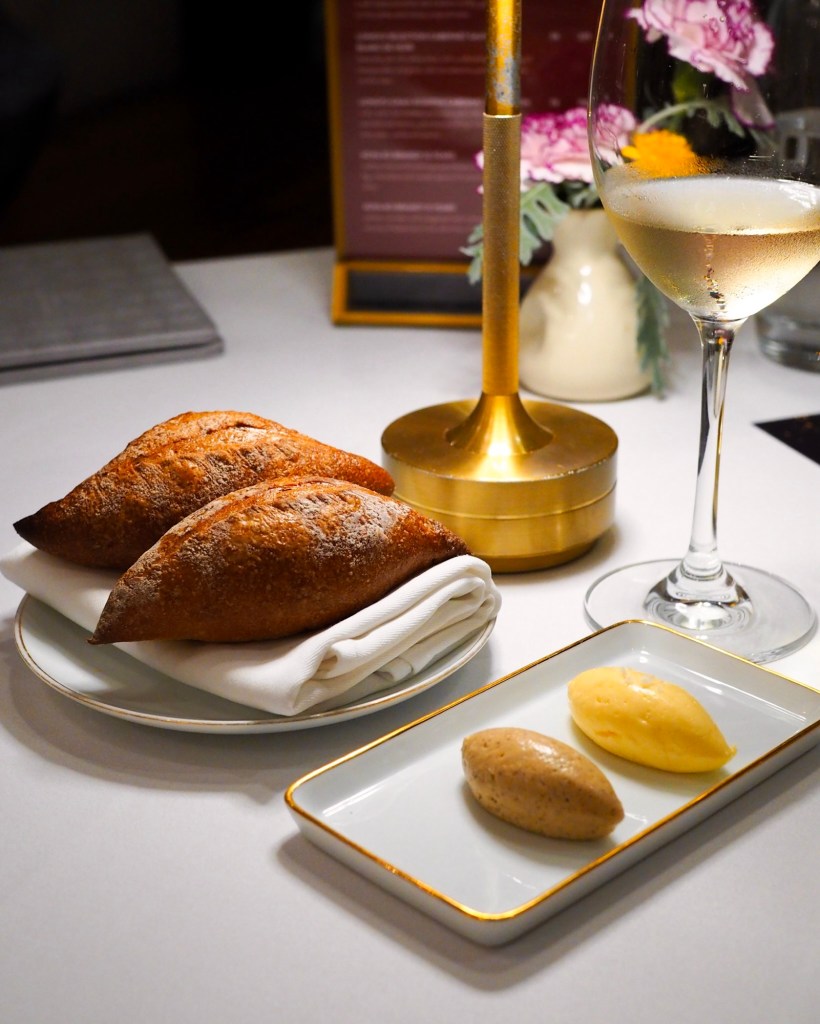
Returning readers know my love for a menu’s bread course and the one at Indigo exceeded expectations.
Black Olive Bread, freshly baked in-house, was served with house-churned butter done two-ways: one as a compound butter with preserved radish, and the other as cultured salted buter. Both quenelles were aerated to a lightness that spread effortlessly, but it was the preserved radish butter that stood out. I never would have thought to incorporate this common condiment into a luxurious experience like this. Naturally, I asked for an extra boule, unwilling to leave any butter unfinished.
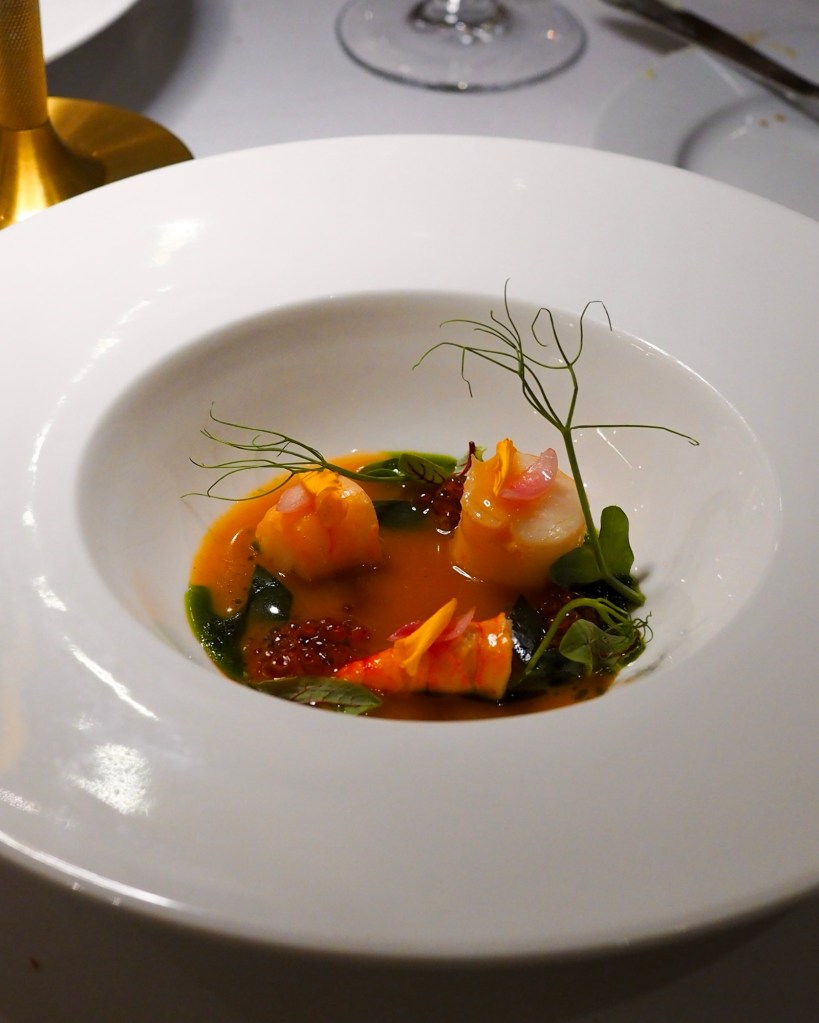
The Penang-Inspired Lobster Bisque that followed bore its name mostly in spirit. Succulent freshwater prawns, poached to a careful balance of crunch and tenderness, were served with ikura in a broth inspired by hokkien mee. Sweetness and savouriness were married with restraint, the flavours immediately recognisable yet refined. It was one of the evening’s quiet highlights.
I have always gravitated towards white wines, and the Changyu Riesling pairing was an early favourite—clean, precise, and refreshing against the richer opening courses.
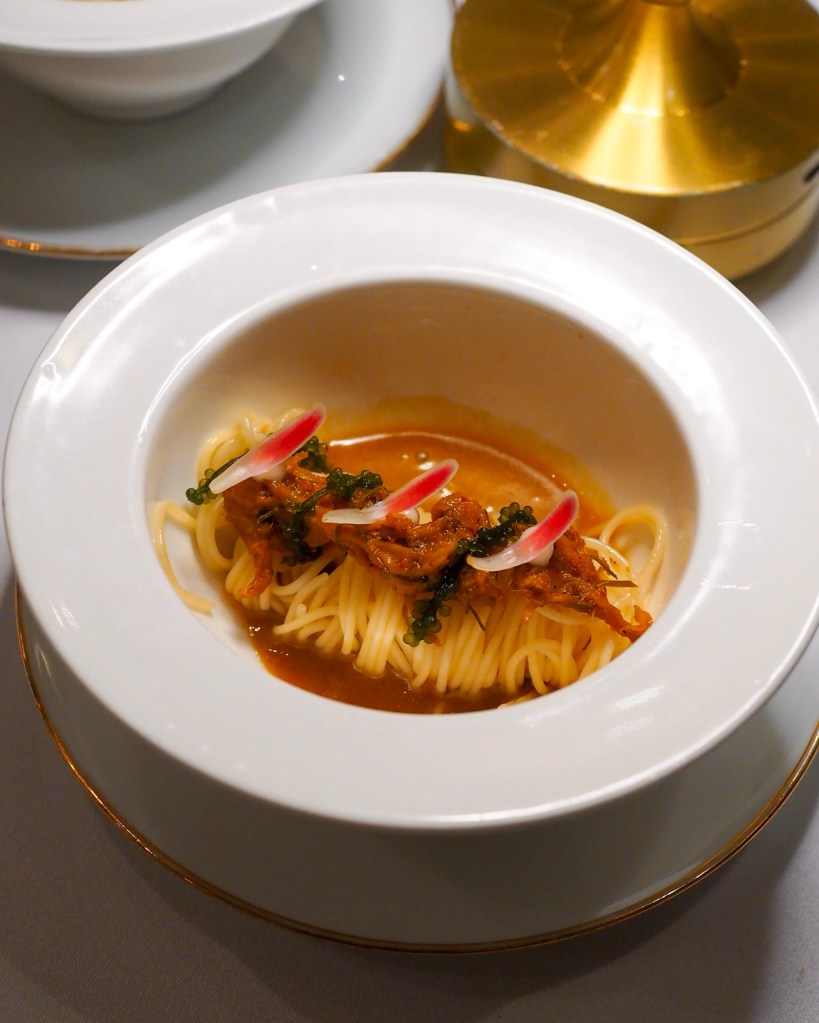
The final starter was a Cold Capellini dish, a format ubiquitous in contemporary dining rooms. Instead of the expected combination of sea urchin, caviar and truffles, Indigo dressed the noodles in a turmeric royale inspired by yellow laksa, and serves it with lion’s mane mushroom rendang and the marine crunch of latok, or sea grapes. The rendang carried the most weight, pushing the other elements into the background, though delicate petals of torch ginger added an aromatic lift.
Mains
The pacing of the meal was exemplary. Courses arrived with enough space between them to allow flavours and conversation to settle, without rushing or stalling. Eating and dining are two very different experiences to me, and here, the latter was clearly prioritised.
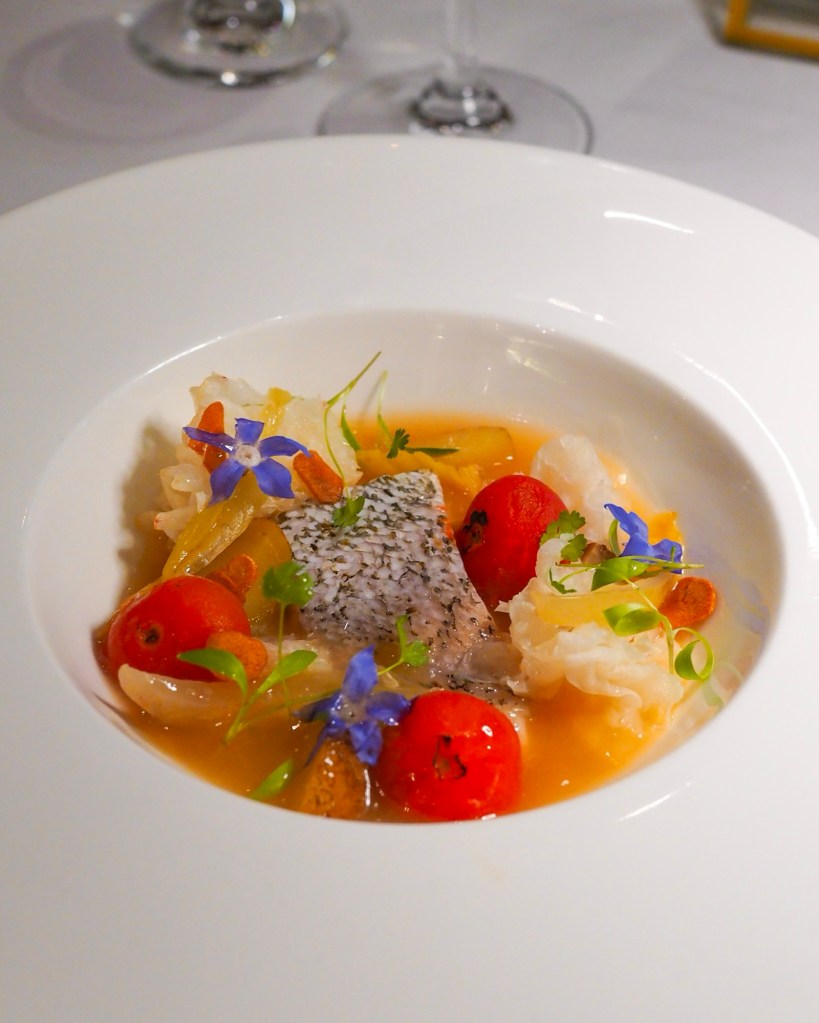
For our entrées, we chose to share two mains. The Steamed Grouper arrived first, pristine and restrained. A single fillet was accompanied by baby potatoes, winter fungus, preserved vegetables, and pickled nutmeg, before being finished tableside with a deeply umami cuttlefish superior stock. The fish flaked at the lightest touch, tender yet carrying a gentle firmness that spoke of its cultured origins. The winter fungus absorbed the broth generously, each bite releasing that distinctive savoury depth reminiscent of dried squid. It was a dish that rewarded patience rather than excitement.
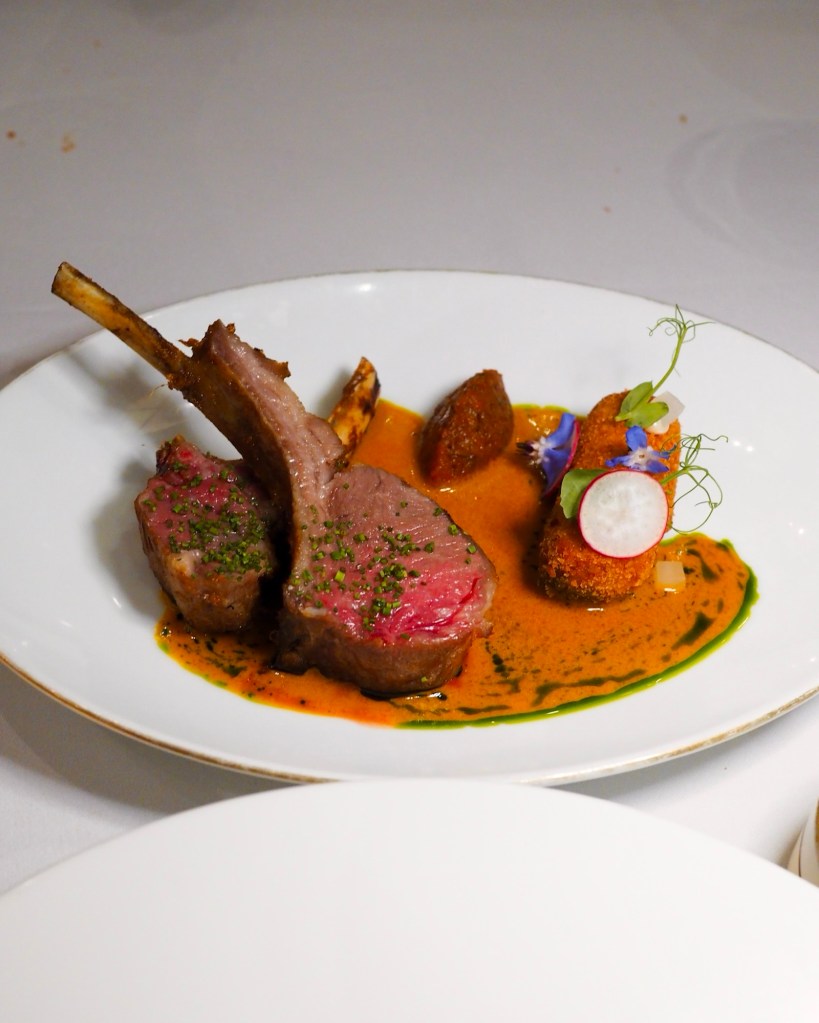
Where the grouper was about subtlety, the Percik Roasted Lamb Rack leaned into louder and familiar flavours. Cooked to a confident medium and free from gaminess, the lamb was served alongside a fantastic pulled lamb bergedil, Indian-style pickles, and a savoury percik peanut sauce. The meat proved incredibly tender, and while utensils were provided, I am adamant that lamb rack chops are best enjoyed between my fingertips.
The spiciness of the Longyu Gran Reserva Cabernet Sauvignon found its natural partner in the lamb, its structure standing up confidently to the percik sauce.
As the evening went on, it became clear that the experience would have felt just as complete regardless of season or menu. Dining at Indigo carries a sense of timelessness, one that is rooted in place rather than occasion.
Desserts
By the time we were done with our main courses, the evening had stretched comfortably past ten. Rather than going off course, I requested that both dessert courses be served together, allowing the meal to settle in a single gesture.
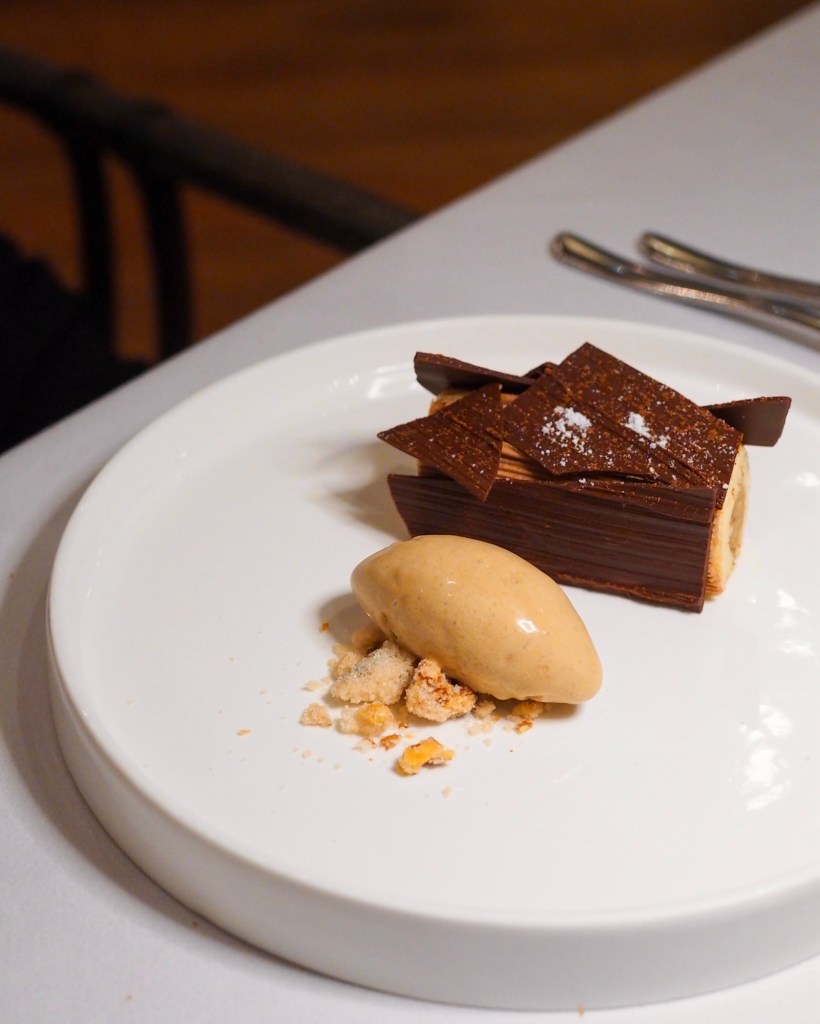
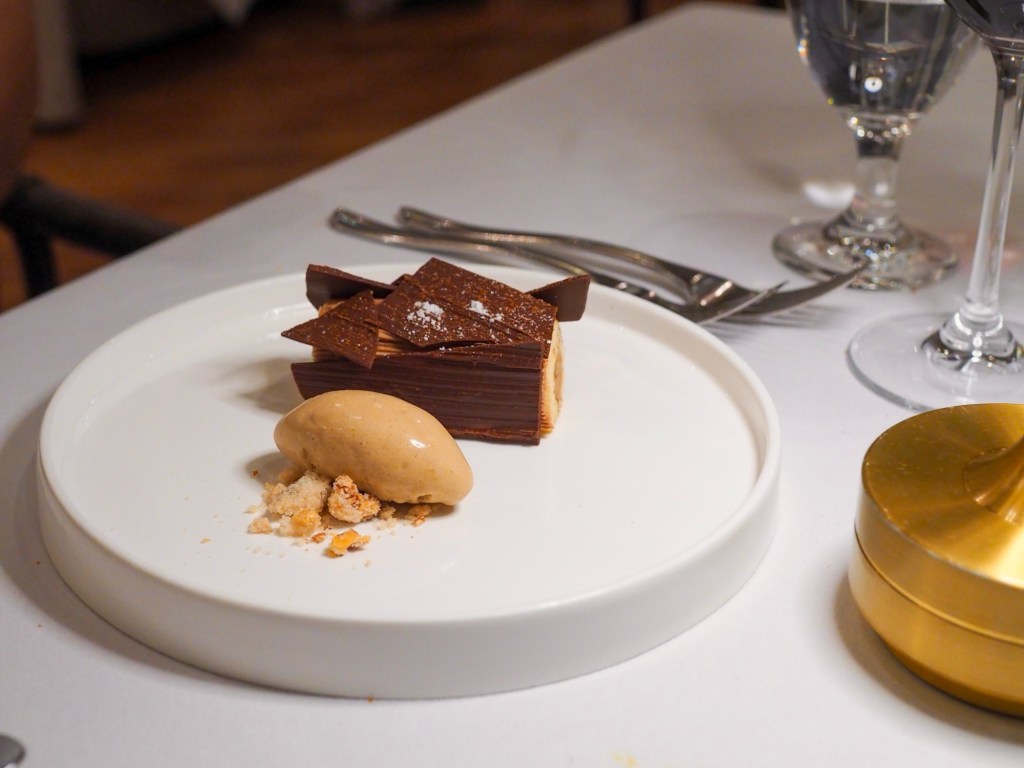
The Festive Yule Log was filled with chestnut and rum purée, paired with a fragrant coffee sorbet and walnut crumble. The feeling of the holiday season that just passed was exemplified in this dessert and it reaffirms my love for the coffee-walnut flavour pairing.
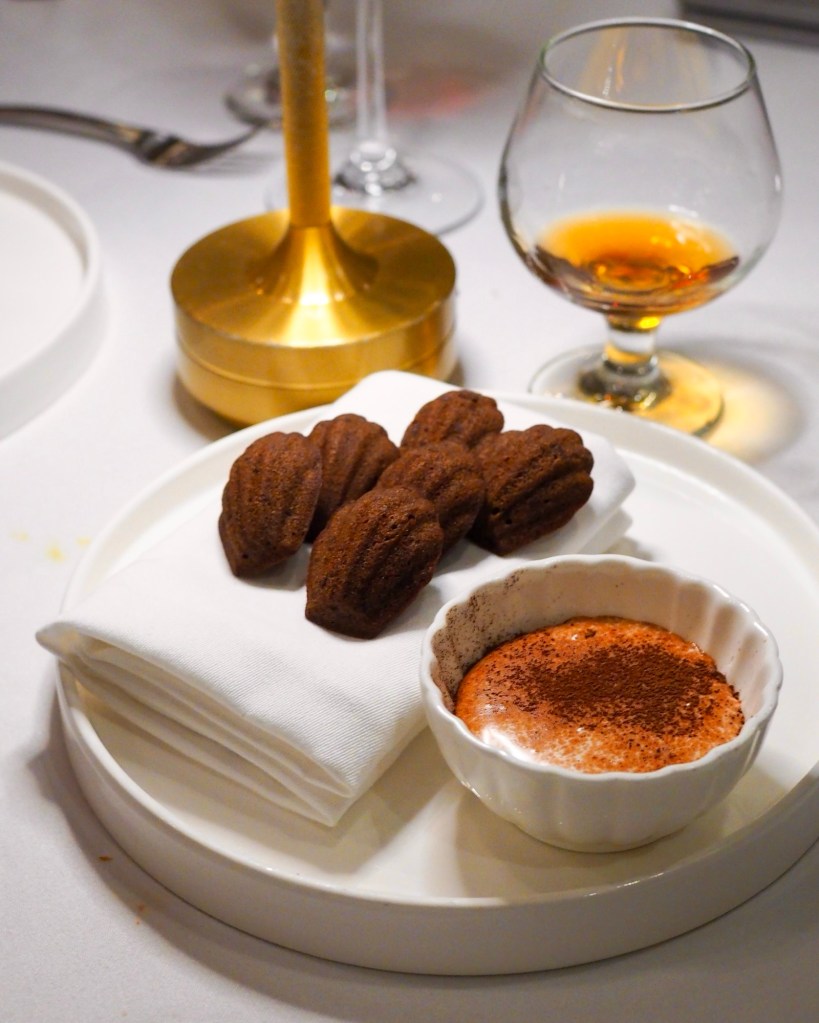
Alongside it was the Bahulu Mignardise—chocolate madeleines infused with buah keluak, meant to be dipped into a lightly salted coconut espuma. The interplay of savoury, sweet, and familiar flavours felt intentional, grounding the end of the meal firmly in place. Buah keluak or pangium nuts are a staple in Peranakan cooking—a fitting note to end the evening in a city so deeply shaped by that heritage.
10-year aged Koya XO Brandy complimented the chocolate-centric flavours of both dessert courses with its unexpectedly strong headiness and lasting warmth. An ideal digestif to end our evening.
End Notes
As the dining room gradually emptied and the evening drew to a close. My two cents: Indigo does not attempt to redefine Penang cuisine, nor does it rely on nostalgia to assert relevance. Beyond the technical execution of the food, what distinguishes Indigo is its strong sense of place.
There was the sense of being hosted rather than attended to, and the team appeared genuinely pleased to be part of the evening. Conversations were allowed to breathe, interruptions were minimal, and humour came naturally rather than by design. I was reminded that true hosting is less about choreography and more about reading a table.
This is a dining room that rewards diners who value context as much as cuisine—those who appreciate how architecture, history, service, and the table itself intersect to form a complete experience.
For fine dining enthusiasts visiting George Town, it is certainly a compelling reservation.
Curious how a Nacre Experience article is formed?
From The Editor: What Makes An Experience Worth Sharing
Indigo
Cheong Fatt Tze Mansion,
14 Lebuh Leith, Georgetown,
10200 George Town, Penang (Maps)
Open daily, 12–3PM & 6.30–10PM
@indigo.georgetown | Website & Menus | Reservations
From the table to the world beyond, Nacre brings you dining, travel, and lifestyle experiences worth savouring. Explore more with us on Instagram (@nacre.asia).

 Nacre.
Leave a comment