

At first glance, SKULLPANDA may seem an unexpected presence inside the National Museum of Singapore. Created by Chinese artist Xiong Miao, the character is best known within designer toy culture, recognisable by its androgynous helmeted form and its shifting personas across different series. SKULLPANDA has always been less about cuteness and more about interior worlds, questions of identity, contradiction, and selfhood rendered through a stylised figure that feels deliberately ambiguous.
Running from 12 December 2025 to 22 February 2026, SKULLPANDA CAGE-UNCAGE Singapore positions itself as both a cultural showcase and an entry point, not only into SKULLPANDA’s universe, but into the museum itself. Through immersive design and restrained storytelling, the exhibition reflects a broader effort to engage contemporary audiences who value experience, atmosphere, and emotional resonance as much as information. Rather than presenting SKULLPANDA as an object to be observed, CAGE-UNCAGE treats the character as a narrative device—a lens through which themes of choice, tension, and self-imposed boundaries can be explored in ways that feel accessible to contemporary audiences, including those who may not typically visit museums.
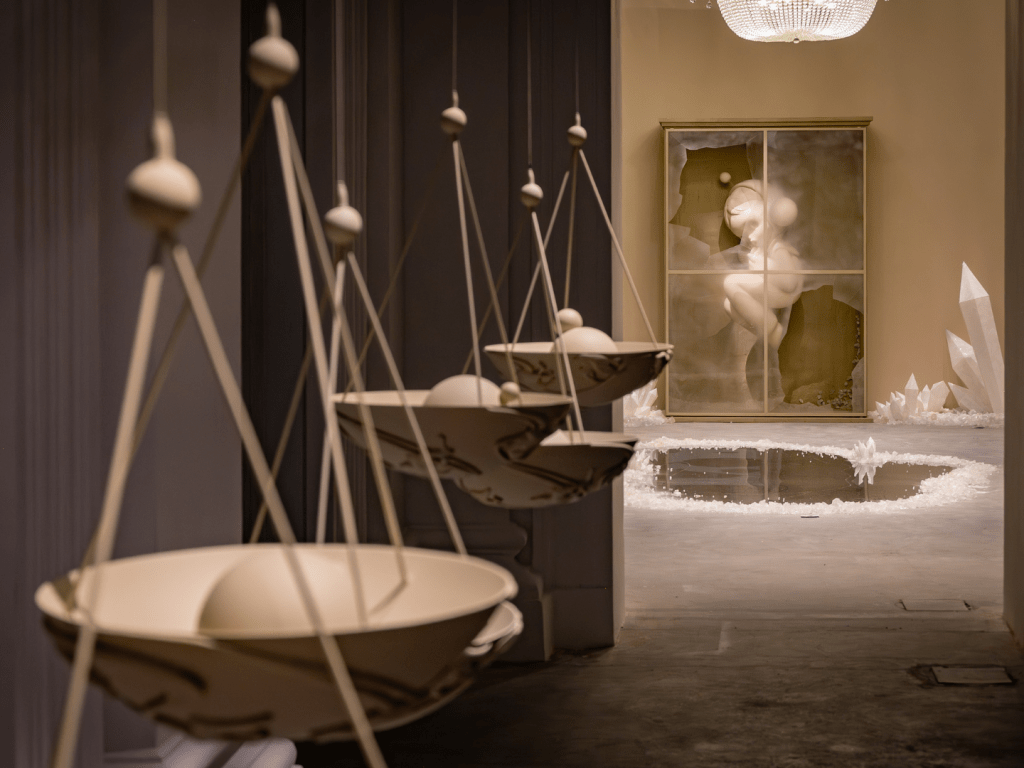
SKULLPANDA CAGE-UNCAGE marks the character’s first international showcase in Singapore, and it arrives not as a retail-driven display, but instead one designed to be experienced spatially. Presented by POP MART in collaboration with the National Museum of Singapore and the Singapore Tourism Board, the showcase represents a first-of-its-kind tripartite partnership that brings together collectible culture, contemporary museum programming, and destination storytelling within a single exhibition framework.
Into A Constructed World
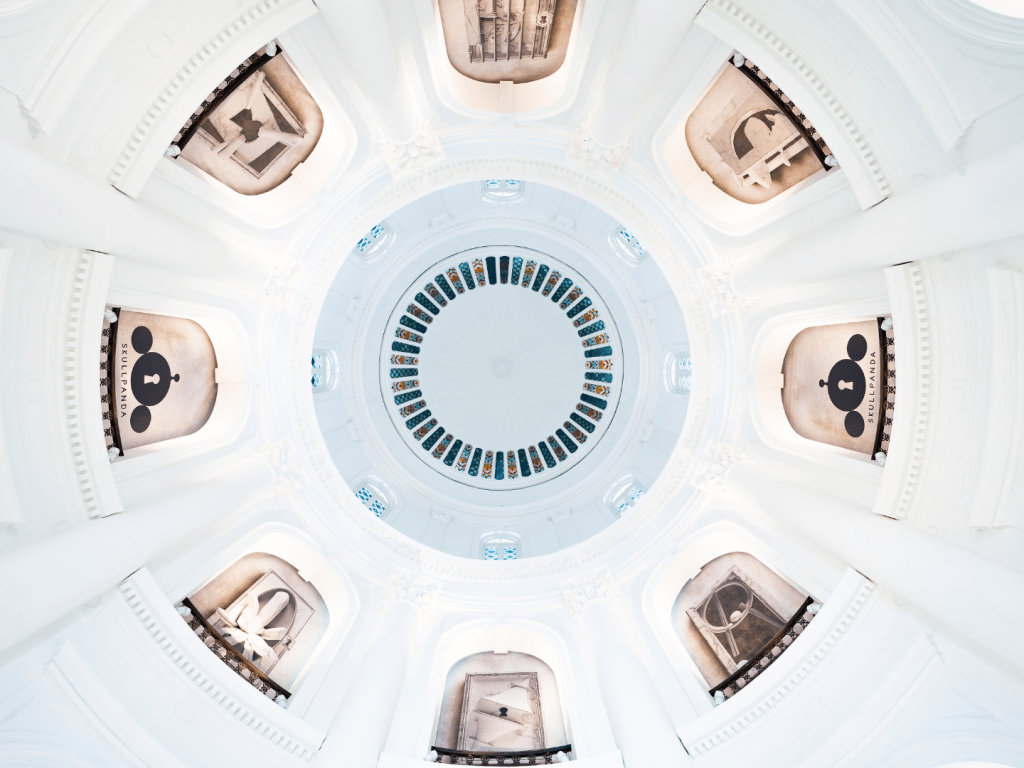
Rather than telling a linear story, the showcase unfolds as a sequence of installations connected by recurring visual motifs. The androgynous SKULLPANDA helmet, lace patterns set against hard metallic surfaces, and the repeated lock-and-key imagery appear throughout, creating a cohesive visual language that guides visitors intuitively from one zone to the next.
Once past the threshold of the Stamford Gallery, SKULLPANDA CAGE-UNCAGE reveals itself less as a sequence of standalone installations and more as a carefully paced journey. The exhibition does not rush its visitors, nor does it overwhelm them with instruction. Instead, it relies on atmosphere, repetition, subtle shifts in light and material. and intuitive responses to guide movement through the space.
The Key opening moments set the tone. The first encounter feels expansive and curious, inviting reflection rather than demanding comprehension. It’s an effective recalibration of expectation, especially for those who arrive assuming a character showcase will be playful or decorative. Here, the mood is quieter, more introspective, and surprisingly contemplative.
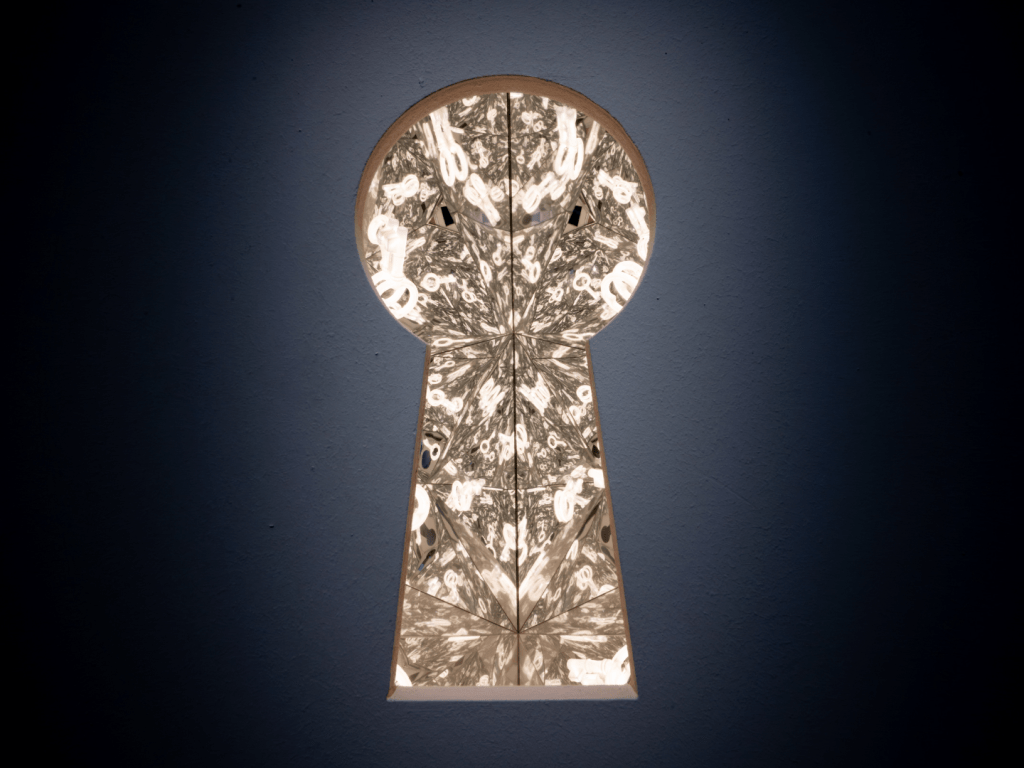
As the journey continues, the exhibition alternates between suggestion and interaction. Some spaces rely on light and shadow to create fleeting impressions that shift as visitors move. Others encourage touch, allowing meaning to change through physical engagement. The pacing is deliberate: moments of visual density give way to more meditative passages, preventing fatigue and encouraging attention.
Midway through, Rules, Time and Fortune subtly ask visitors to contemplate. Time becomes more visible. Elements that respond delicately to touch or motion introduce a sense of fragility, reminding visitors that balance is rarely fixed. These moments resonate particularly strongly, not because they are dramatic, but because they mirror experiences that feel familiar and unresolved.
Later sections reintroduce curiosity and play. Interactive elements reward Exploration without prescribing outcomes. Forms shift, symbols appear and disappear, and nothing settles into permanence. Visitors are encouraged to engage, disengage, and re-engage; an approach that mirrors how contemporary audiences naturally move through spaces.

At the heart of the exhibition lies a central chamber—The Room—that functions as an anchor point rather than a finale. It is here that the themes introduced earlier converge spatially. Reflection becomes literal. Perspective multiplies. Visitors see themselves not as observers outside the experience, but as participants within it. Many pause longer than expected, drawn less by spectacle than by the opportunity to sit with the moment.
The exhibition concludes on a quieter, culturally grounded note. A Singapore-exclusive installation introduces a local reference to the city-state’s bird-singing history that feels personal rather than didactic, connecting SKULLPANDA’s universe with shared memory of its temporary home.
The Contemporary Way In
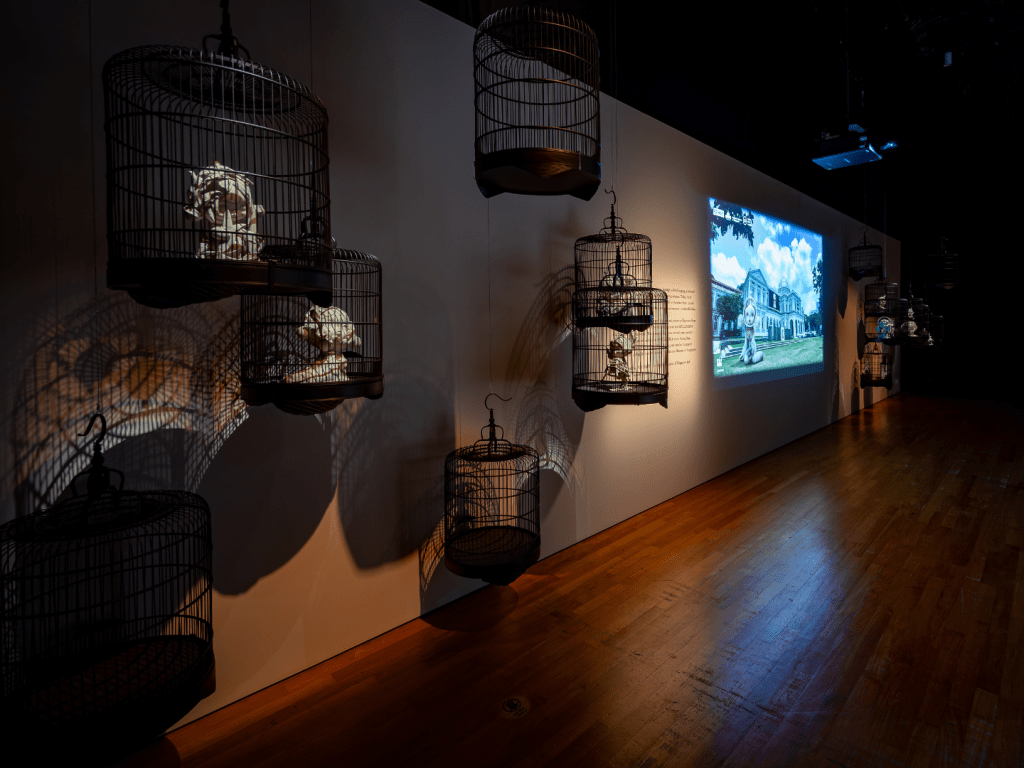
What makes SKULLPANDA CAGE-UNCAGE effective is not any single installation, but the way the experience is constructed as a whole. What the exhibition ultimately offers is not a definitive reading, but an entry point. For some visitors, that entry point is a familiar character reframed through art and space. For others, it is the museum itself, experienced in a way that feels less formal and more navigable than expected.
The strength of the exhibition lies in how it balances intention with openness. It acknowledges contemporary audiences without flattening the experience, allowing visitors to move at their own pace, engage as deeply as they wish, and leave with impressions rather than conclusions.
As a collaboration between POP MART, the National Museum of Singapore, and the Singapore Tourism Board, the showcase reflects a broader shift in how cultural institutions are meeting people where they are not by simplifying content, but by rethinking how it is encountered. The exhibition does not insist that visitors understand everything they see. It simply invites them to stay a little longer, look a little closer, and perhaps return. For a museum visit, that may be the most meaningful outcome of all.
SKULLPANDA CAGE-UNCAGE Singapore
Venue: National Museum of Singapore
Dates: 12 December 2025 – 22 February 2026
Tickets: National Museum of Singapore or Trip.com
Exclusive gifts available for the first 4,500 visitors, while stocks last.

At Nacre, we are interested in how people move through culture, not just what they consume. Exhibitions like SKULLPANDA CAGE-UNCAGE sit at an intersection of design, popular imagery, and institutional space that many readers encounter intuitively but rarely see examined.
From the table to the world beyond, Nacre brings you dining, travel, and lifestyle experiences worth savouring. Explore more with us on Instagram (@nacre.asia).
 Nacre.
Leave a comment