A first-timer’s experience of how Rosewood’s most unexpected Southeast Asian address became its most convincing argument for Sense of Place.
Nacre Impressions:
Rosewood Phnom Penh
Mood
Warm, quietly confident, and deeply of its city. The Bois Cachemire scent and the confluence in the window become, over four nights, the signals of somewhere that already feels like yours.
Spaces
Residentially-styled accommodations that face the Tonle Sap with a pool the colour of the sky. Cambodian art, wellness and a rooftop bar that owns the golden hour complete the picture.
People
Anticipatory without being intrusive. Every corridor encounter acknowledged, every request—however small—treated as obvious.
Taste
A dining programme built on its address and sustainability. Cuisines spanning contemporary grill, Japanese, Chinese, and French Cambodian make a strong case.
Verdict
Ultra-luxury and genuine Sense of Place are not competing ambitions here. Rosewood Phnom Penh proves it. My first Rosewood; It will not be my last.
Best For
First-time visitors to Phnom Penh, luxury travellers seeking an accessible introduction to Rosewood, and guests who believe a hotel should give something back to the community.
There is a hotel in Phnom Penh that has no business being this good—and yet it is impossible to imagine the city without it.
The capital city of Cambodia is an underrated destination in Southeast Asia, oftentimes overshadowed by Siem Reap to the north, where Angkor Wat endures as the country’s most recognisable landmark. But Phnom Penh is rapidly developing and seeking to position itself as a destination of its own, yet it doesn’t assert itself the way Bangkok, Jakarta or Kuala Lumpur does. With the opening of Techo International Airport (KTI) just outside the city, access has never been easier. I visited in early February for the second Phnom Penh Cocktail Festival at Sora.
At the arrivals hall, a staff member waited with an iPad bearing the Rosewood logo. Arriving from the airport in the morning, the road into the city centre is wide and sleepy—tuk-tuks weaving between newer sedans, street vendors arranging fruit in the hazy light, the flatness of the land making a statement of its riverside geography. A WiFi modem in the car proved indispensable as my Cambodian eSIM had decided not to cooperate for the entirety of the trip, and the Rosewood’s connection became a lifeline I hadn’t anticipated needing, that, and the bottle of Acqua Panna handed to me as I boarded.
The Dragon on the Mekong
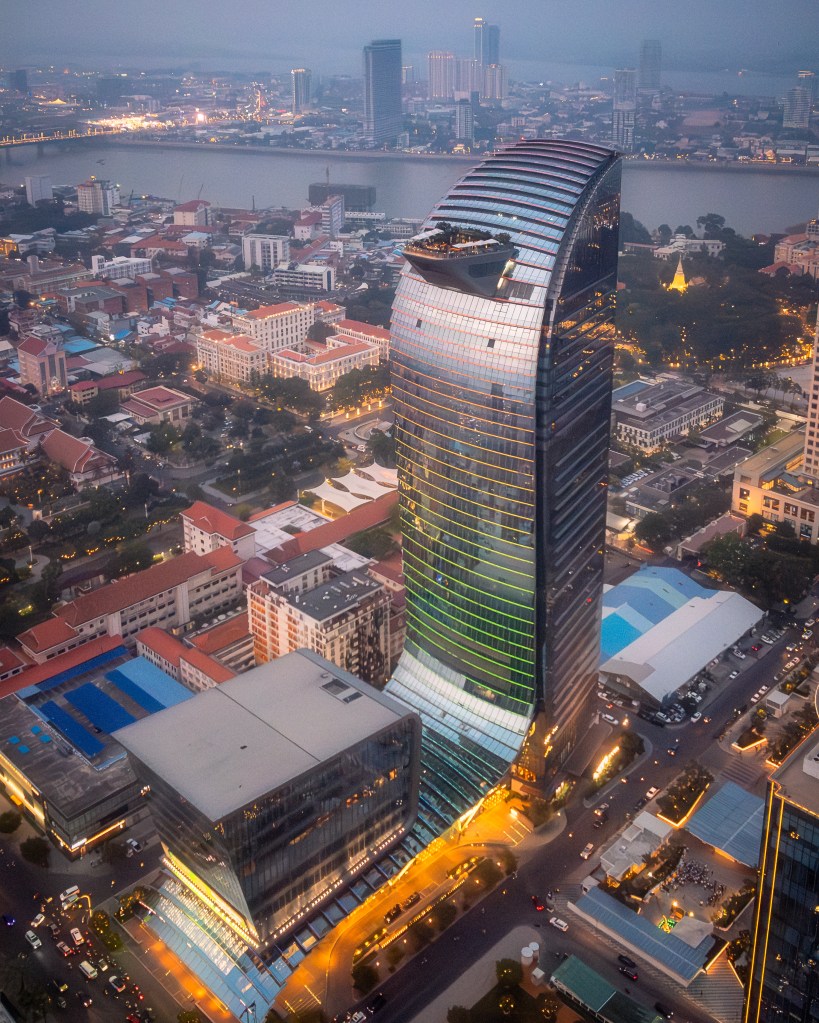
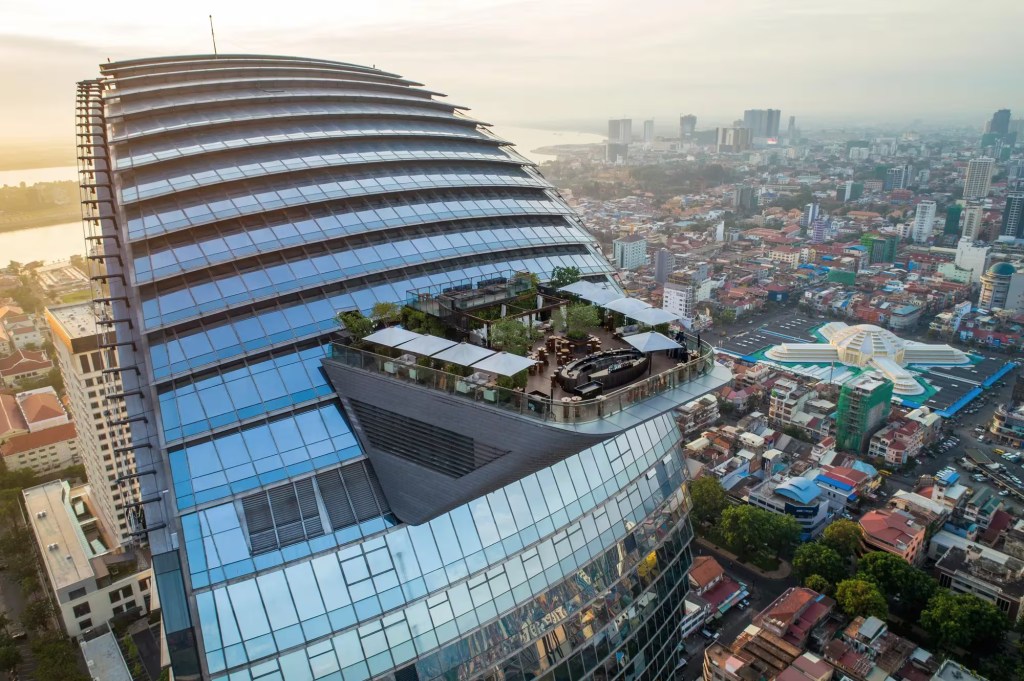
Rosewood Phnom Penh is the crown jewel of Vattanac Capital Tower, rising over the intersection of Monivong and Norodom with the kind of architectural confidence rare in Southeast Asia’s mid-tier capitals. Its ascending curves and gilded crown were conceived to evoke a dragon watching over the Tonle Sap-Mekong confluence—something ancient in a modern silhouette, a creature that chose this place for a reason.
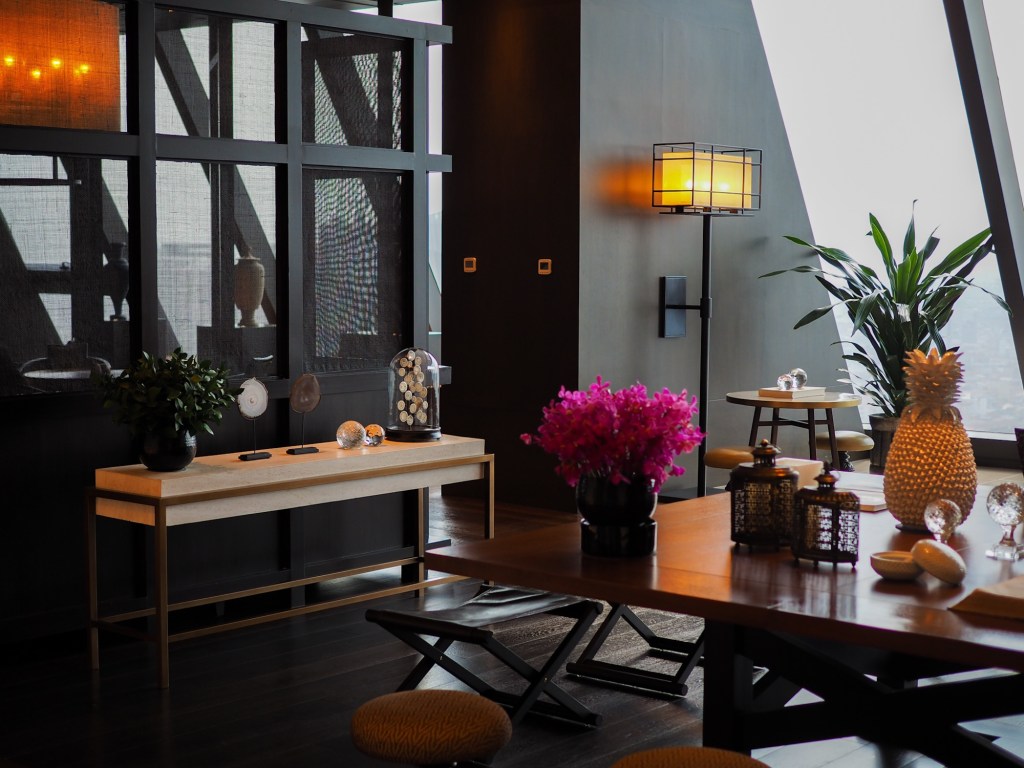
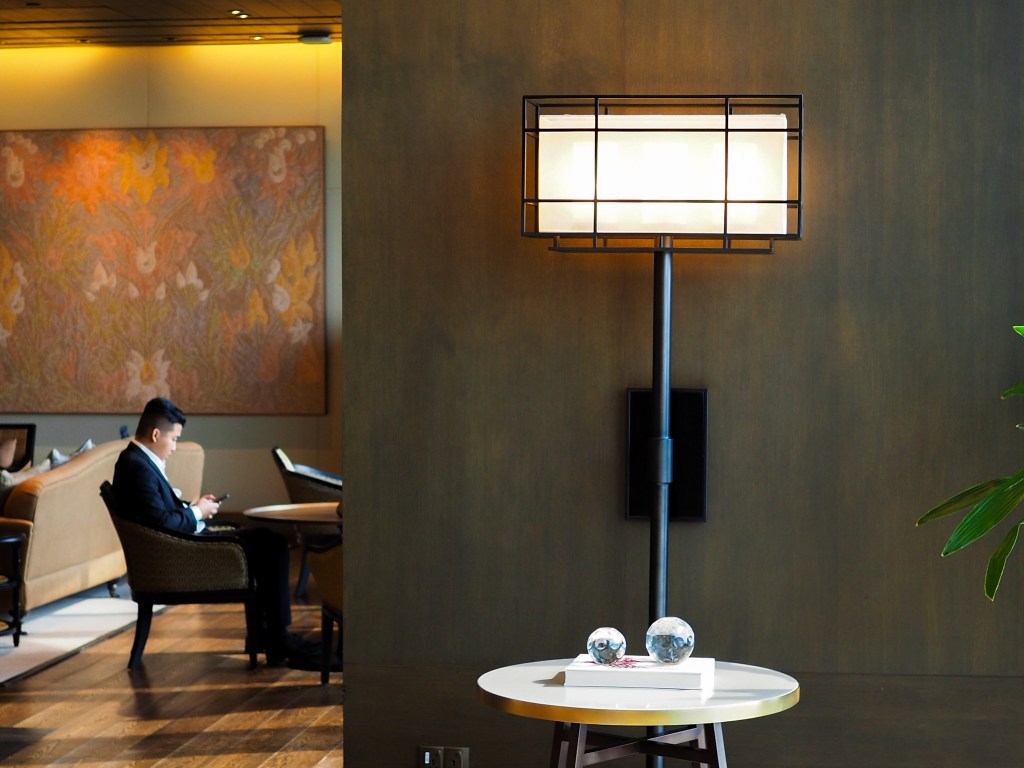
The ground floor lobby decked out with woodwork, sculpture, and considered negative space created a threshold that isolated me from the streets just beyond the glass, where the city was audible but no longer present. The elevator ascends to the 35th floor reception, where angled window walls open the lobby to the city in a way that feels architectural. Light and shadow play against the backlit skyline, creating silhouettes that shift as you move through the space. Cambodian art lines the walls alongside curated reading material its living room-inspired design.
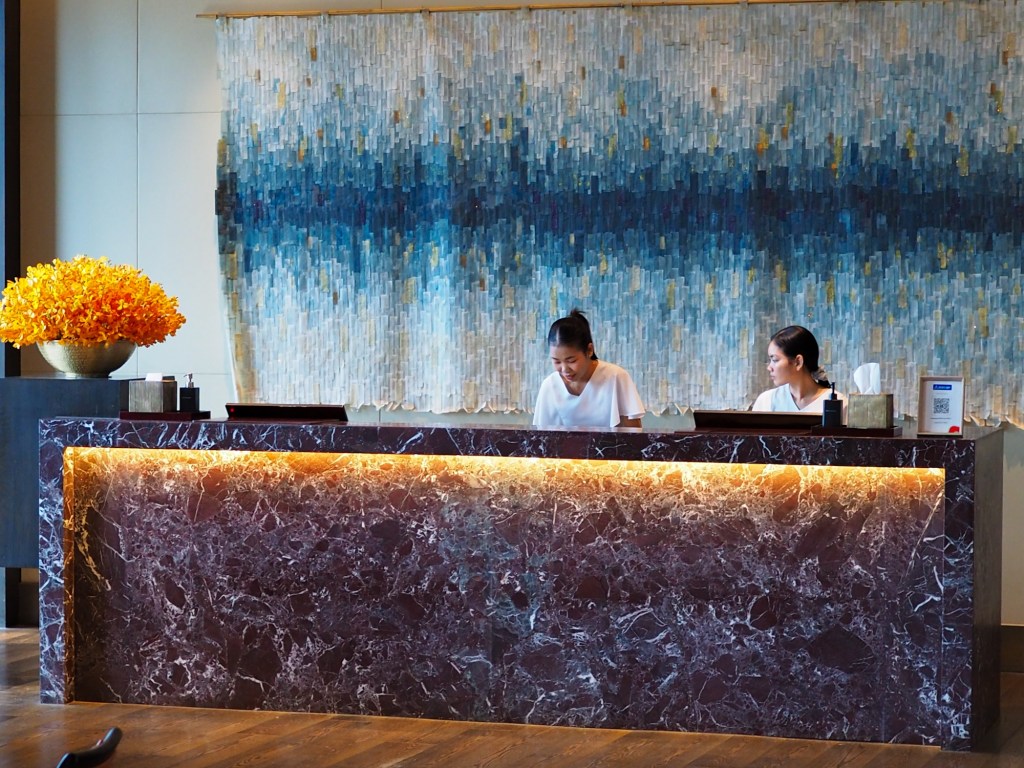
Check-in was swift and standing, and the process as quick enough that a welcome drink or towel was unnecessary. My room was ready on arrival. The keycard, when it came, was a small square of wood—the same tactile format I had encountered at The Qing Suites in Penang—distinctive enough to remember. Rosewood’s signature Bois Cachemire scent hung in the air and would become, over the next four days, the feeling of having returned.
Residential views of Phnom Penh
Tapping my keycard on the elevator scanner automatically reveals my floor and guest-exclusive areas. The doors opened on the 28th to a sultry, elegant hallway fitted with sculptures and mirrors—and a staff member who caught my eye, smiled, and offered a small welcoming nod. It was the first of many such moments. At Rosewood Phnom Penh, no corridor encounter goes unacknowledged.
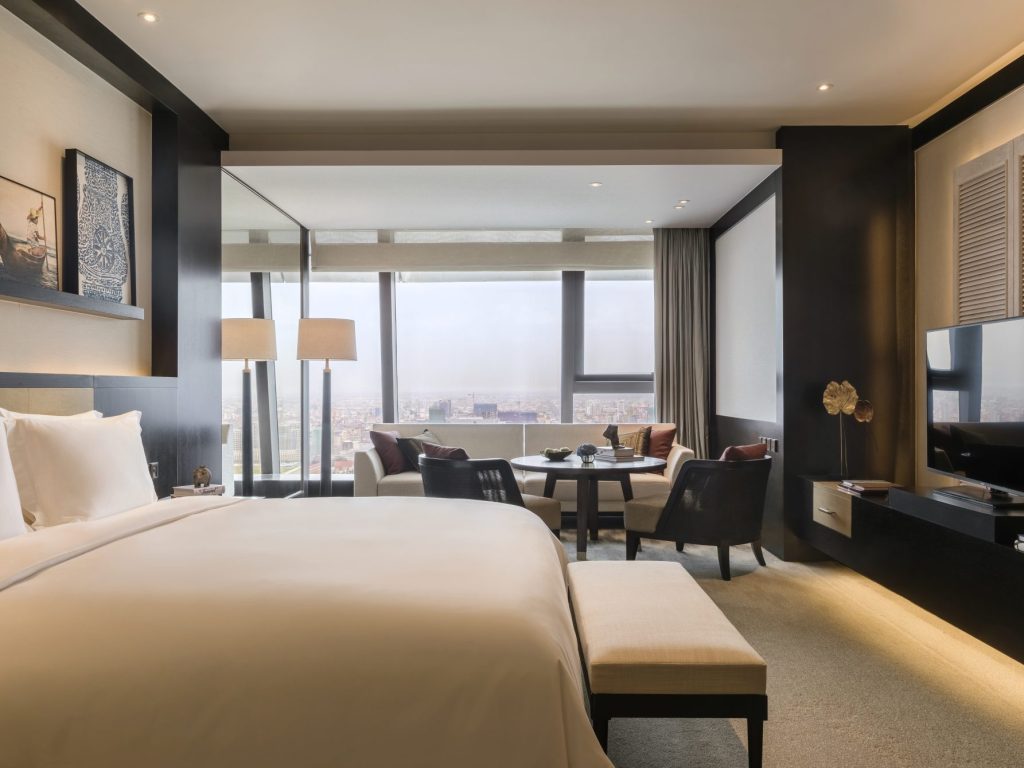
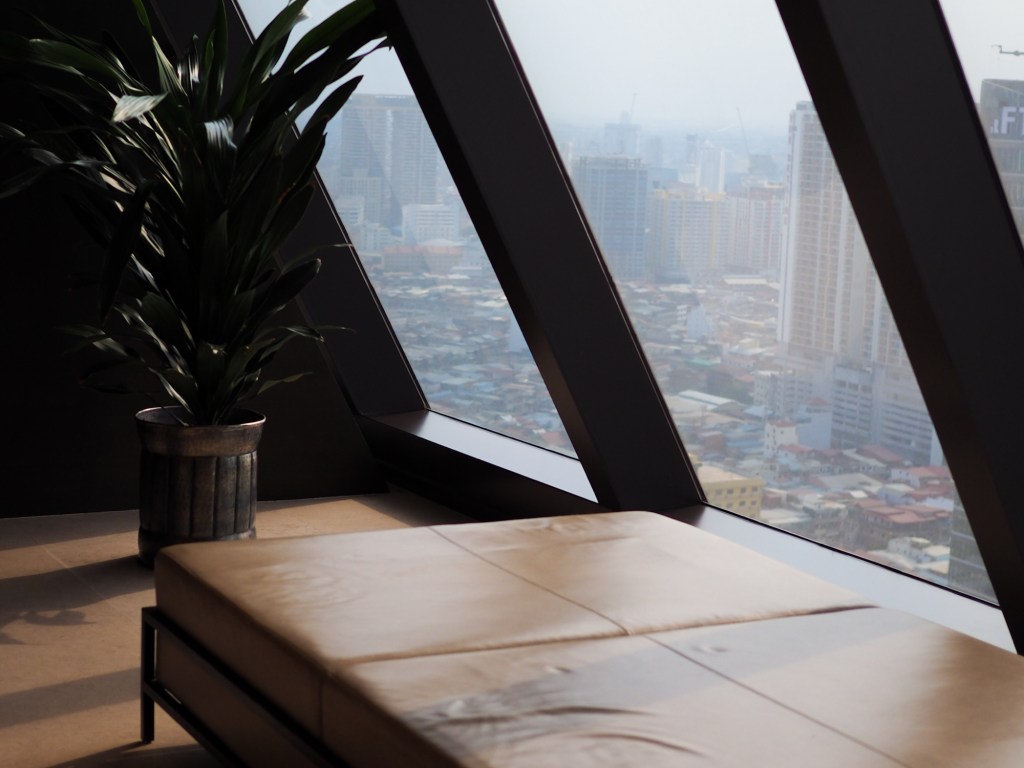
My Premier River Room (Number 2817) is 50 square metres of residential intention, and it presents itself differently depending on the hour. In the morning, warm amber light comes off the river and fills the space through floor-to-ceiling windows. By afternoon, the marble surfaces reassert themselves and the palette cools. By evening, with the sheers drawn and the blackout shades still raised, the twinkling city lights come in—the room neither fully sealed nor fully open, held in a particular kind of suspended intimacy that I came to look forward to each night. Its elevation makes for the perfect vantage point to take in Phnom Penh and its landscape.
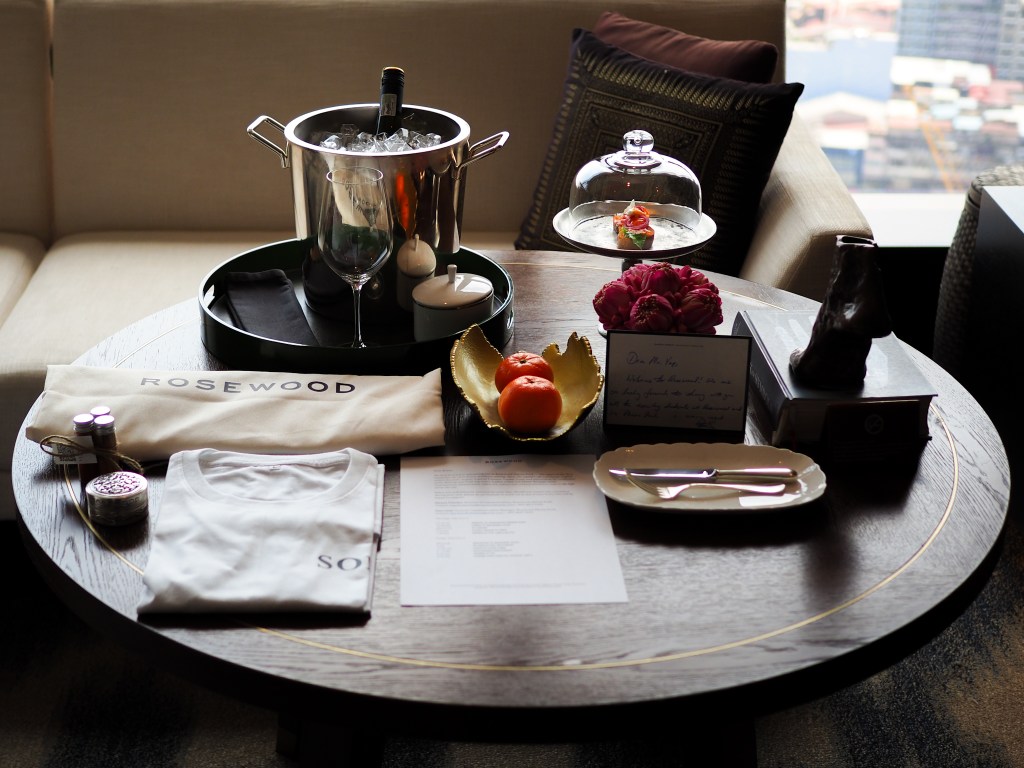
The welcome amenities that greeted me on the table do heavy work: a Rosewood pewter tin with a wax candle, a bottle of white wine, a smoked salmon canapé, cashews, a handwritten note, and—most tellingly—a small bundle of Cambodian chilli, turmeric, and Kampot pepper. The words Sense of Place really come to mind.
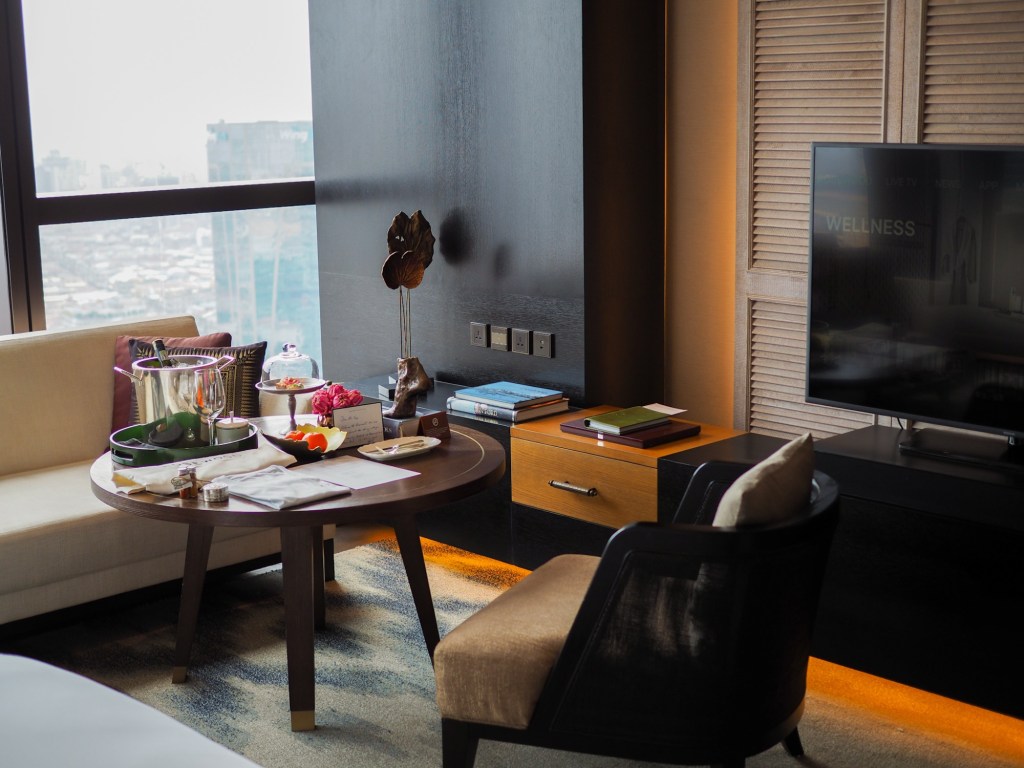
The bed is dressed in 600-thread-count Frette linens and pillows firm enough to support my neck—after fun-fueled evenings at Sora, this became a sanctuary of refuge. The long beige couch spans almost the full width of the room. On a free afternoon I spent a good hour on it doing nothing more purposeful than daydreaming and flipping through The World of Rosewood.
The minibar held a curated selection of travel-sized spirits I was tempted to purchase as souvenirs; on the first turndown, the box was placed on the countertop as a quiet introduction. When I didn’t engage with it, it didn’t reappear—the hospitality here learns from guest behaviour. Turndown itself became one of the stay’s quiet pleasures: a nightcap left on the table—chocolate buttons one evening, nuts and dried fruit on another—wayward cables tidied, stray clothing folded, and everything as it was before my mess. A steaming cup of TWG chamomile in the evenings after a warm soak, gazing out at the nightscape became a nightly habit I hadn’t planned for.
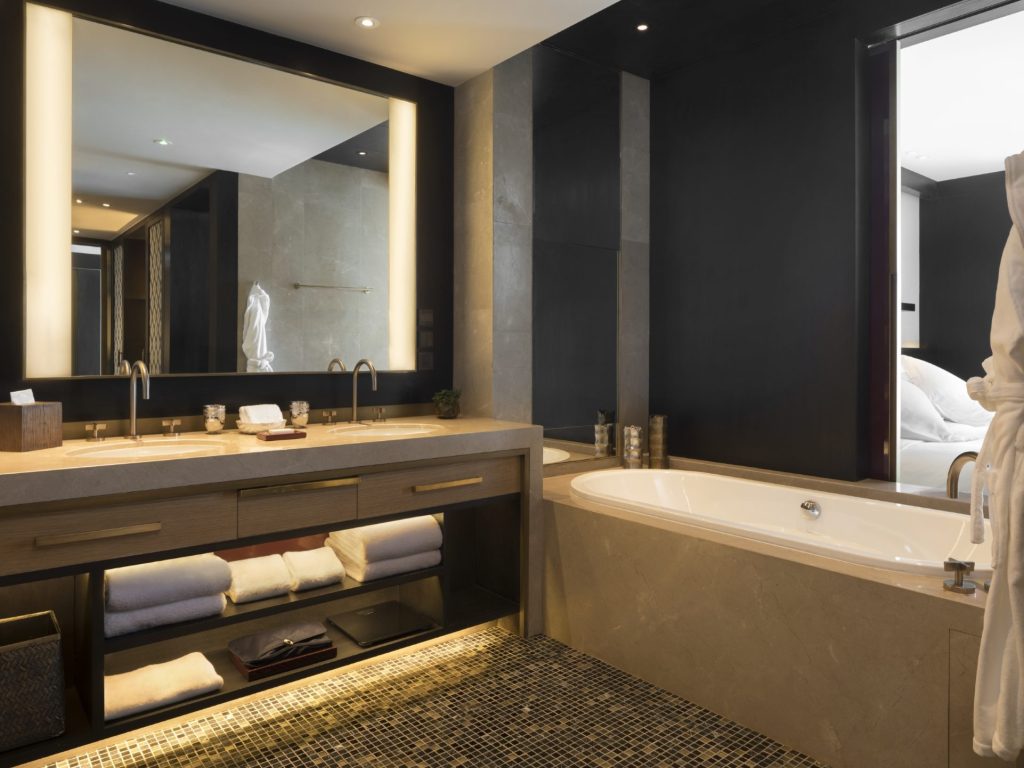
The bathroom claims more than a third of the room’s footprint. Double vanity, bespoke Christophe Laudamiel amenities, a very welcome hairbrush, and a washlet concealed behind a full-length mirror door. The considered height of the shower room was as reinvigorating as the heavy rainfall shower itself. The bathtub was set within a solid block of marble, positioned against a sliding door that connects the bathroom directly to the river view. My room, even after four days, did not become ordinary.
Mornings at Brasserie Louis
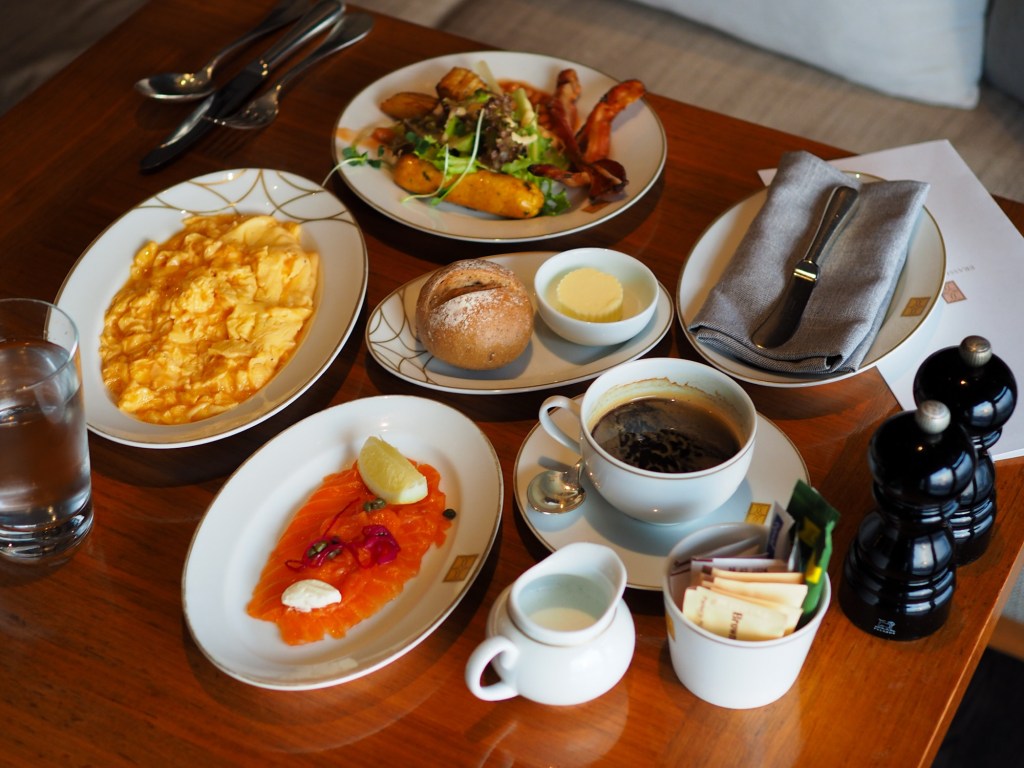
There are hotels where breakfast is an obligation and hotels where breakfast is the reason. At Brasserie Louis, it became the one appointment I commited myself to. With a schedule that regularly started at 11.30AM, I was up by 6AM each morning and seated early enough to catch the sun still low over the Mekong, throwing long light across the east-facing dining room that was still quiet.
The buffet is abundant without being indiscriminate: charcuterie, cured fish with crème fraîche, artisanal cheeses, freshly baked pastries alongside fine butter. For a traveller whose hotel breakfast experience has been shaped almost entirely by Malaysia’s halal hospitality landscape, the presence of a full pork programme was a reminder that I was away from home. The live egg station produced the best scrambled eggs I have encountered at any hotel breakfast—slightly runny, intensely creamy, barely holding together. When I asked for smaller portions of the à la carte dishes to try more of the menu, the kitchen obliged without hesitation.
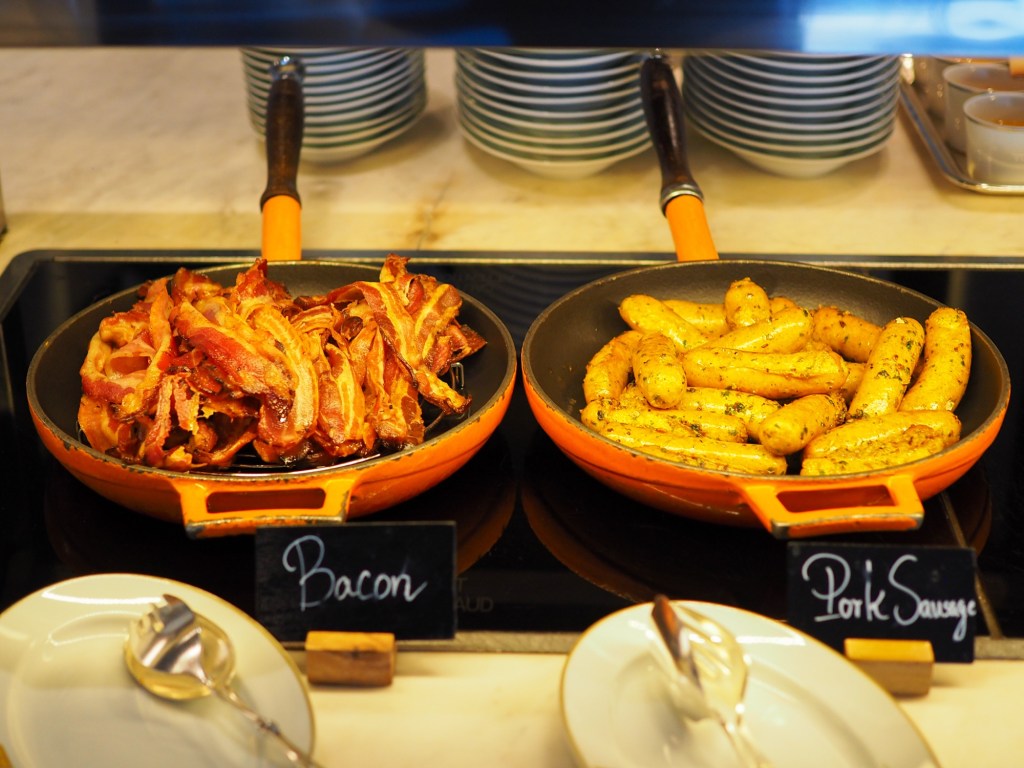
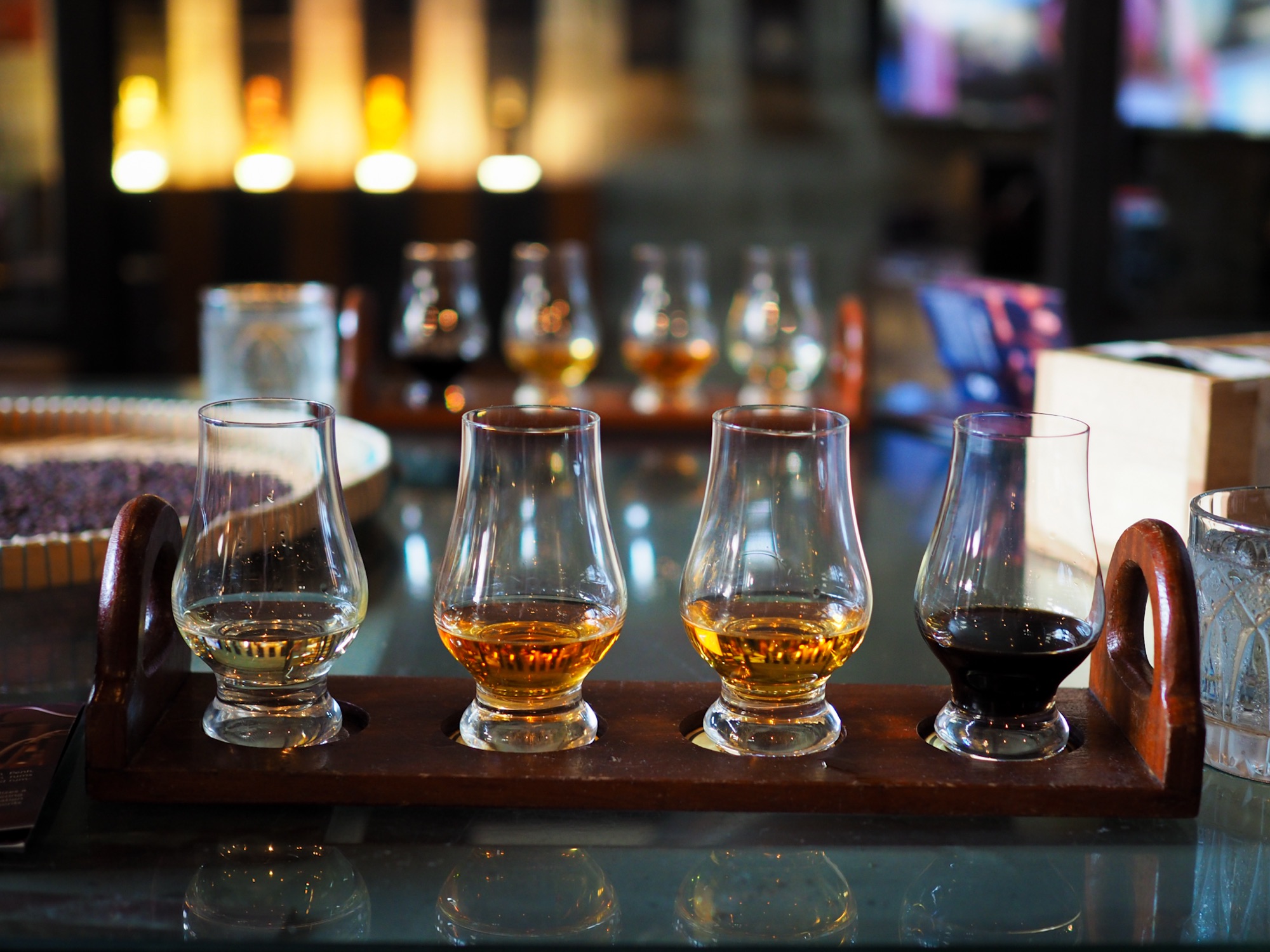
From the à la carte menu, the Kuy Teav Sach Kor—a Cambodian rice noodle soup with pork broth, sliced beef and fried garlic similar to Vietnamese Pho—was a comforting cure for the mild hangovers after nights of overly enthusiastic festival shenanigans. I followed it with a Morning Boost tea blend by La Plantation: turmeric, ginger petal and moringa, all locally sourced.
Dining at Rosewood Phnom Penh
Rosewood Phnom Penh houses multiple distinct dining and bar venues across its upper floors: Brasserie Louis for all-day dining and the property’s acclaimed Sunday Brunch; Zhan Liang, a pan-Chinese restaurant spanning Cantonese, Sichuanese and Northern registers in the basement of the adjacent Vattanac Capital Mall; Cuts, a contemporary steakhouse on Level 38 with a kitchen philosophy built around whole-animal butchery and the hotel’s own hydroponic garden; Iza, a Japanese izakaya on Level 37; and Sora, the rooftop cocktail bar on Level 37, ranked 65th on Asia’s 50 Best Bars 2025 and the first Cambodian bar on the list.
For a full account of dining at Rosewood Phnom Penh across all five venues, read our dedicated dining Experience here.
SEVEN — Art on the 35th Floor
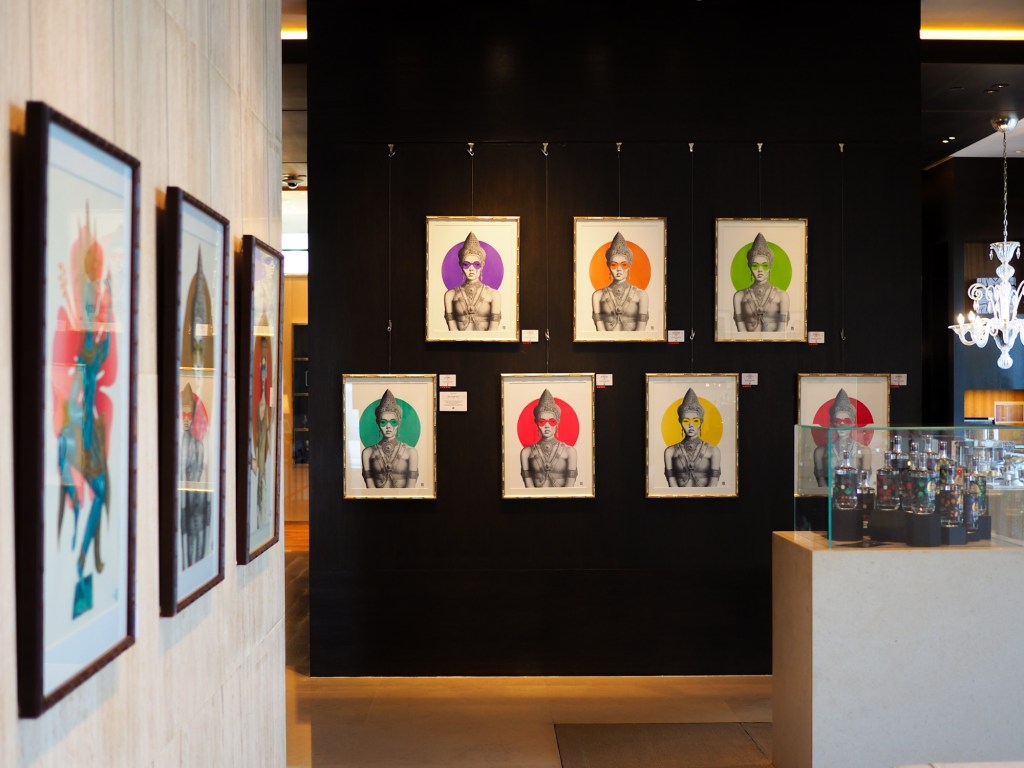
From the sculptures in the ground floor lobby to the Cambodian artefacts lining the reception corridor, the hotel treats cultural curation as an extension of its Sense of Place philosophy rather than an afterthought. A dedicated art gallery lives on Level 35, steps from the reception—close enough that a guest passing through on the way to breakfast might pause, then find themselves still standing there twenty minutes later.
During my stay it housed SEVEN, a landmark exhibition conceived jointly by Rosewood Phnom Penh, Tribe Art Gallery, and Seekers Spirits, marking seven years of creative collaboration between three partners who have helped shape Cambodia’s contemporary cultural landscape. Seven artists, seven original works each, the conceptual thread drawn from the Seven Factors of Awakening in Theravada Buddhism.
The City, at Your Own Pace
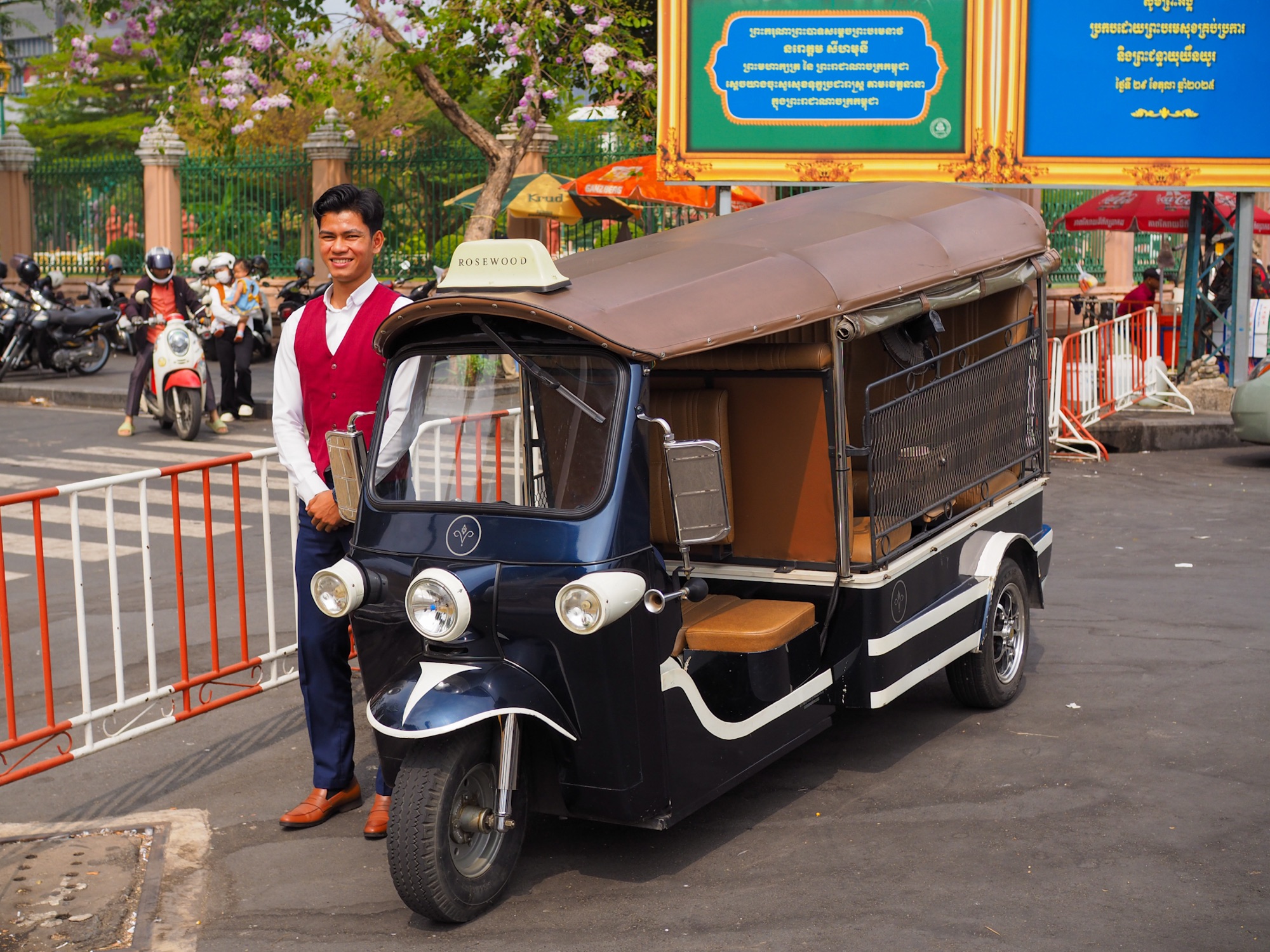
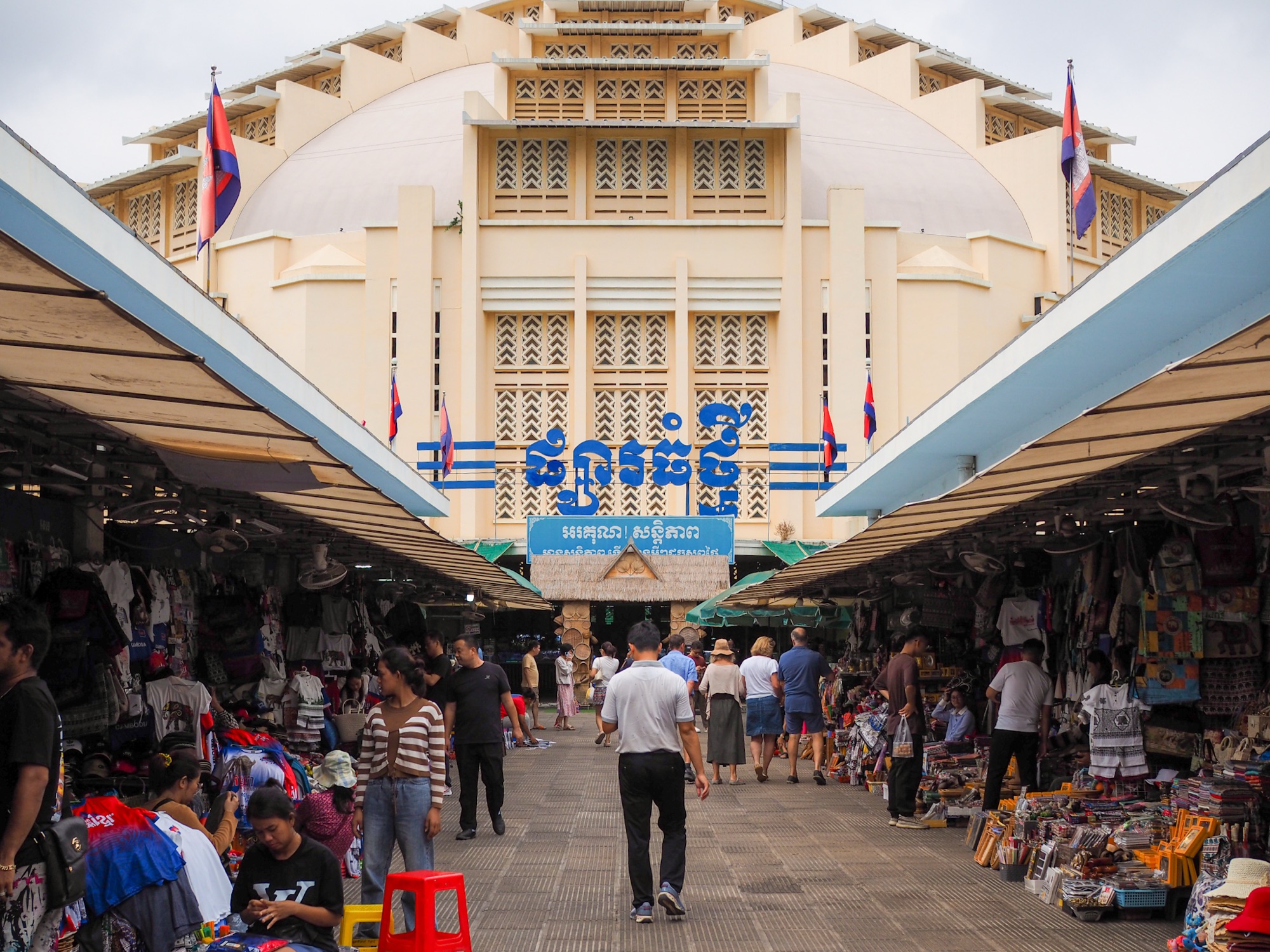
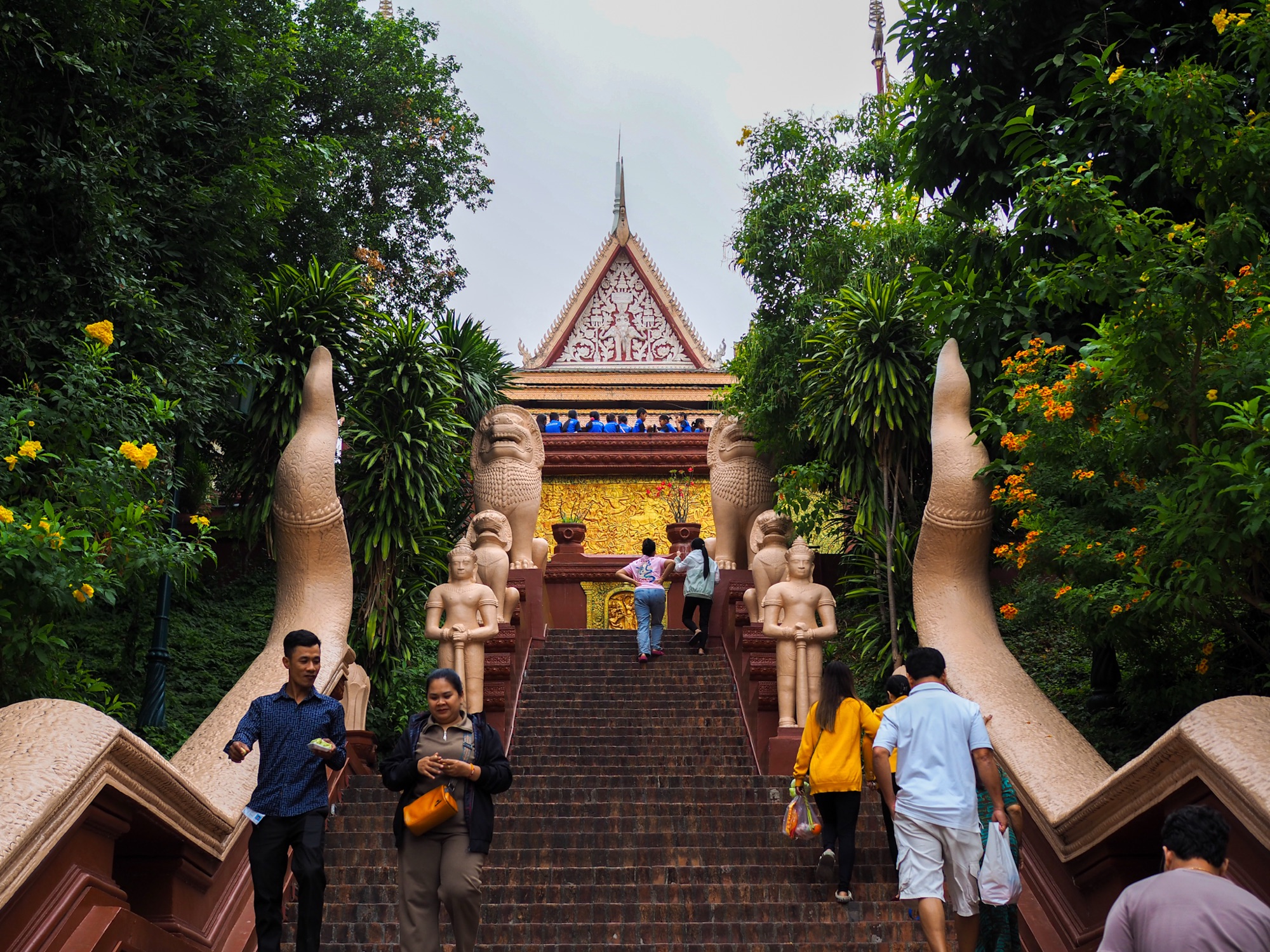
Outside of Vattanac Capital Tower, Rosewood Phnom Penh offers its own Remork tuk-tuk for guest use, and it is immediately, unmistakably the most luxurious tuk-tuk in the city. Where most are weathered rickshaws, the Rosewood’s arrives in a luscious shade of tan, fitted with mounted fans, stocked with chilled Acqua Panna, and driven by what may be the most handsomely uniformed driver in Cambodia. In a sea of vehicles outside Wat Phnom, Central Market or the Royal Palace, ours was never difficult to find—which can be interpreted as testament to the vehicle or a comment on everything else around it.
Getting around Phnom Penh independently is easy—Grab tuk-tuks are cheap, plentiful, and the streets are remarkably clean. But returning to the hotel after the city’s dry season heat and stepping through the ground floor lobby’s woodwork and sculpture into the familiar Bois Cachemire was something I came to appreciate more with each return.
Sense — Wellness on the 33rd Floor
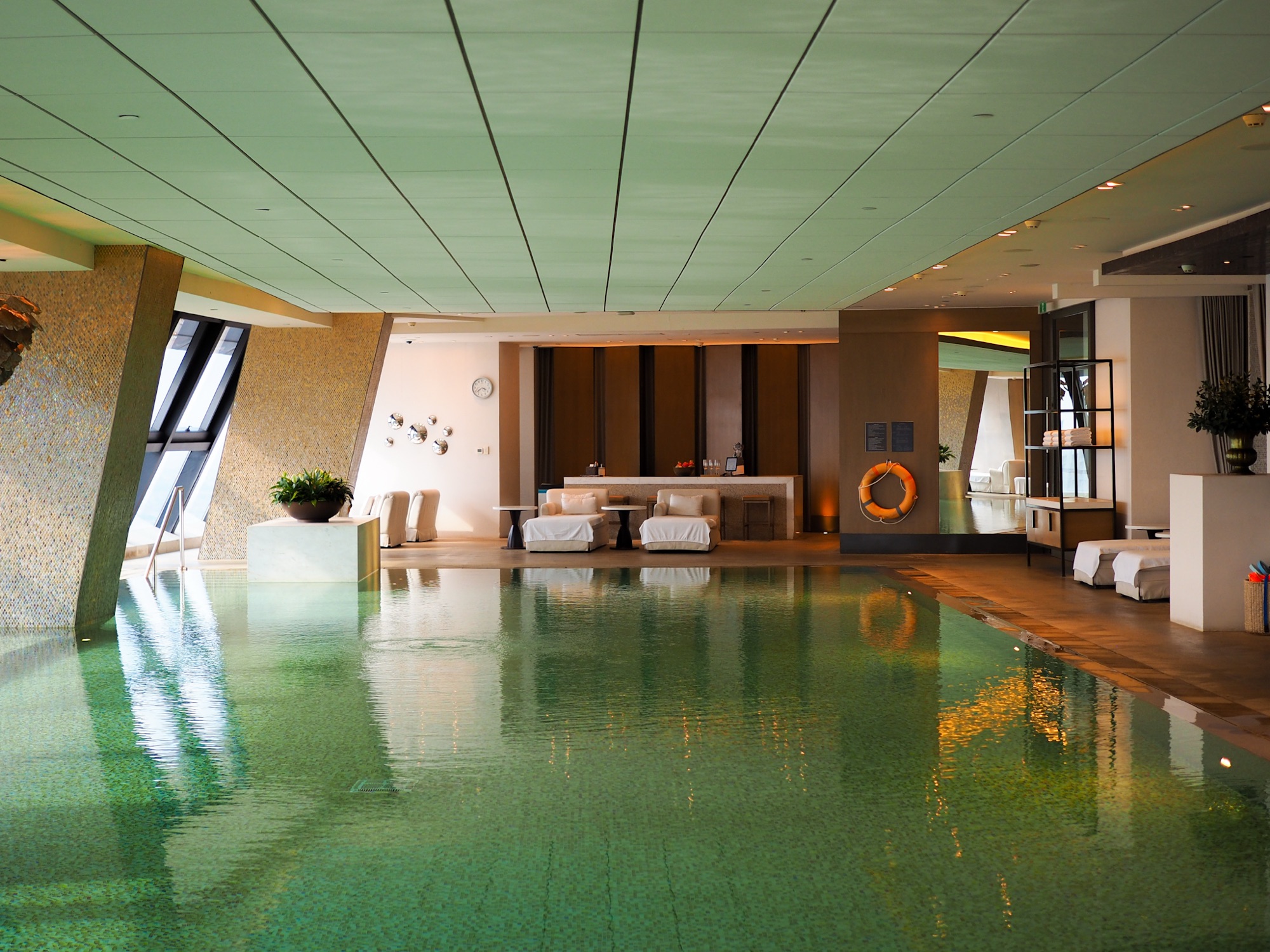
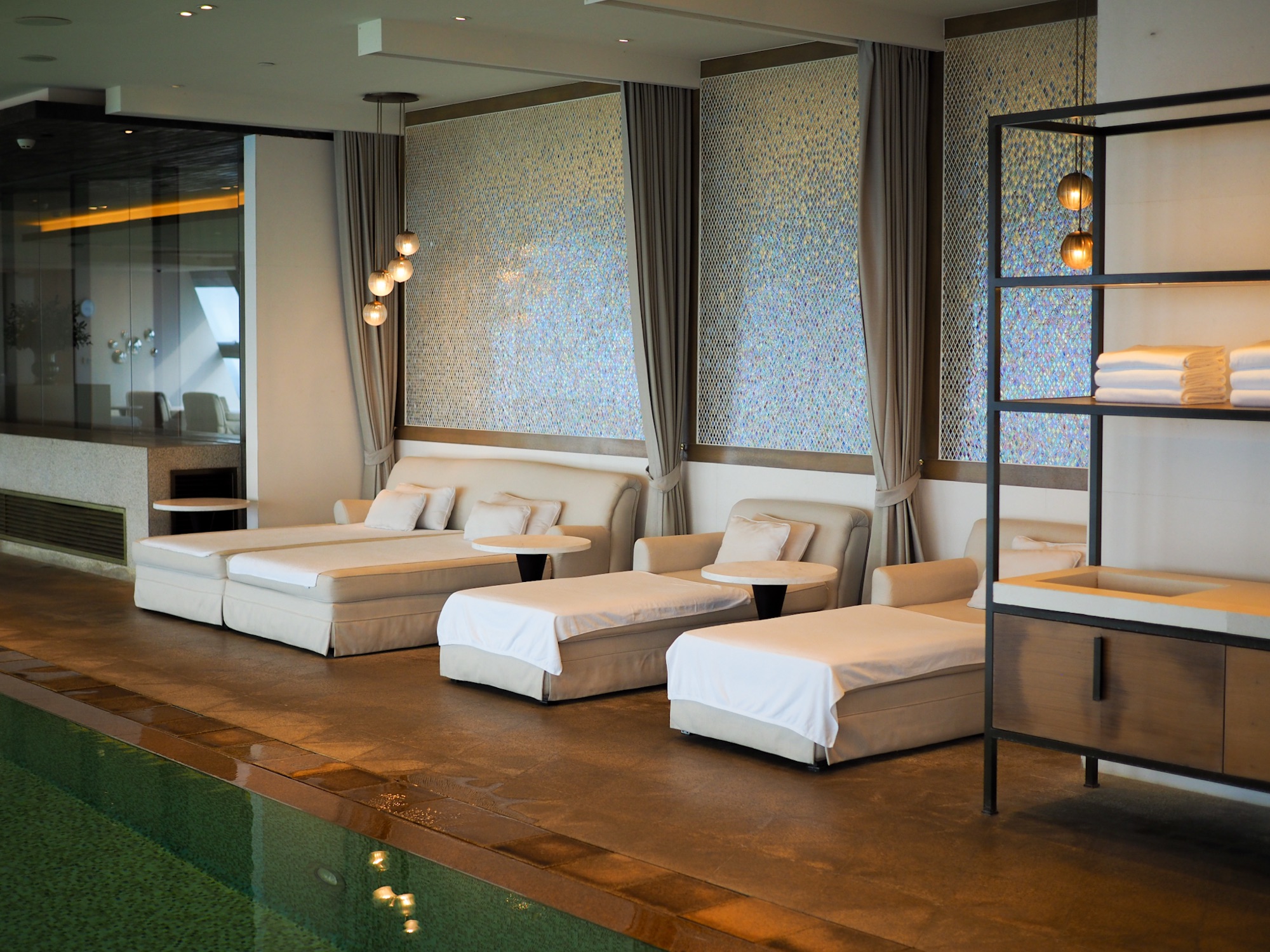
The wellness floor sits on Level 33 and operates on a tempo entirely its own. The 22-metre pool is among the most picturesque hotel pools in the region—its teal surface set against earthy tones and floor-to-ceiling city views, completely indoors yet entirely open in feeling. The pool beds were supremely comfortable, and an attendant appeared shortly after I settled with a cool towel and cold water. It is service nuances like this that signal ultra-luxury hospitality more convincingly than any design detail could. Light wood, marble and stone textures dominate the wellness spaces throughout the sense of this place was definitely calm.
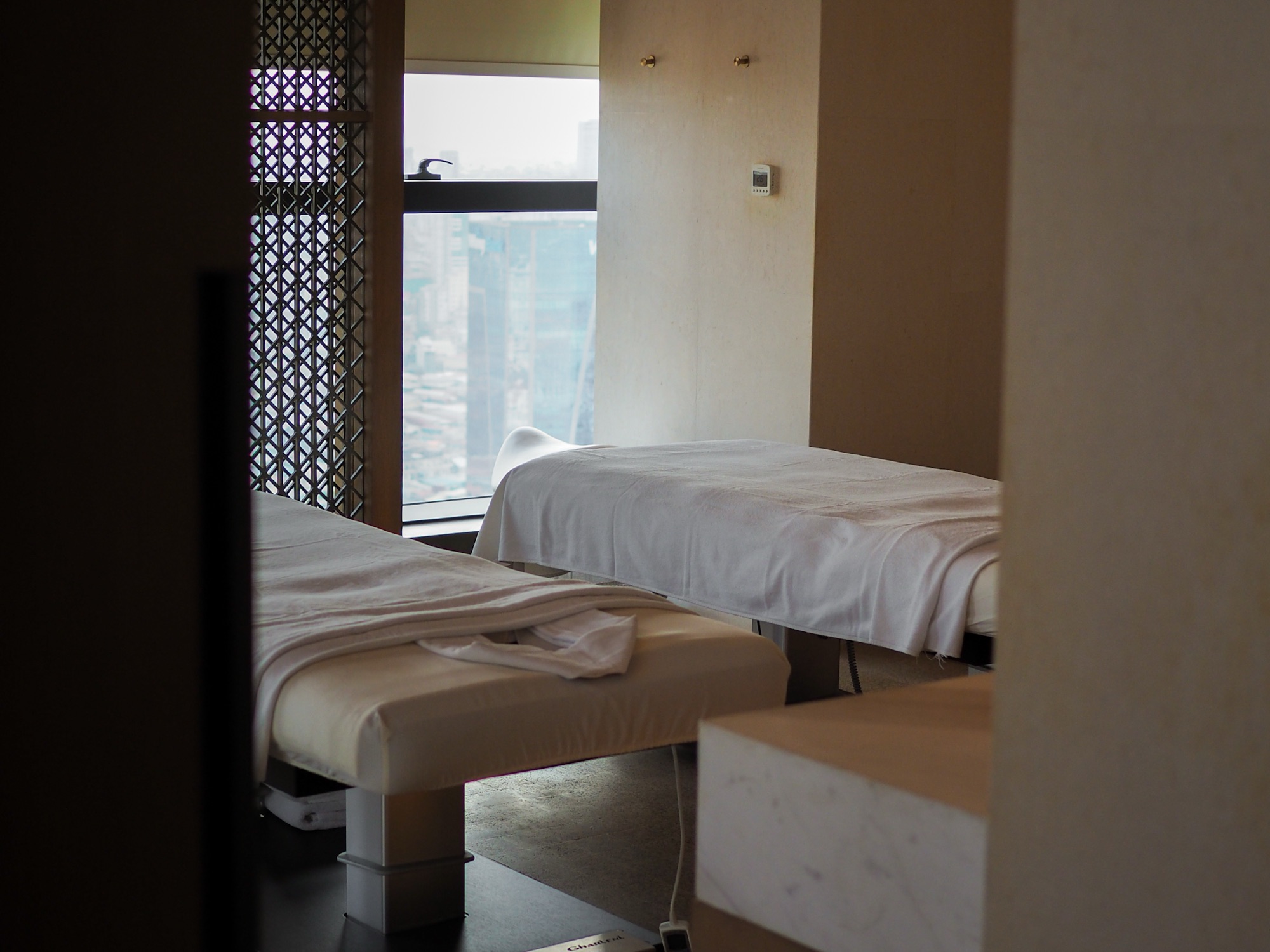
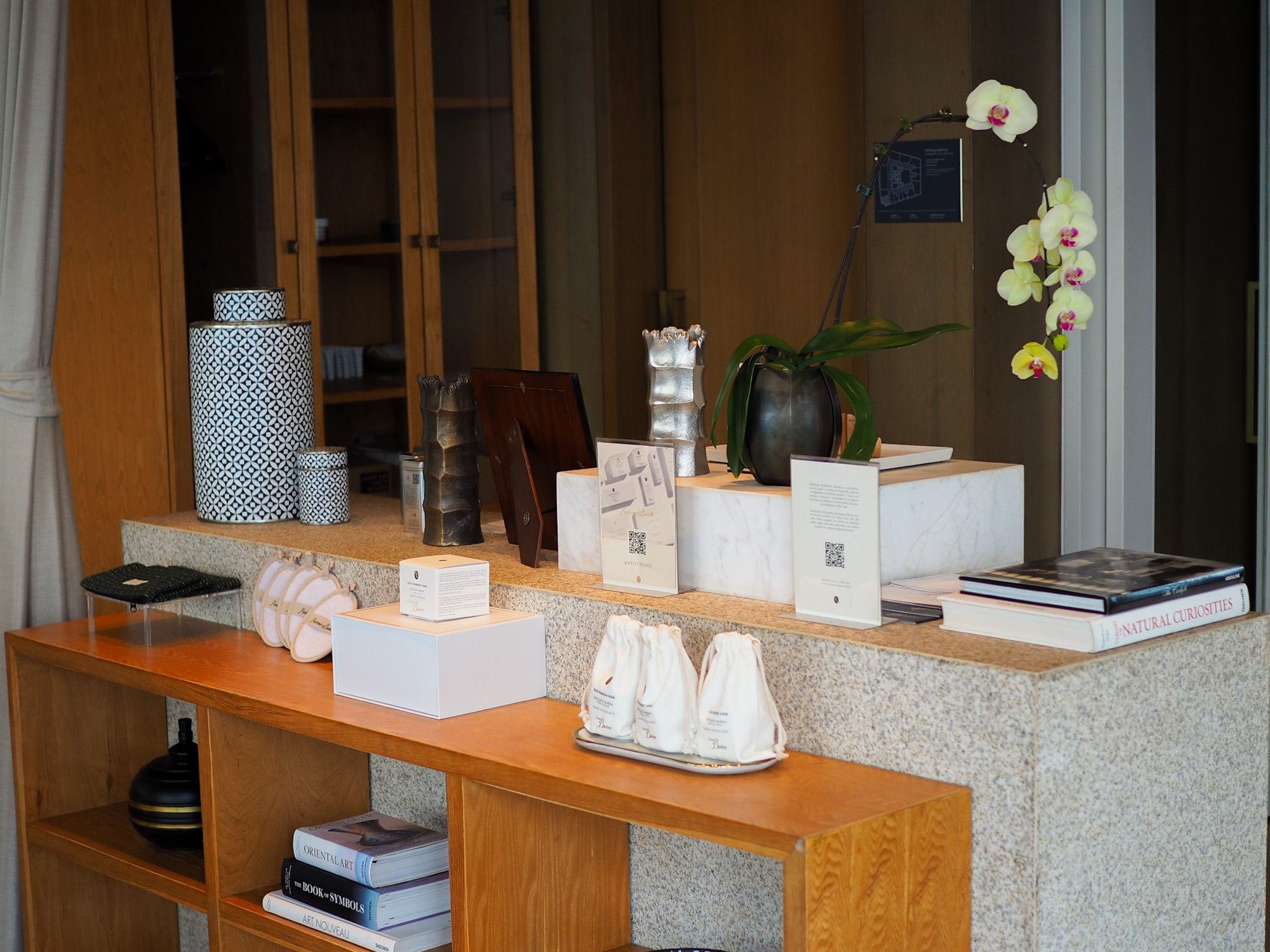
Sense, A Rosewood Spa draws from Cambodia’s traditional healing heritage through Khmer healing’s Lost Remedies — naturopathic protocols using indigenous botanicals specific to this address. The 60-minute Phnom Penh Signature Massage uses Khmer spice oils of turmeric, lemongrass and Ponlei: fragrant, warming, intoxicating in a way that made the deep tissue and Khmer-Swedish technique feel almost effortless. I nearly fell asleep—which is either the highest compliment or an irony I am still working out. Treatment rooms feature dynamic lighting and blackout shades that reveal the city held in reserve. Each room comes with a private shower and changing area fitted with the same luxurious amenities as the guestrooms.
The Weight of Silent Sustainability
Rosewood Phnom Penh holds two Michelin Keys and is the first hotel in Cambodia—and within the Rosewood portfolio—to receive the Sustainable Restaurant Association’s Food Made Good three-star standard. But the more compelling credential is one guests are never asked to notice. The hotel’s Silent Sustainability philosophy was articulated by Jonas Vittur with characteristic precision: if a guest has to change their behaviour, we have already failed.
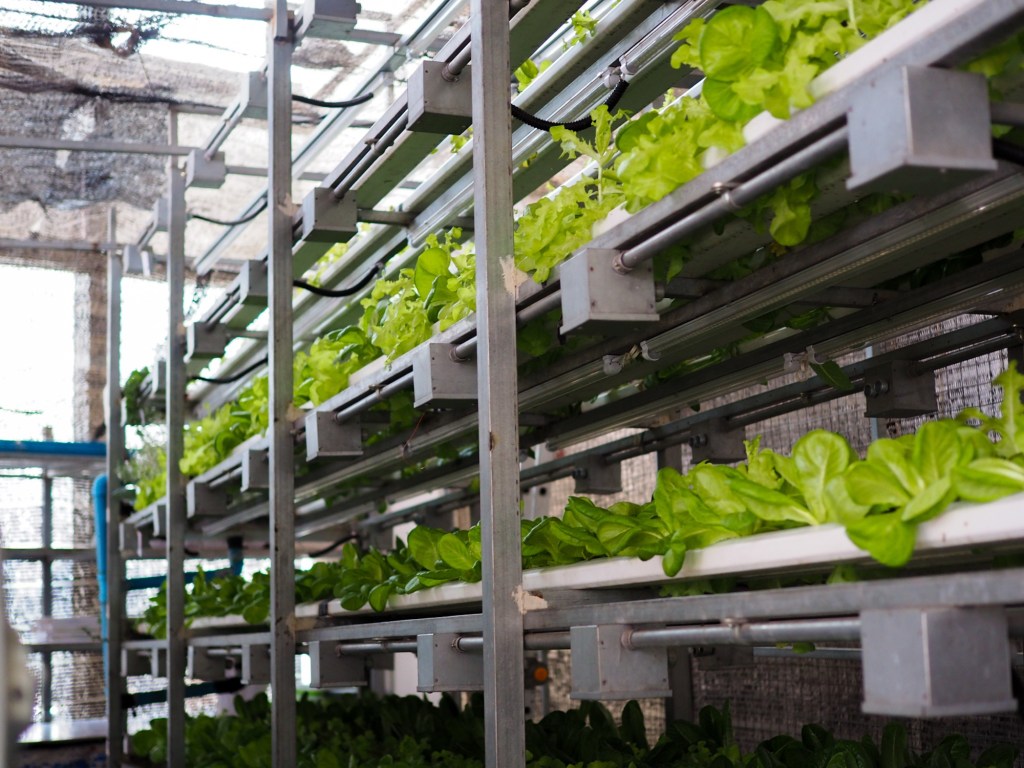
Under the stewardship of Seyha In, the hotel’s Impact and Sustainability Manager, a purpose-built hydroponic garden supplies most of the hotel’s leafy greens and garnishes. Buffets are designed with smaller plates and live stations to minimise waste; leftover proteins are repurposed into stocks and bases. A house vermouth at Sora is produced in collaboration with local distillers using Rosewood leftovers—kitchen offcuts transformed into something exclusive to the property. In-room shower heads have been redesigned to simulate full pressure while quietly reducing consumption. The majority of ingredients are sourced from local farmers and fishers. The guest experiences none of this as effort. They just experience a very good hotel.
The Verdict
Rosewood Phnom Penh is not a hotel that asks you to think about what it costs. It asks you to think about where you are—and then it answers that question better than almost any other hotel can.
It answers it in the marble bathtub positioned against the sliding door, the Tonle Sap to the left and the city below, warm water and river light after a long evening at Sora. In the scrambled eggs at six in the morning, the east-facing dining room catching the first light off the Mekong. In the turndown that tidied the charging cables and folded the clothes without being asked—small gestures that accumulate over four nights into something that begins to feel less like service and more like being known.
Phnom Penh is still writing its identity as a destination, and the Rosewood is already several chapters ahead.
Elevate Your Experience:
- Book a River View room. The Tonle Sap and Mekong confluence is visible from the desk, the couch, and the bathtub. For more space to spread out, the residentially styled suites make for an even more immersive stay.
- Set your alarm for six. Brasserie Louis faces east. The breakfast spread, the Kuy Teav Sach Kor from the à la carte menu, and the best scrambled eggs at any hotel breakfast in the region are all reasons to be there before the city fully wakes.
- Take the Remork. The hotel’s in-house tuk-tuk covers Wat Phnom, the Royal Palace and the Central Market in a half-day at your own pace. It is also, without question, the most luxurious tuk-tuk in Phnom Penh.
- Book the Phnom Penh Signature Massage. The Khmer spice oil treatment at Sense—turmeric, lemongrass and Ponlei—is indigenous to this address. It is not available at any other Rosewood property.
- Stay three nights, pay for two. Rosewood Phnom Penh’s ongoing More Rosewood promotion makes the third night complimentary. At approximately USD 400 per night, this is already the most accessible entry point into the brand globally—the offer makes it the strongest value proposition in the portfolio.
Nacre Notes: Rosewood Phnom Penh
Occupying the top fourteen floors of Vattanac Capital Tower, Rosewood Phnom Penh opened in 2018 as Cambodia’s first ultra-luxury hotel. With two Michelin Keys, it is also the first hotel in Cambodia—and within the Rosewood portfolio—to receive the Sustainable Restaurant Association’s Food Made Good three-star standard.
Location
Vattanac Capital Tower, 66 Preah Monivong Blvd, Phnom Penh, Cambodia (Maps)
Approximately 45-60 minutes from Techo International Airport (KTI)
Accommodations
175 guest rooms and suites across Levels 25-34
- Premier Rooms: From 50 sqm
- Suites: From 95 sqm
Wellness Facilities, Level 33
- Sense, A Rosewood Spa
- 22-metre indoor pool
- Fitness centre
- Sauna and steam facilities
Dining
- Brasserie Louis, Level 35 — All-day dining, breakfast and Sunday Brunch
- Zhan Liang, Vattanac Capital Mall Basement — Pan-Chinese cuisine
- Cuts, Level 38 — Contemporary steakhouse
- Iza, Level 35 — Japanese izakaya
- Sora, Level 38 — Rooftop cocktail bar, Asia’s 50 Best Bars 2025 No. 65
Booking & Reservations
Reservations can be made via rosewoodhotels.com
Contact: phnompenh@rosewoodhotels.com | @rosewoodphnompenh
Visuals: Images courtesy of Rosewood Phnom Penh, and Bryan Yap for Nacre.
Editorial Note: This stay and its dining experiences were hosted by Rosewood Phnom Penh and Accela Communications. Nacre retains full editorial independence, and all reflections in this review are the author’s own.
Curious how a Nacre Experience article is formed?
From The Editor: What Makes An Experience Worth Sharing
From the table to the world beyond, Nacre brings you dining, travel, and lifestyle experiences worth savouring. Explore more with us on Instagram (@nacre.asia).

 Nacre.
Leave a comment