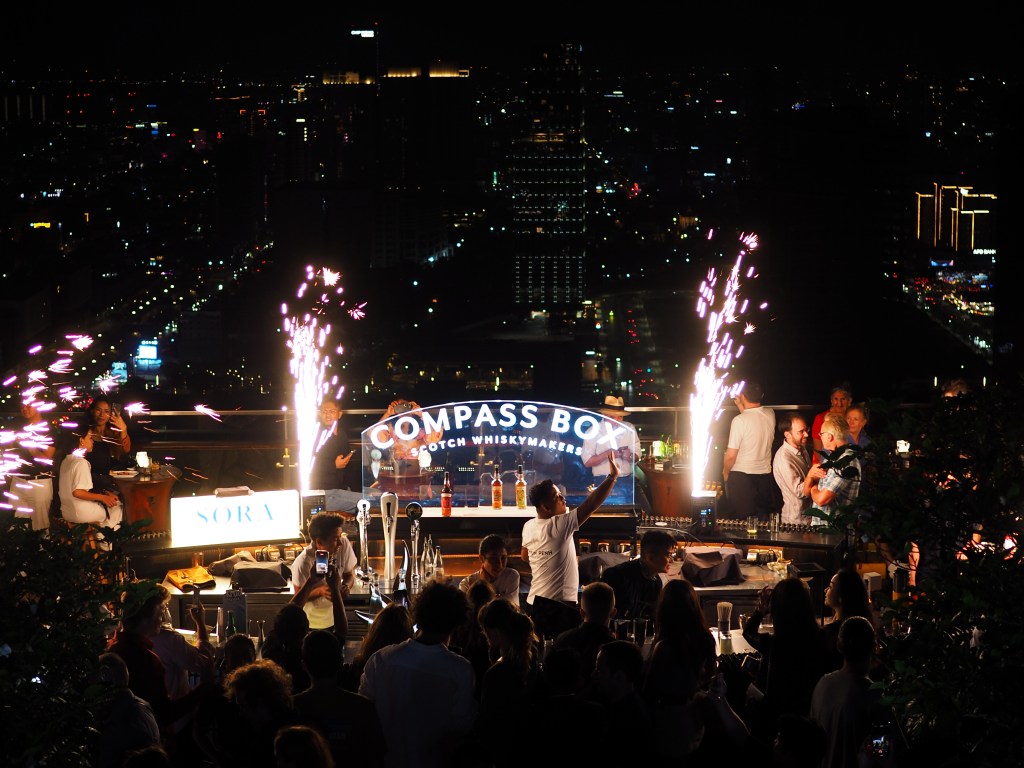
Sustainability is rarely associated with high-volume cocktail festivals. By design, these events are typically high-energy, high-waste affairs where the spectacle of the pour often leaves behind a mountain of debris. However, over two sold-out nights in early February, the second Phnom Penh Cocktail Festival quietly dismantled that status quo.
Held on 6 and 7 February 2026 at Sora, the sky-high Japanese-Cambodian bar on Level 37 of Rosewood Phnom Penh, the festival proved that the most effective environmental efforts are those the guest never has to think about.
A Regional Convergence
Just as the Mekong and Tonle Sap rivers converge beneath the cantilevered gaze of Sora, the festival transformed Level 37 into a literal and figurative confluence of 16 Cambodian and international bars. For a property like Rosewood Phnom Penh—where nightly rates that start at $500 can feel worlds away from the streets below—the festival served as a vital bridge.
The energy was electric, fueled by free entry for the diverse crowd of expats and young, trend-conscious locals who swept the democratically priced $8 tokens early; revenue from the first night alone surpassed the entire two-night total of 2025.
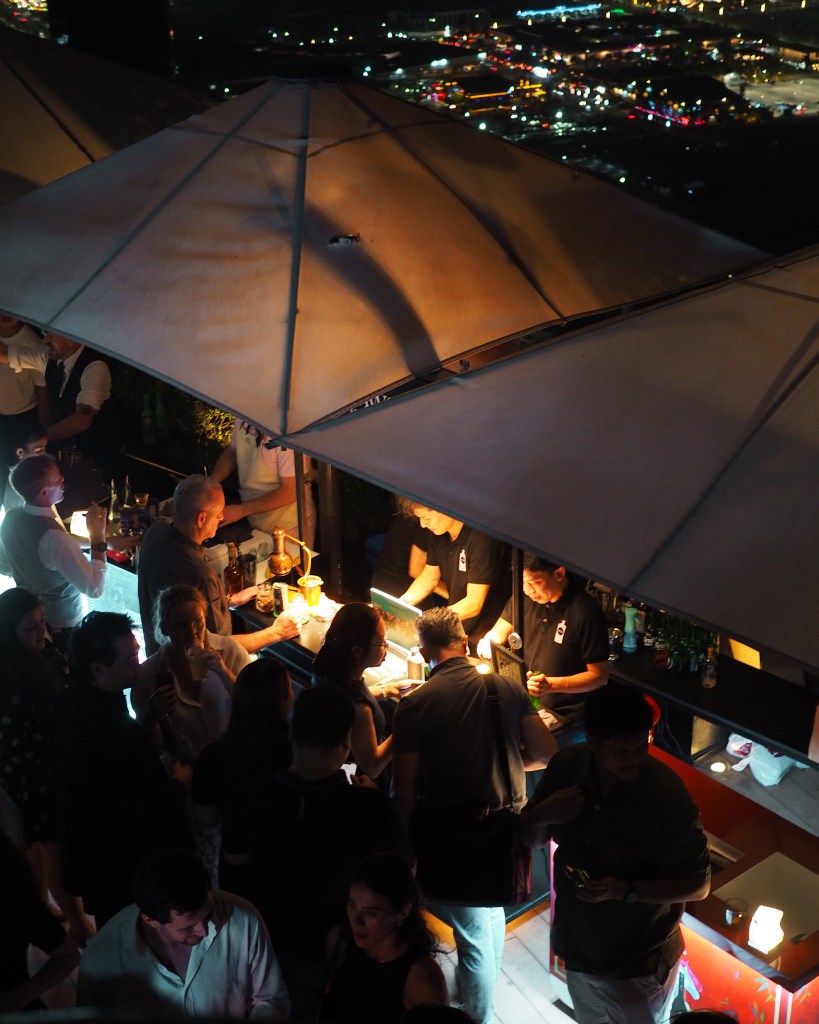
The participating bars reflected a broad and confident regional spread, with representation from Phnom Penh and Siem Reap alongside cities such as Penang, Hanoi, Colombo, Ulaanbaatar, Hong Kong, Vietnam, and Malaysia.
The participating bars reflected a broad and confident regional spread. From the north came Bar S-OTTO (Shanghai) and To Infinity and Beyond (Taipei), while the southeast was anchored by Lennon’s (Bangkok), Between the Sips (Jakarta), and a strong Malaysian contingent featuring Penang’s quietly influential Nomad.
The dialogue was further deepened by cross-border collaborations: The Enigma Mansion (HCMC) and Workshop 14 (Hanoi)—the latter collaborating with award-winning Cambodian rum producer Samai—highlighted a sophisticated spirits infrastructure. Meanwhile, an unlikely but compelling partnership saw Mongolia’s Nomad Lab join forces with Cambodian distillery Seekers. From the west, Sri Lanka’s Smoke & Bitters brought a values-driven approach that resonated with the festival’s core ethos.
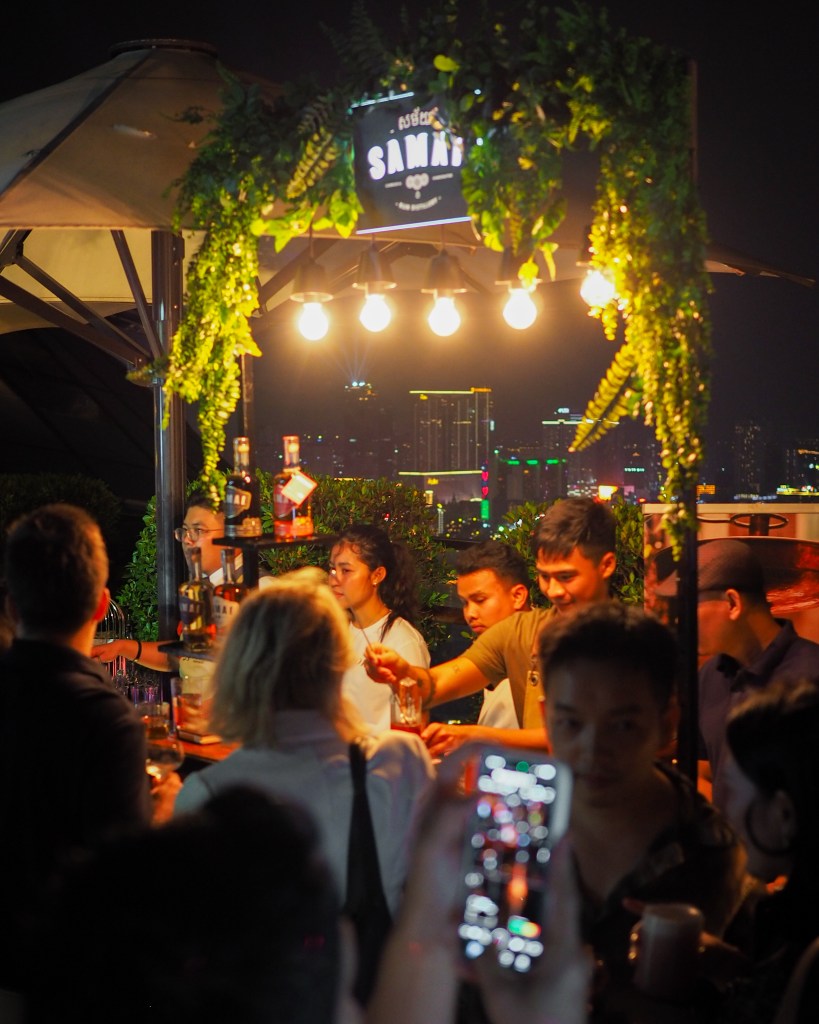
The domestic pulse was equally vibrant, drawing from every corner of the Kingdom. From the coastal breeze of Wave (Kep) and the artisanal energy of Siem Reap’s Spin and Bar 43, to the capital’s own stalwarts like Roodbar, Sromoal, and Kravat. Local producer MAWSIM—which famously put Cambodia on the map by securing two ‘World’s Best’ accolades at the 2023 World Gin Awards—anchored the festival’s local credibility, alongside the Cincoro x Moonshine collaboration.
Together with Sora, these bars positioned Phnom Penh not as a peripheral stop, but as a central connector in Asia’s evolving cocktail conversation.
The Ghost in the Glass
The festival’s defining triumph was “Silent Sustainability.” At an ultra-luxury level, responsibility is often performative; here, it was embedded into the hardware of the night.
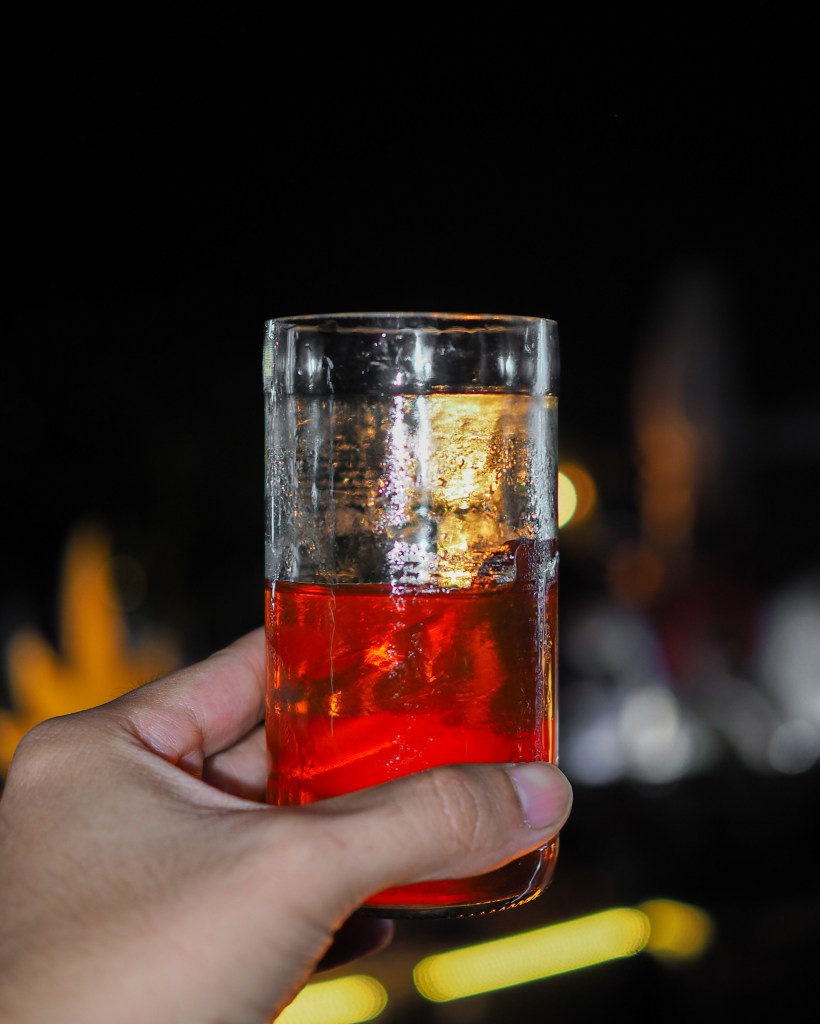
The most immediate example was the glassware. Every cocktail was served in premium vessels upcycled from bottles sourced from the hotel’s guestrooms. In the hand, these glasses felt substantial—heavier and cooler than standard barware. Though closer inspection revealed the slight, charming inconsistencies of hand-sawed edges, they felt like a bespoke upgrade rather than a compromise.
Behind the bars, the typical “festival chaos” was replaced by surgical precision. By pre-batching complex bases and pre-calculating garnishes—many plucked from the hotel’s own sky garden—the visiting bartenders operated with minimal waste. Even the logistics felt invisible; no bins lined the sky deck, and food was served from a discreet indoor counter that kept the focus on the liquid craft while staff cleared used glasses with rhythmic efficiency.
The Sustainable Bar Summit
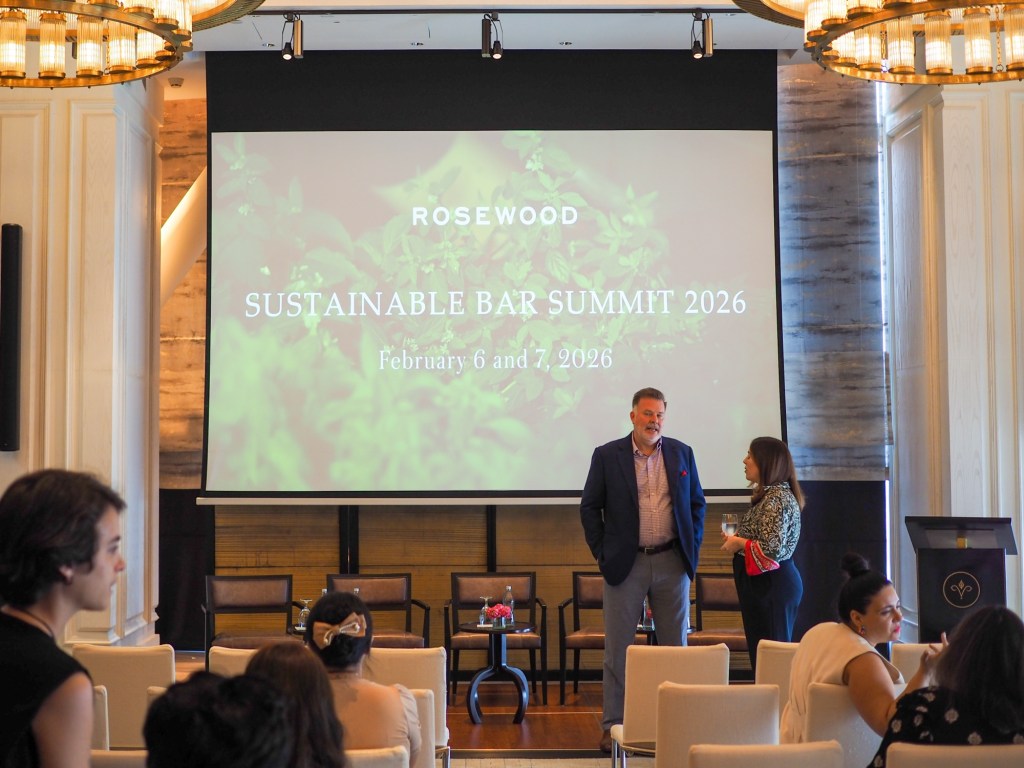
The festival opened with the Sustainable Bar Summit 2026, held in the Pavilion on Level 39 overlooking the Chaktomuk below.
The summit brought together industry leaders— including Karen Finnerty (Sustainable Restaurant Association), Sokleap Ngon (Smiling Gecko), Brittany Sims (Farm to Table), and Ryuji Nakata (MAWSIM) alongside Rosewood Phnom Penh’s Director of Bar Jonas Vittur—to discuss sustainability across hospitality, from certification frameworks and community-supported production to waste-to-resource pipelines within bar operations.
The tone was aspirational and energising rather than didactic. Speakers were largely aligned in their perspectives, reinforcing shared goals rather than debating definitions. Among the most resonant ideas was the concept of “silent sustainability” — the belief that responsibility in luxury hospitality should be absorbed into systems and sourcing, not placed on guests through visible trade-offs or behavioural prompts.
“If a guest has to change their behaviours, we have already failed”
— Jonas Vittur, Director of Bar, Rosewood Phnom Penh
Rethinking What a Festival Can Be
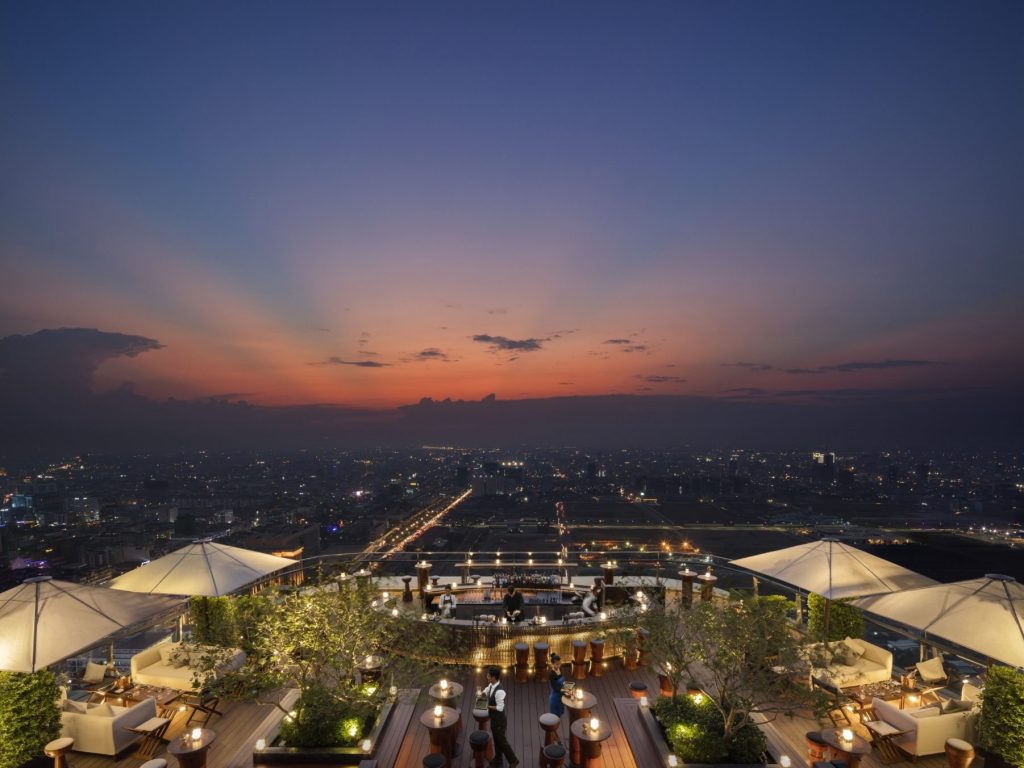
That the festival was hosted by Rosewood Phnom Penh, now marking its eighth year, is significant. Rather than foregrounding the anniversary, the hotel positioned itself as an enabler—a platform capable of convening people, ideas, and infrastructure at scale.
As the nights progressed and the shots began to flow, the true value of the festival became clear. Sora did not lean on its accolades—like the Ketel One Sustainable Bar Award it received in 2025—to sell the event. The award went largely unmentioned; the quality of the work spoke for itself.
For a first-time attendee, the experience was both eye-opening and reassuring. It demonstrated that sustainable bar culture does not need to compromise energy, creativity, or pleasure. When systems are designed thoughtfully, sustainability becomes invisible — and in doing so, far more effective.
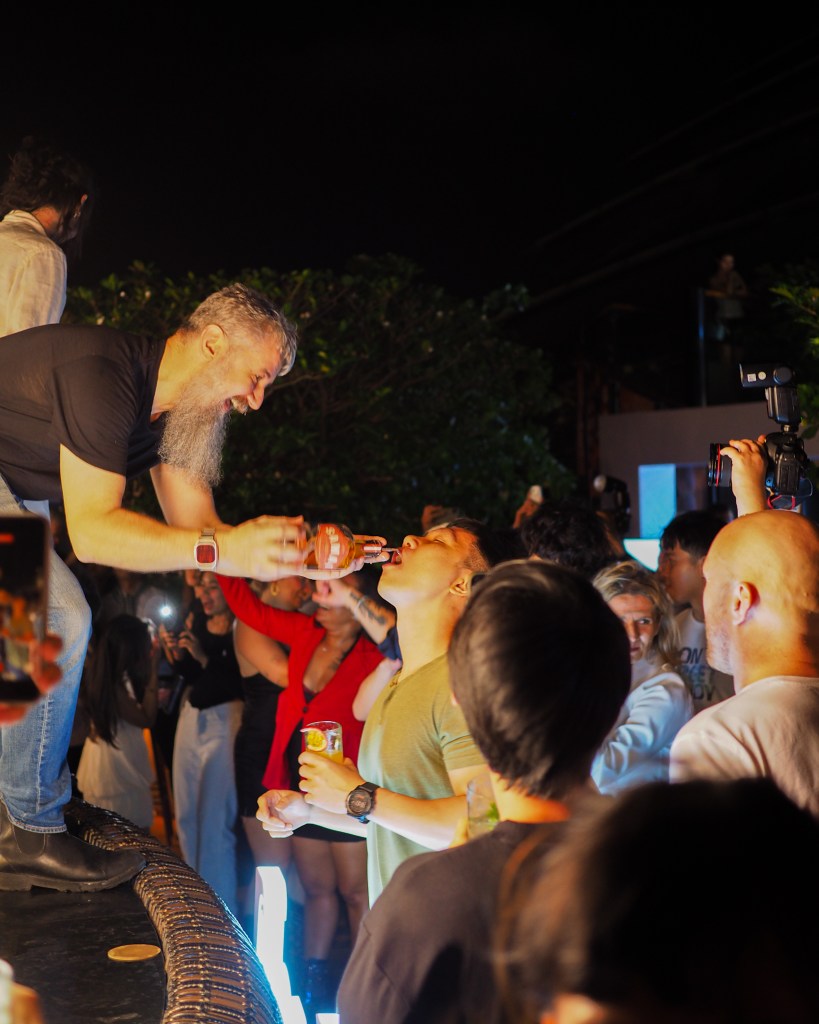
As Phnom Penh continues to define its place within Asia’s dining and drinking landscape, the second Phnom Penh Cocktail Festival stands as a compelling example of how hospitality can lead not by instructing, but by quietly doing better.
For the guests clinking heavy, upcycled glasses against the backdrop of the Cambodian skyline, the sustainability wasn’t a talking point—it was simply the spirit of the night.
From the table to the world beyond, Nacre brings you dining, travel, and lifestyle experiences worth savouring. Explore more with us on Instagram (@nacre.asia).

 Nacre.
Leave a comment