Are you a believer of Traditional Chinese Medicine?
I have spent most of my life somewhere between scepticism and curiosity. Trained in the language of Western medicine, where causes are isolated and outcomes measured, TCM often sat at the edges of my understanding, respected for its longevity but rarely interrogated beyond that. Yet travel has a way of loosening those intellectual certainties, especially when the body begins to speak louder than theory.
Virtue TCM at The Qing Suites is a Traditional Chinese Medicine spa in George Town, Penang, offering acupuncture, cupping, gua sha, and qi rebalance treatments, alongside massages and facial therapies. Housed within a carefully restored heritage building, it is the first TCM spa located inside a heritage hotel in Southeast Asia, situating ancient practice within a contemporary framework of slow living and considered care.
Here, health is understood through the balance of Jing, Qi, and Shen—essence, vital energy, and spirit—where imbalance is read as a disruption of internal rhythm rather than a singular ailment. That philosophy carries particular resonance at The Qing Suites, given that Cheong Fatt Tze’s father was himself a scholar and practitioner of TCM.
Between the sweltering heat of George Town and the translocation from Kuala Lumpur to Penang, I arrived in need of rest and recalibration. My first afternoon at The Qing Suites was designed to ease me in. After check-in and before dinner, there was a narrow window where my body still held on to travel, heat, and movement. It was within this pause, where restoration felt necessary that my treatment took place. This is how my experience at Virtue TCM at The Qing Suites unfolded:
Step 1: Crossing the Threshold
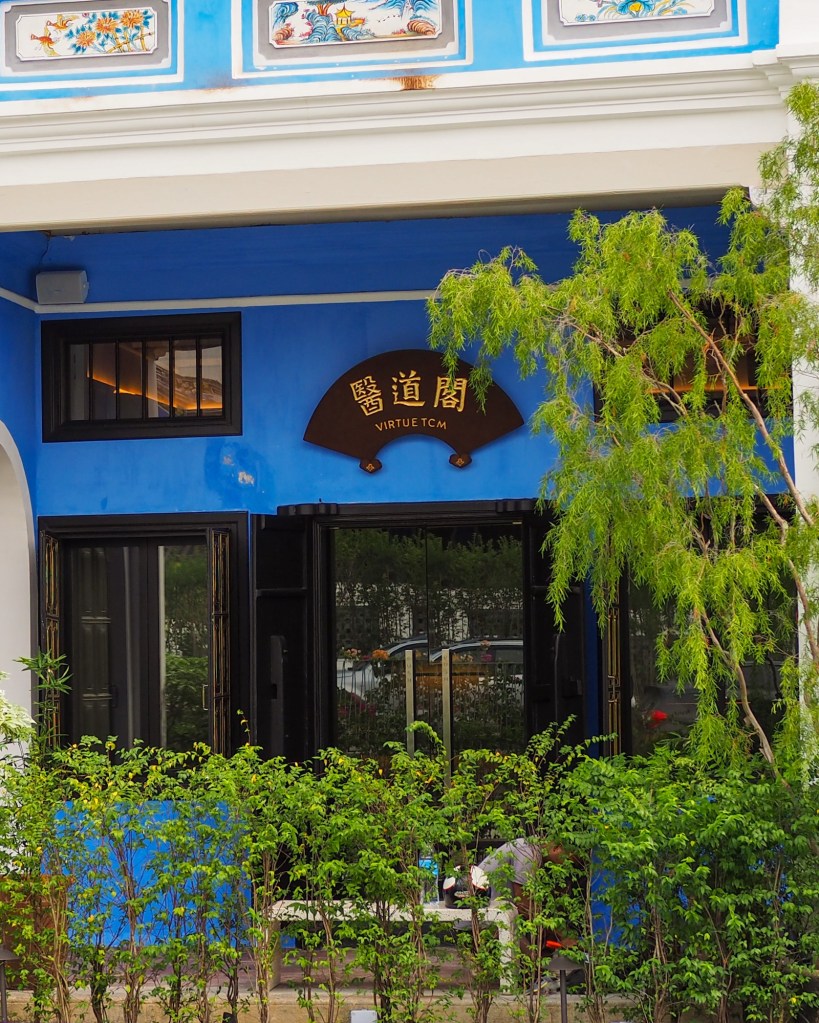
The Qing Suites resides within the century-old annex of George Town’s Blue Mansion. I entered through the front entrance of the spa rather than the internal guest passage, stepping through double doors and over a raised concrete threshold that marked a clear shift from the street outside. Afternoon light filtered in through glass doors, illuminating the reception area without feeling exposed. Inside, the air was cool and lightly perfumed with flower tea and the hotel’s signature scent.
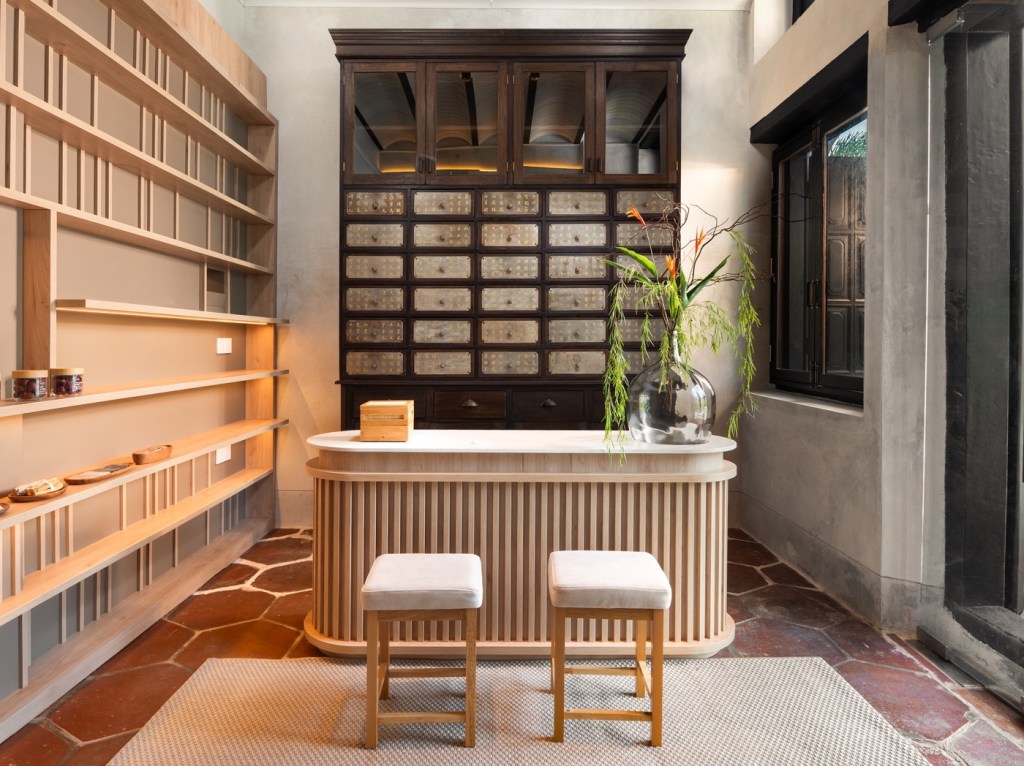
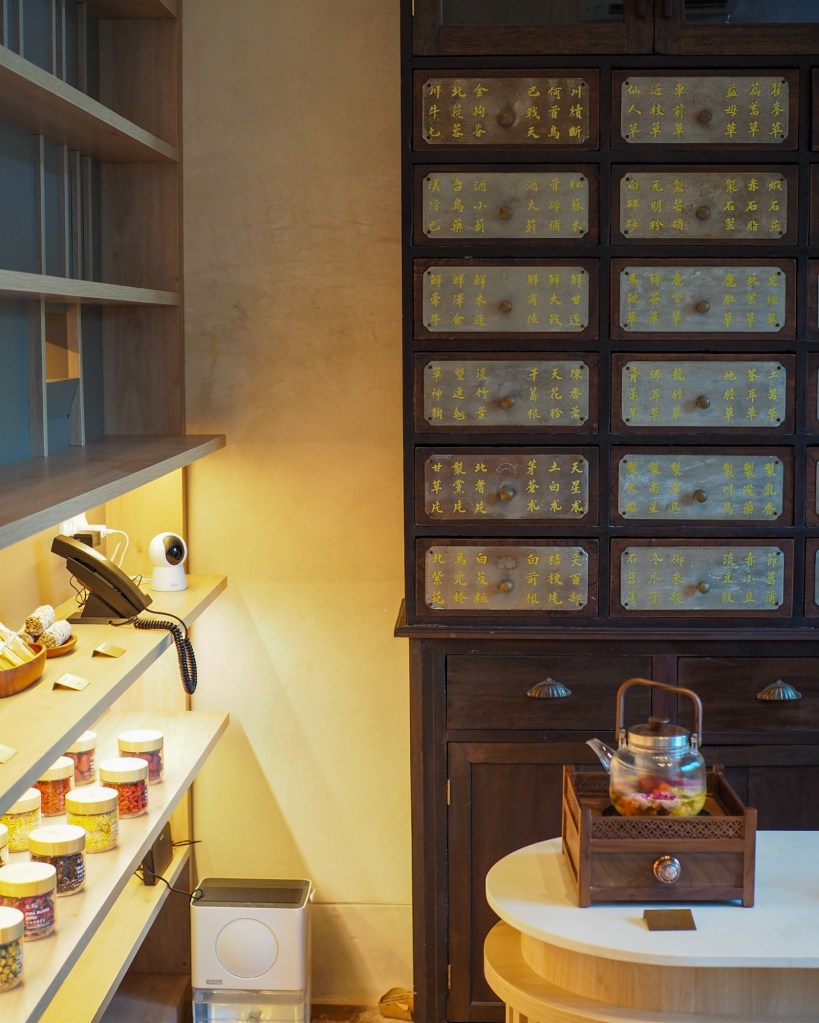
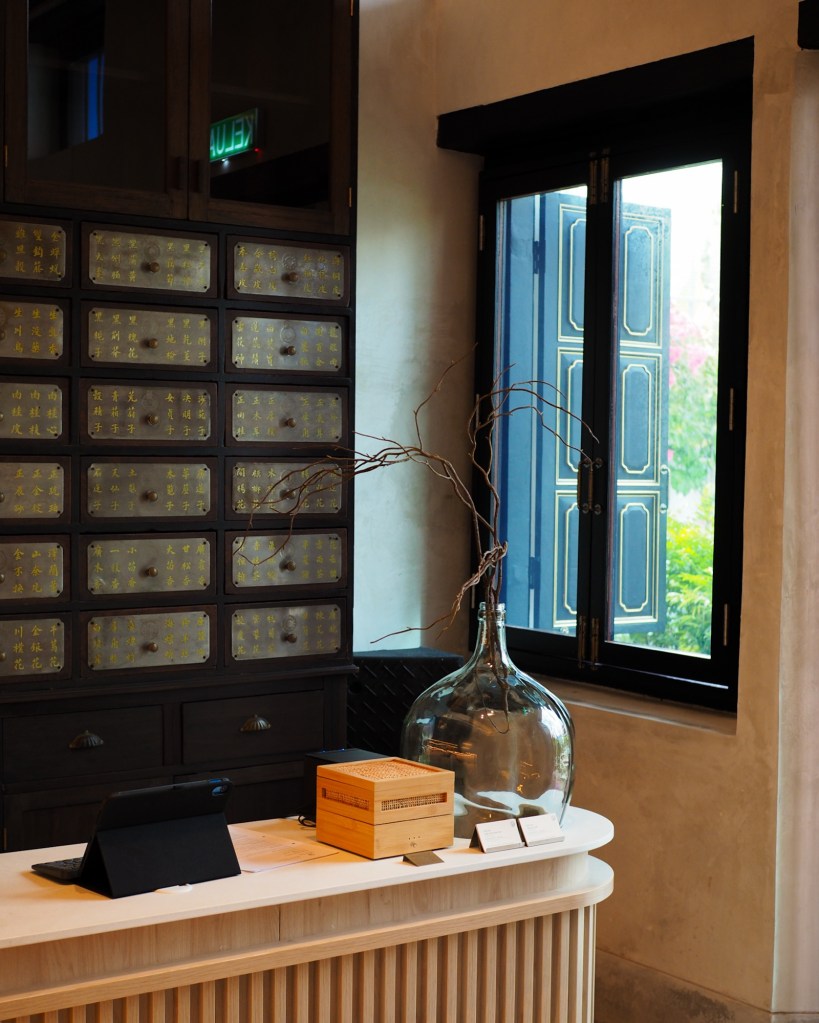
The street outside was calm that evening, and the interior absorbed what little noise there was. I was welcomed with a warm towel and hot tea. Wood dominates the reception space, including a tall cabinet of small drawers reminiscent of traditional Chinese herb shops, decorative here but symbolically grounding. My footwear was exchanged for woven slippers, a small gesture that reinforced the sense of separation.
Step 2: The Consultation
The practitioner who welcomed me, registered my details, and later conducted the treatment was the same person throughout. Her name was Tian, who introduced herself casually and without ceremony. The consultation came through conversation, covering sleep, digestion, stress, energy levels, and any discomfort I wished to address.
What surprised me were not the questions, but her conclusions. Through pulse reading and tongue observation, Tian described patterns of discomfort I had struggled to articulate, explaining in TCM terms that my heart and liver were “fiery,” a state that could manifest as agitation or impatience. We moved seamlessly between English and Mandarin because certain concepts resist translation. The pace relaxed and the atmosphere never felt clinical or overly intimate.
Coming from a biomedical sciences background, I have long approached TCM with caution. Yet there was something disarming in how this consultation was conducted. If a system has endured for millennia, there is likely substance beneath the mysticism. That was the moment my resistance softened into openness.
Step 3: Preparation
This spa is unlike any other spa, adding elements of TCM into every treatment from full-body massages and sleep therapies, to aesthetic procedures and pain management. And of course, the staples of traditional Chinese medicine including acupuncture, moxibustion and auriculotherapy.
The treatment Tian proposed was the Qi Rebalance (60 minutes, RM298), combining gua sha for circulation and lymphatic flow, cupping for cooling and release, and acupuncture to restore qi flow, particularly in relation to my history of heartburn and indigestion. Tian explained the sequence and timings clearly, answering questions with reassurance rather than prescription.
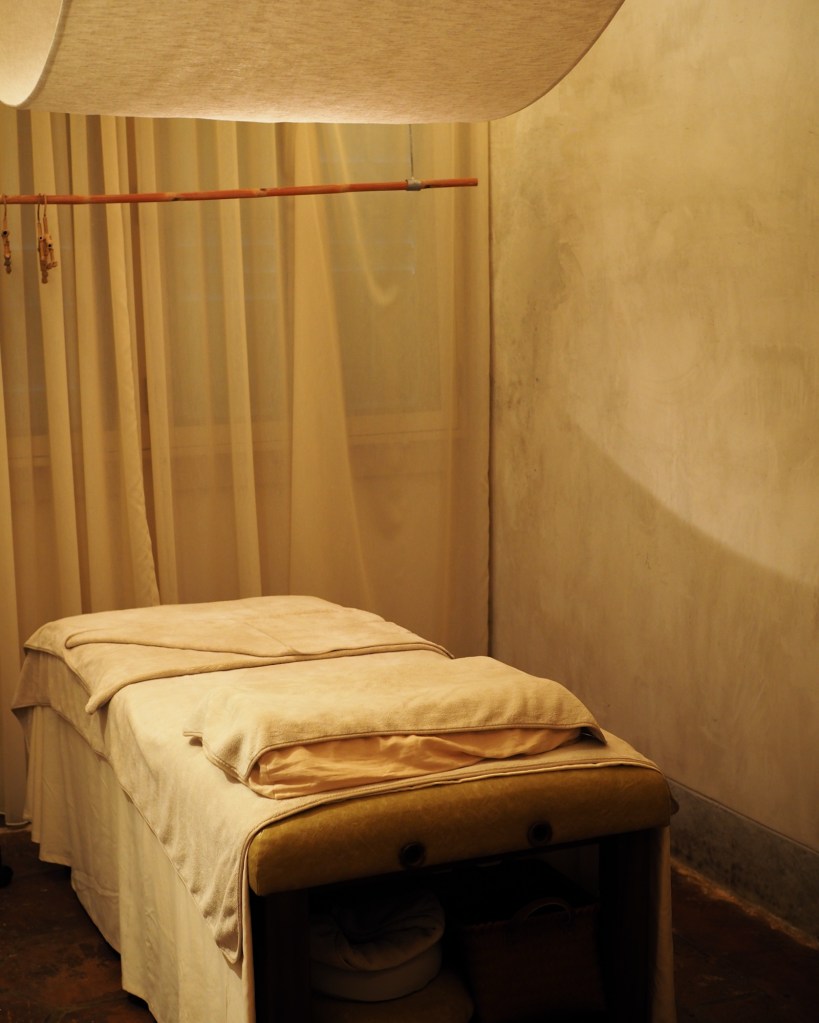
I changed into what might be the most comfortable set of spa clothes I have worn, designed to open from both front and back to facilitate treatment. The treatment room blended traditional wooden elements with modern comforts. Adjustable lighting allowed the space to dim for privacy, while sheer drapery overhead softened the room visually. The treatment table felt more like a bed, generously cushioned with a supportive face ring.
Step 4: The Qi Rebalance
Gua sha began with a scraping pressure that was initially uncomfortable, particularly around my right shoulder where lingering soreness from recent physical strain had pooled. At moments the sensation bordered on ticklish as the strokes moved towards my sides, but I powered through it. Gradually, sensitivity gave way to warmth as circulation spread across my back.
Cupping followed with heated cups placed carefully along my back. I had braced for pain, but instead felt gentle heat and the slick glide of oil against skin. My mind wandered, and I drifted briefly into sleep.
My worst fear: Eight needles in total, four placed along my abdomen and two on each calf where digestive pressure points reside. Tian had reassured me I would almost feel nothing, and aside from one rogue nervous impulse, she was right.
As my body cooled in the air-conditioned room, Tian brought over a heating machine to warm me while the lights were dimmed further. I was left alone for around twenty minutes, wrapped in warmth and quiet. It is difficult to ignore the presence of needles, but there was a calm acceptance that whatever was unfolding was purposeful.
Conversation during the treatment was minimal, limited to quiet check-ins to ensure comfort, and silence did most of the work.
Step 5: Re-emergence
When the acupuncture time was complete, Tian returned, brightened the room slightly, and removed the needles. She told me we were done and left me again to dress. Sitting upright afterward, I took a moment to assess my body. The tightness in my shoulder had eased completely. As for digestion, time would tell.
Back in the reception area, my sandals were already laid out, and a fresh cup of hot tea awaited me.
Step 6: The Aftereffects
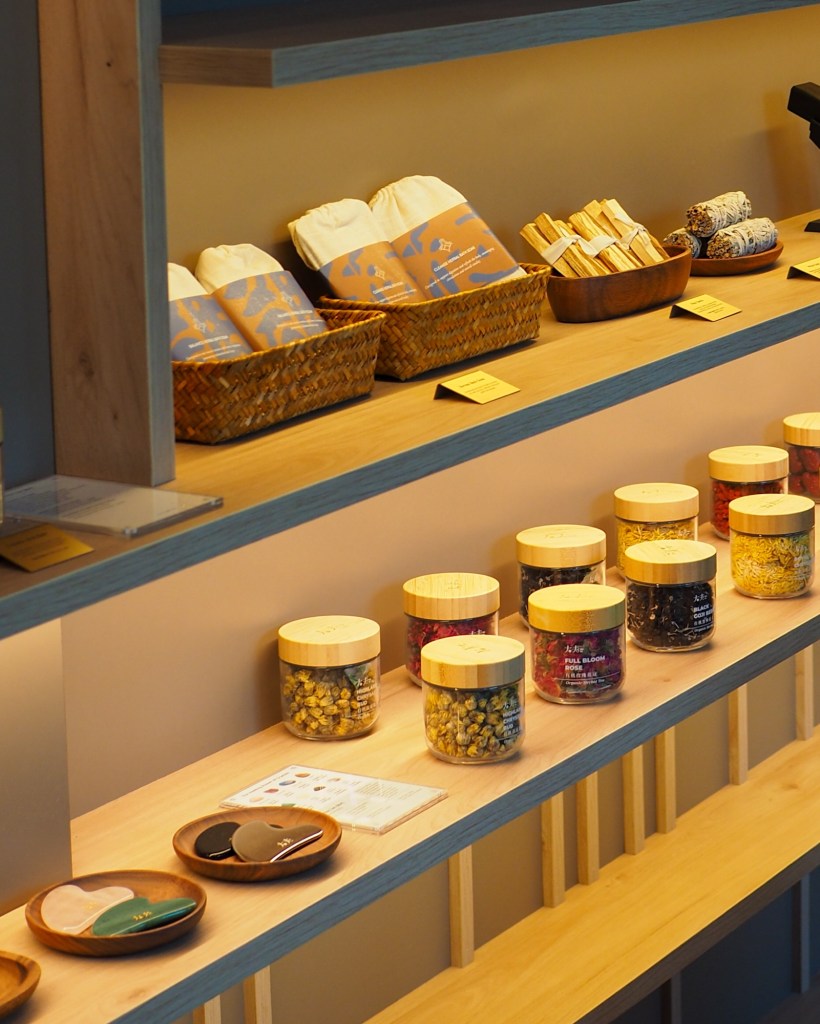
Tian explained that the treatment was intended to reinvigorate qi flow and alleviate tension, advising me to avoid heaty and oily foods, prioritise sleep, and refrain from showering for a few hours to allow the oils to absorb fully. I stayed on for a while, browsing the teas and herbal bath soaks displayed on the shelves, including the same bath soak placed in my suite, which I would later use during my stay.
The effects were not dramatic, but they were real. I felt reenergised and more present within The Qing Suites, ready to settle into its slower rhythms. The shoulder soreness did not return, and that night, I slept deeply.
Reflections
Virtue TCM adds a meaningful dimension to The Qing Suites’ approach to wellness. Open to the public yet integrated into the guest experience, it feels less like an optional appointment and more like a natural extension of the stay. From the cadence of slow living within the heritage walls to the Qi Rebalance itself, the philosophy remains true to itself.
It is an accessible entry point for first-timers, as it was for me, but it will resonate just as strongly with business travellers, burnt-out creatives, older guests, or anyone carrying the quiet weight of tension. Health, after all, underpins everything else.
Curious how a Nacre Experience article is formed?
From The Editor: What Makes An Experience Worth Sharing
Virtue TCM at The Qing Suites
9, Lebuh Leith, George Town,
10200 George Town, Pulau Pinang (Maps)
Open daily: 10.30AM–7.00PM
@virtuetcm.theqingsuites | Website & Menu | Bookings | WhatsApp
From the table to the world beyond, Nacre brings you dining, travel, and lifestyle experiences worth savouring. Explore more with us on Instagram (@nacre.asia).


 Nacre.
Leave a comment