

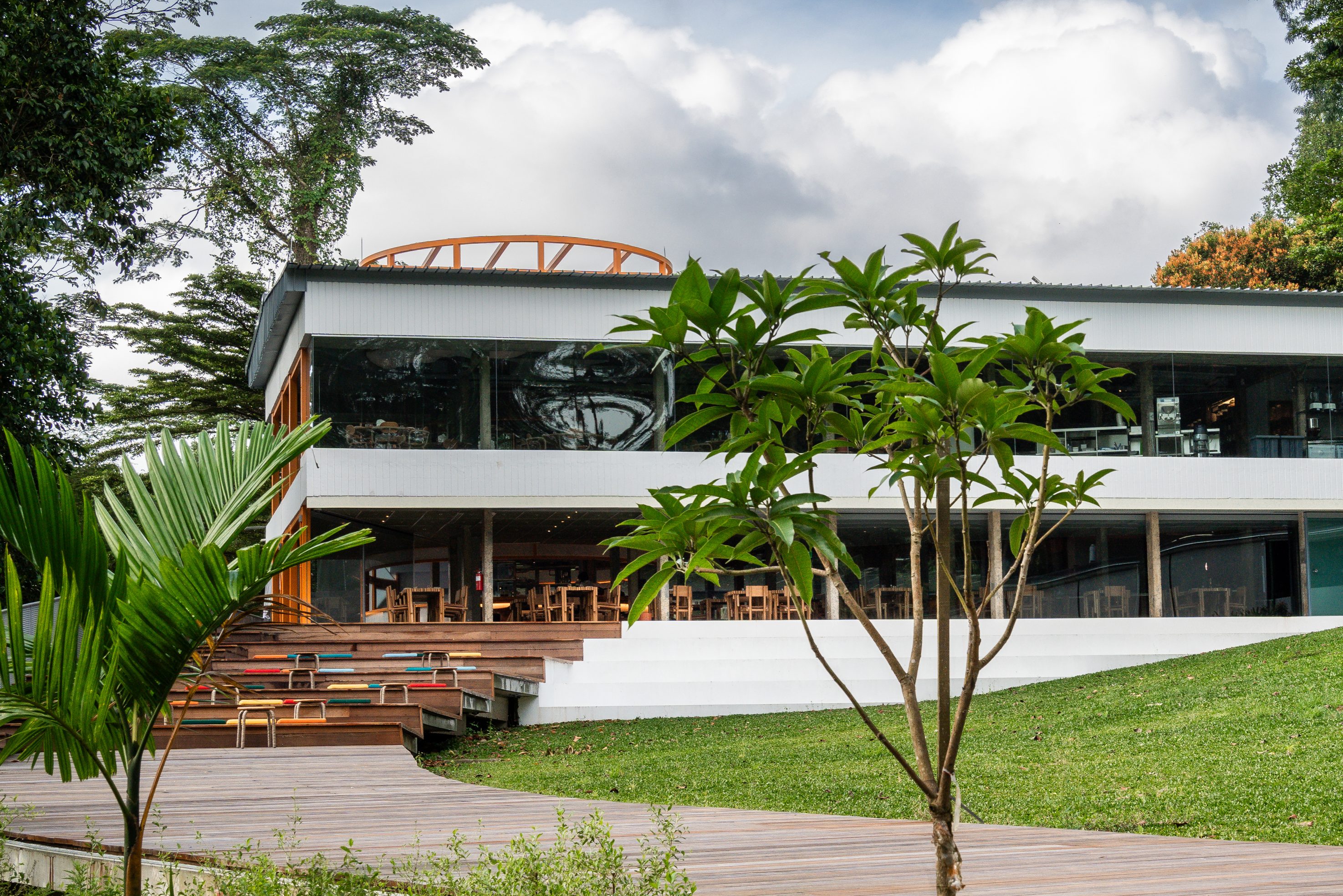
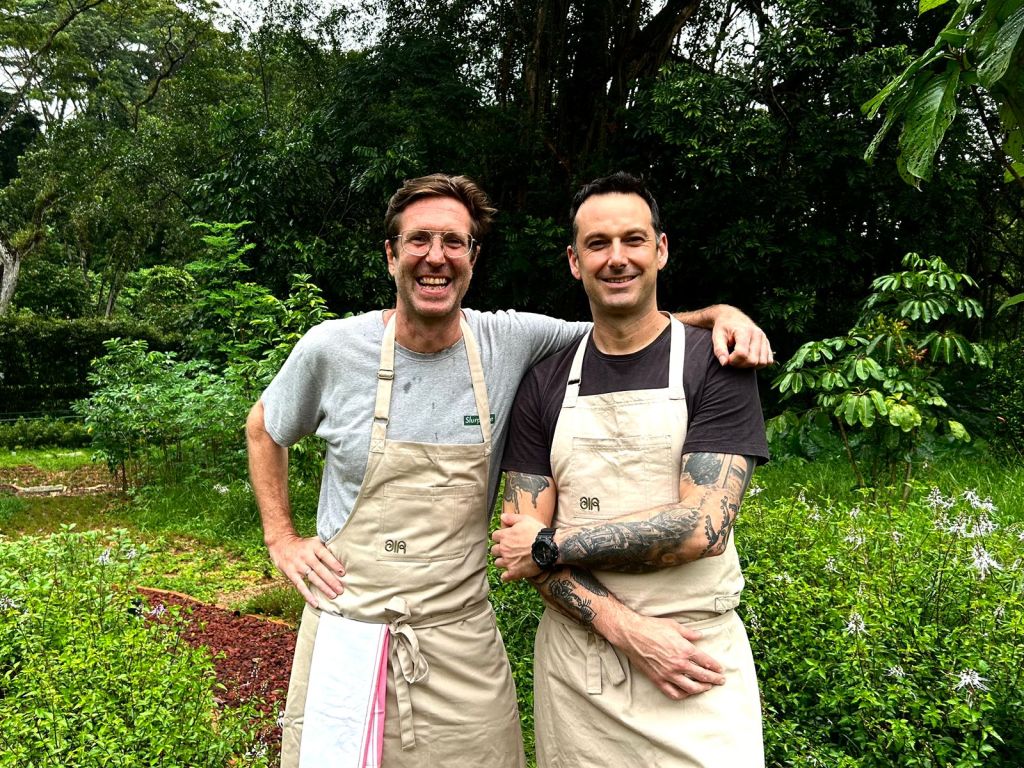
Awareness, Impact, and Responsibility—three words that make up the core philosophy of AIR, a multi-hyphenated space created by sustainability chef Matthew Orlando of Amass, Copenhagen; renowned pastry innovator Will Goldfarb of Room4Dessert, Bali; and entrepreneur Ronald Akili. The sole purpose of AIR is to inspire thought about food
It is the shared vision of three global minds whose collective experiences across Bali, Copenhagen, and Jakarta (and many others) have reshaped the way food can be grown, cooked, shared, and understood. Together, they imagined a place where sustainability isn’t a side note but a central rhythm, and where hospitality means caring not just for the guest, but for the environment and community as well.
But before the accolades and acclaim, it began with a question: What would it look like if a restaurant could teach, nourish, and regenerate all at once? AIR’s answer is a campus rooted in the earth, designed to inspire both pleasure and awareness.
The Concept
Before the art and lifestyle enclave that it is known as today, Dempsey Hill was once a nutmeg plantation in the mid-19th century and served as a barrack complex between the 1860s and 1990s.
Spanning some 4,000 square metres of green space, AIR is not your typical restaurant—it is a living, breathing campus designed to blur the lines between diner, chef, farmer and thinker. Behind this incredible design is OMA, the world-renowned architecture firm led by David Gianotten and Shinji Takaji for this project, who have transformed a nondescript 1970s civil service clubhouse into a rare confluence of circular interaction between nature, community, and culinary arts.
Instead of a fine dining temple to passive indulge, AIR is conceived as a Circular Campus and Cooking Club (CCCC) that invites guests to participate in its activities. Visitors can walk through the on-site farm, join cooking workshops, explore the fermentation labs, and even sprawl across the lawn for a casual picnic at sundown.
The Space
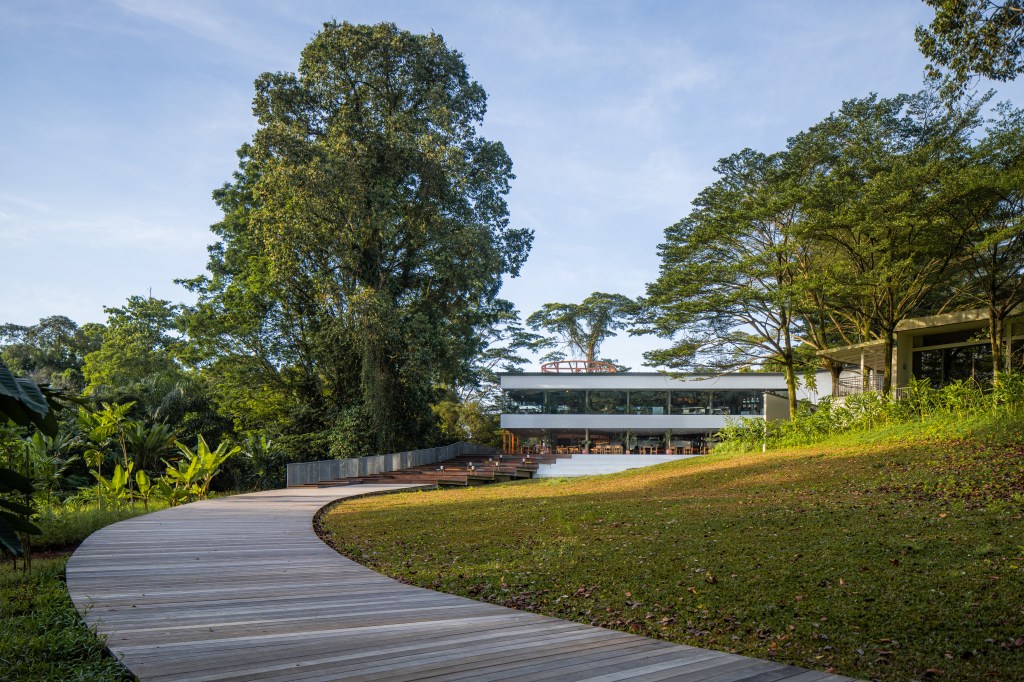
You can access AIR through one of two routes: its organic 100-meter footpath that once made the clubhouse inaccessible, or a short flight of stairs down an inconspicuous entrance facing Dempsey Hill’s main parking lots.

The footpath is a key architectural intervention by OMA that provides access to AIR while maintaining its natural topography and separating the two green spaces of AIR—the herb and vegetable garden on one side, and the open lawn on the other. Patios along the walkway allow guests to sip and savour AIR’s craft in shaded chaises and recliners.
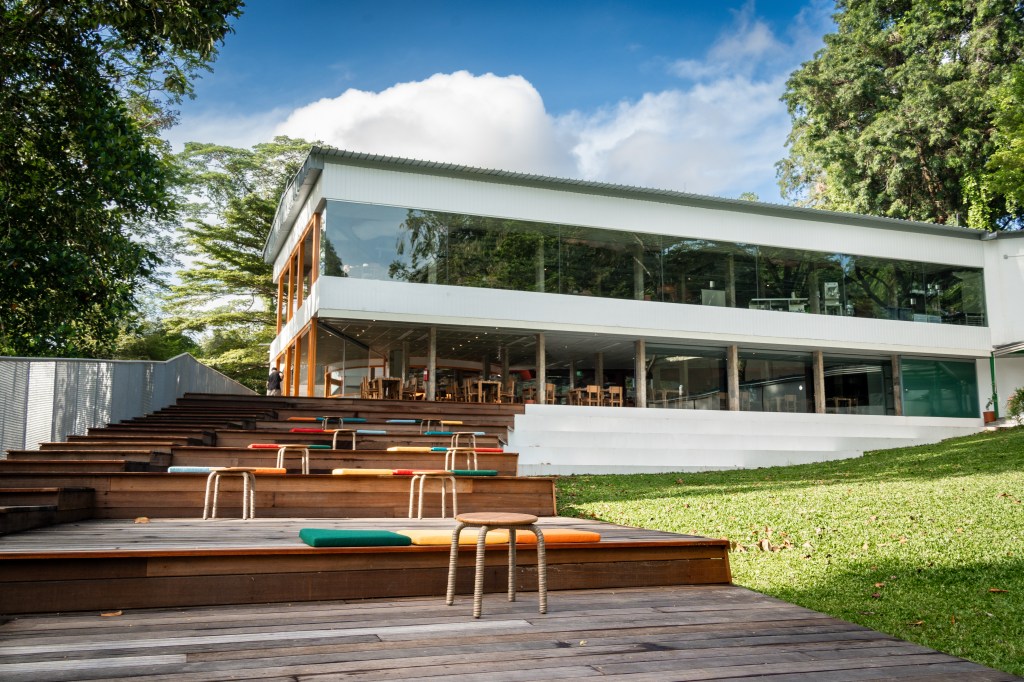
The main structure of the complex is the transformed clubhouse, home to AIR’s kitchen and labs. Instead of tearing it down, the design team incorporated the bones of the building and made minimal, meaningful interventions to reduce waste. Its key features—ribbon windows, flat planes, and concrete volumes—were retained while redefining its purpose.

On the first floor, operable facades have replaced static walls, dissolving the divide between indoors and out. This new openness allows the dining room to spill onto a broad terrace, welcoming the lawn as part of the experience. Above, the second floor embraces light and perspective, with glass panels inviting panoramic views of the grounds.
An intimate dining area coexists with AIR’s research spaces: a fermentation lab and a teaching kitchen, where the curious can turn observation into action. Behind the clubhouse, a cylindrical volume anchors AIR’s operations—housing the bar, kitchen, and vertical circulation of guests and staff.
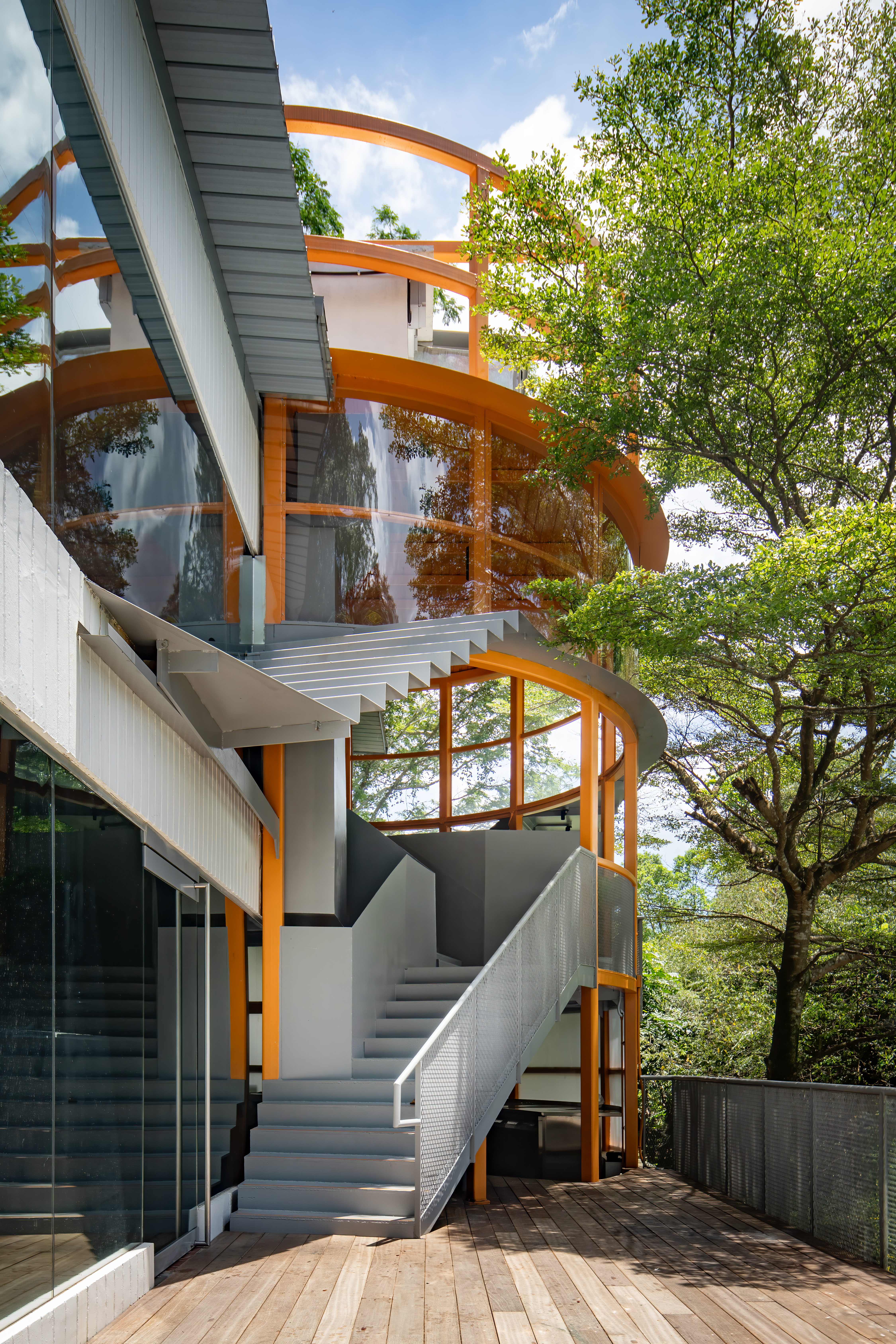
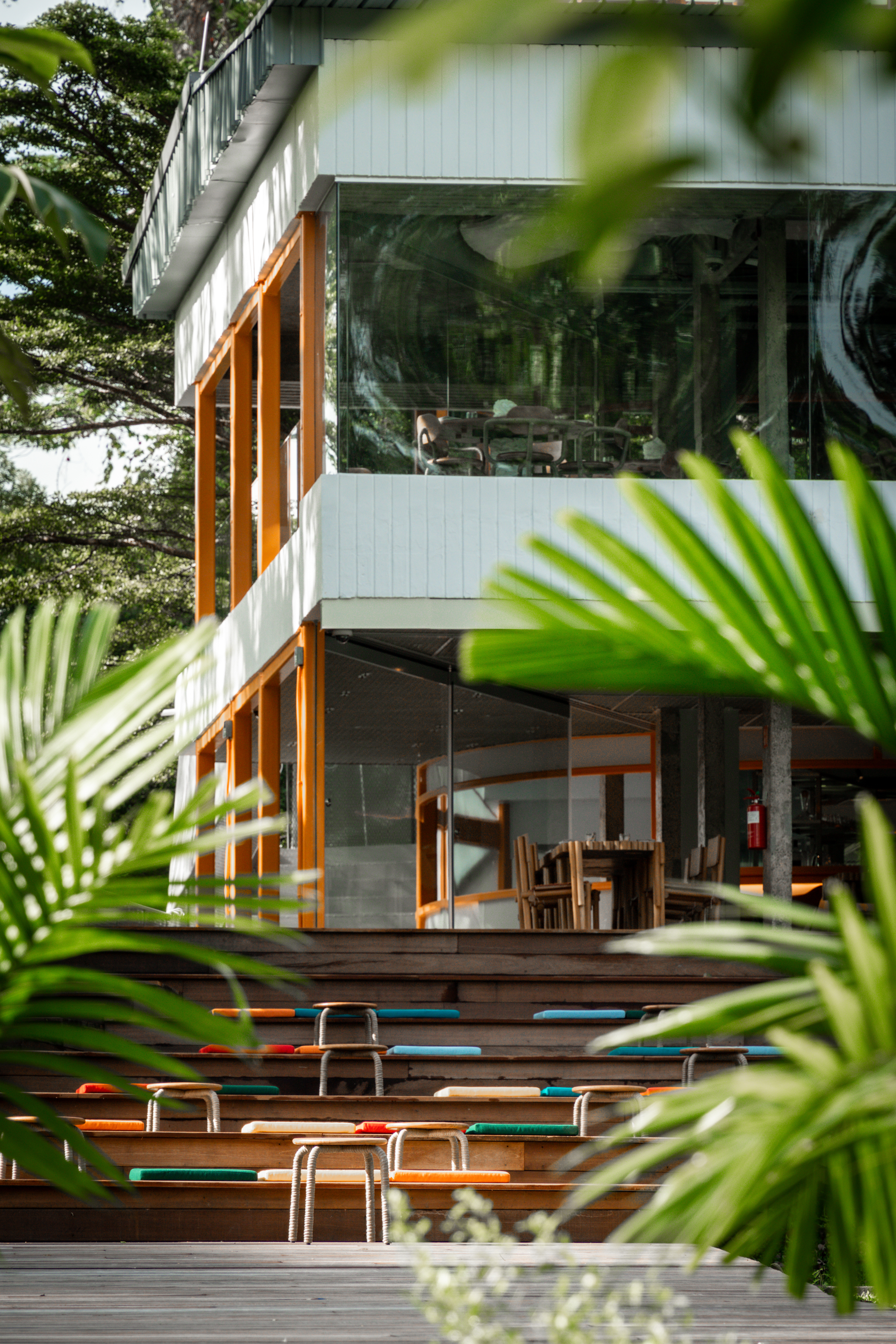
AIR CCCC | Photography by Kris Provoost for OMA
The Ecosystem
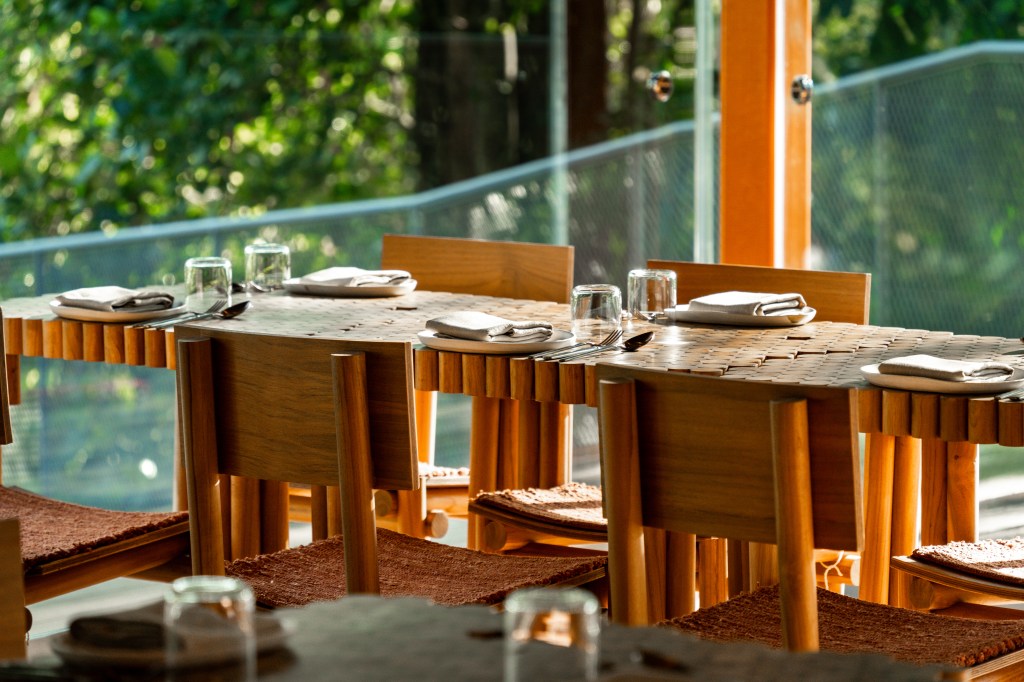
True to its ethos of circularity, even the chairs and tables at AIR have stories to tell. Barcelona-based designer Andreu Carulla was commissioned to create bespoke furniture from materials typically considered unremarkable, even disposable: recycled timber, HDPE plastic bottles sourced from a dismantled art installation, and styrofoam commonly used in throwaway food containers.
Rather than masking their origins, Carulla allows the imperfections, textures, and quirks of these salvaged elements to speak—reminding diners that beauty can be found not despite, but because of, a material’s past life.
The result is a collection of furnishings that are both sculptural and honest: rough-edged, quietly expressive, and deeply integrated into AIR’s spatial and philosophical fabric. These aren’t just tables to eat at or chairs to sit on—they are subtle provocations that ask guests to reconsider the value of what we so often discard. It’s sustainable design that doesn’t lecture—it invites, surprises, and evolves with time.
The Garden
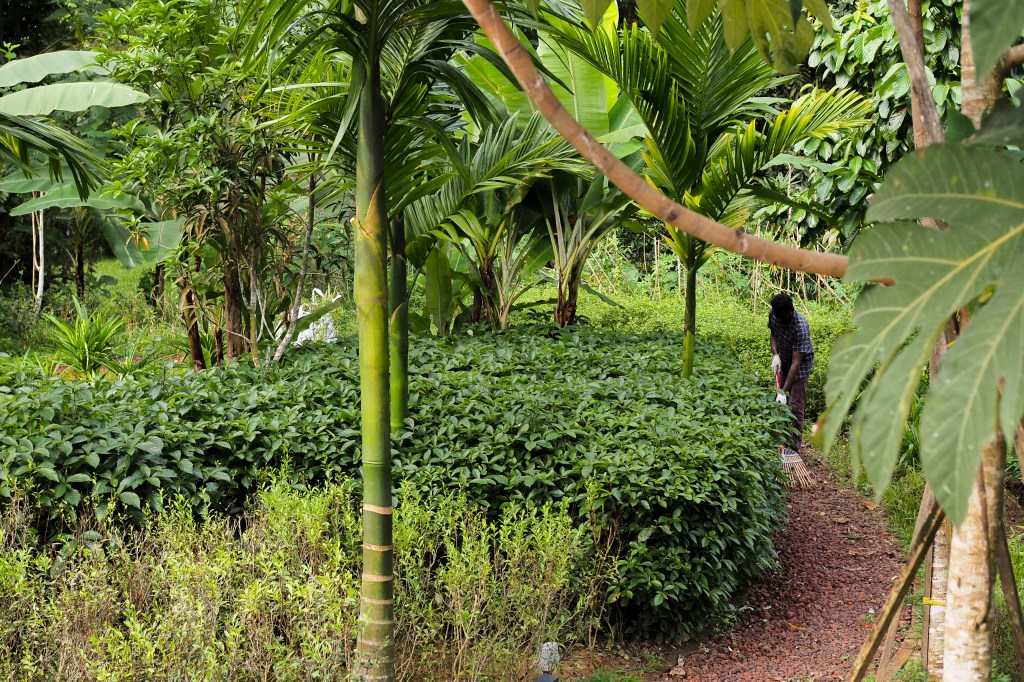
Every journey at AIR begins with the earth. Nestled within the campus is a working garden—the on-site farm cultivated in collaboration with urban farming social enterprise, City Sprouts. Planted in August 2023, the farm is a living, growing cornerstone of AIR’s ecosystem. It’s where guests can observe how food is grown, touch the soil, and trace the journey from seed to plate.
This isn’t just for show. The crops—ranging from buah keluak and turmeric to lantern chillies, wormwood, moringa, starfruit, and more—are chosen not only for yield, but for flavour, texture, aroma, and colour. Every harvest is destined for the kitchen, where chefs adapt and tweak dishes according to what the farm provides on any given day. That means a signature dish might taste slightly different each time you visit, evolving alongside the seasons.
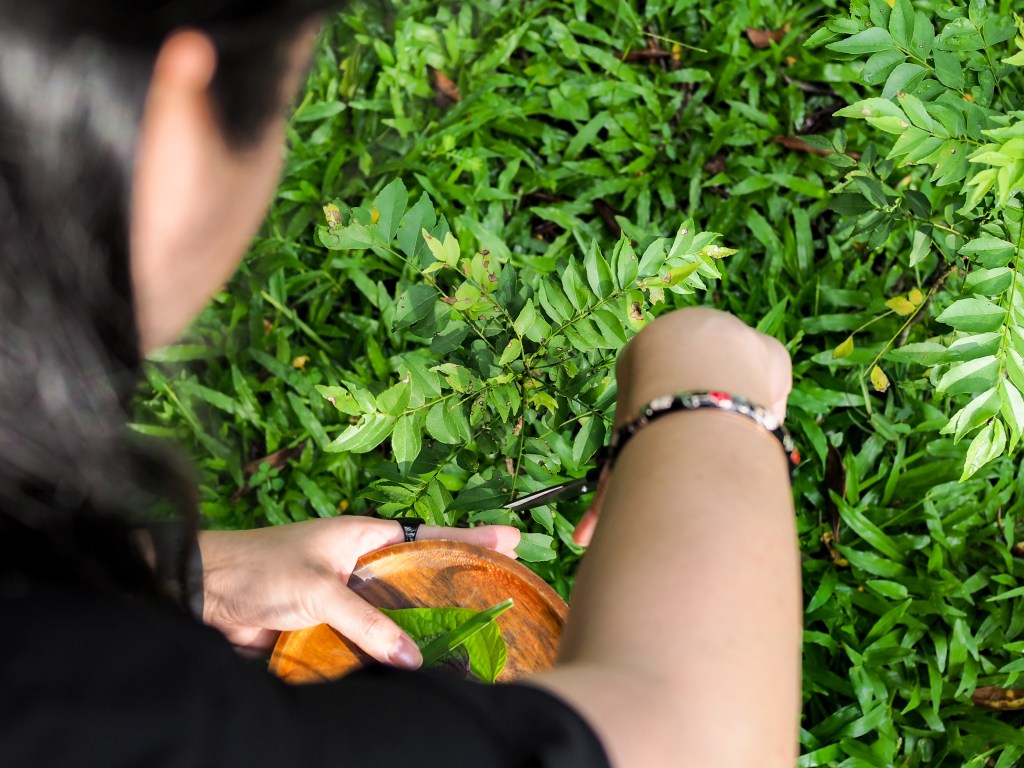
AIR also sources additional produce from local growers across Singapore, reinforcing its commitment to regional biodiversity, traceability, and low-impact sourcing. The result is a menu that is not just farm-to-table, but campus-to-plate, intimately tied to place and purpose.
The Research
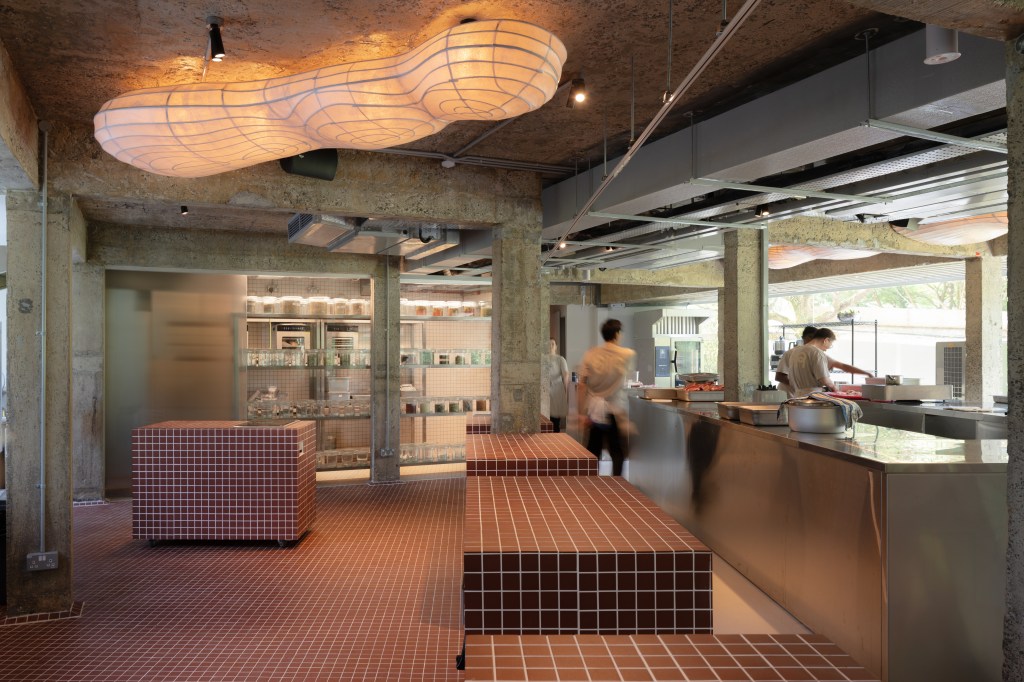
Tucked within is one of AIR’s most compelling spaces: the Research Space, where the team of chefs swap knives for notebooks and treat culinary innovation as a form of scientific inquiry. It’s here that creativity is structured around curiosity—where anaerobic fermentation experiments unfold in quiet anticipation, and the stems of freshly clipped wormwood are tested for their potential to become vinaigrettes or botanical infusions. This is where Chef Matt once figured out how to turn discarded fish bones into a delicate, savoury lavash.
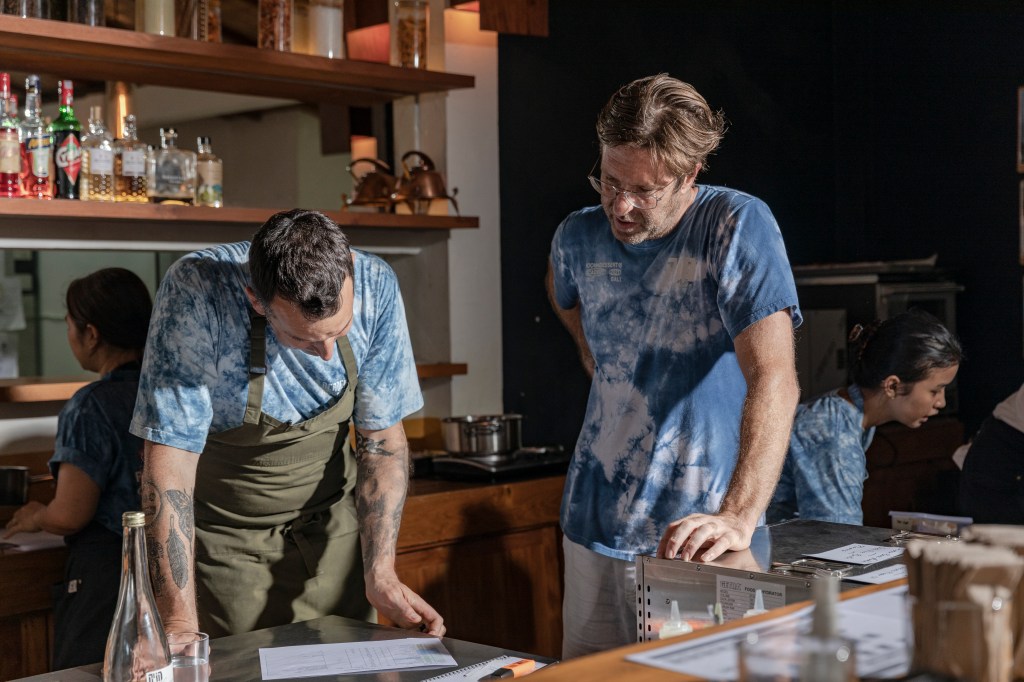
As part of the Cooking Club and broader campus vision, AIR opens its doors to guests of all ages to learn, question, and connect. From hands-on cooking classes to explorations of the medicinal and cultural qualities of garden-grown ingredients, learning is embedded into the rhythm of the space. Talks by farmers, foragers, and producers give voice to the stories behind the ingredients, creating a living library of food knowledge that evolves with every season.
For aspiring chefs, AIR’s kitchen also serves as a real-world classroom. With its open format and access to fresh, traceable ingredients, it provides not just training in technique but immersion in values—respect for nature, zero-waste cooking, and transparency in process. This dynamic environment is fertile ground for cultivating not only skill, but also philosophy.
The Menu
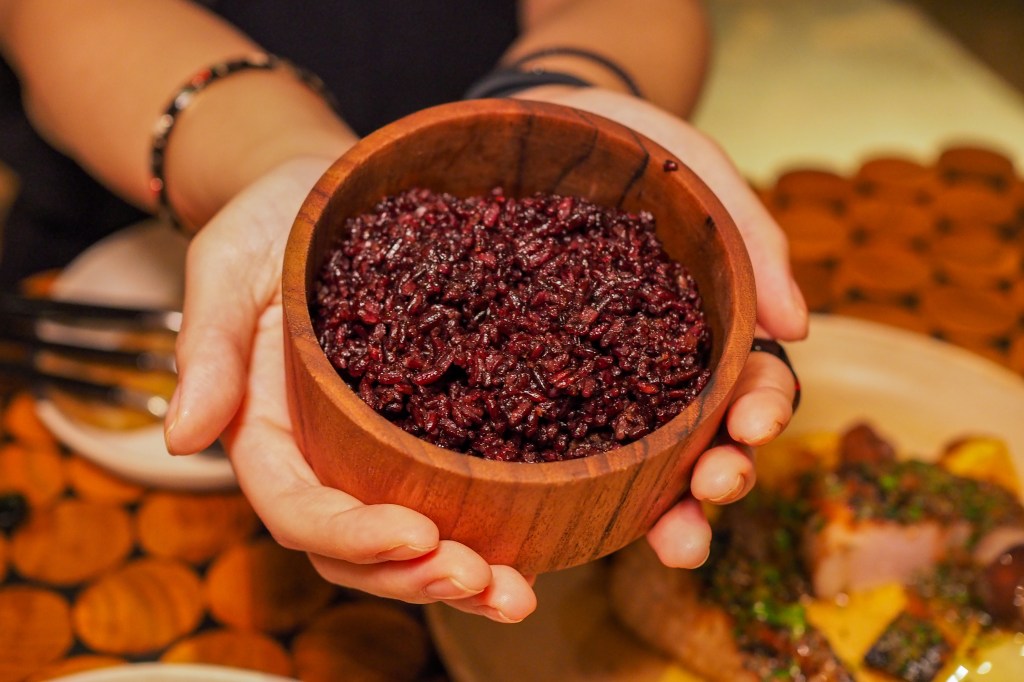
At AIR, the menu is not a fixed performance but a seasonal dialogue—an evolving response to the land, the weather, and the spirit of curiosity that drives its creators. Designed to reflect the principles of circularity and stewardship, each dish begins with what’s available—what’s ripe in the garden, what’s been preserved or fermented in the lab, and what’s been thoughtfully sourced from trusted local growers.
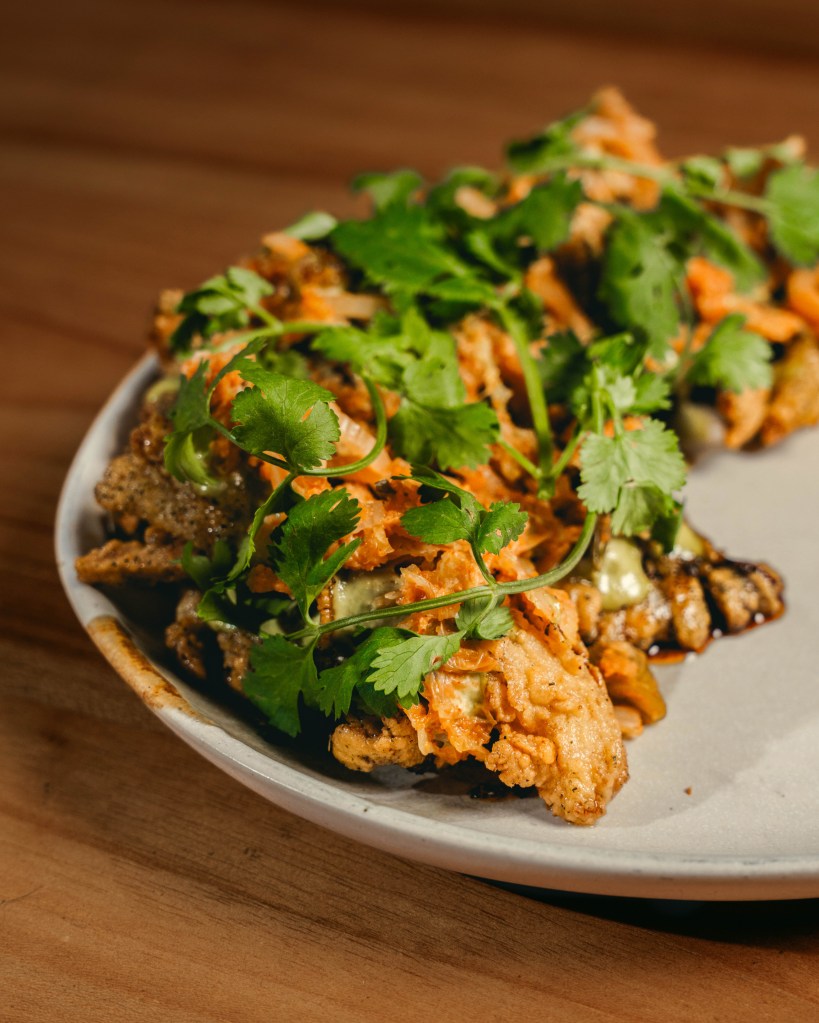
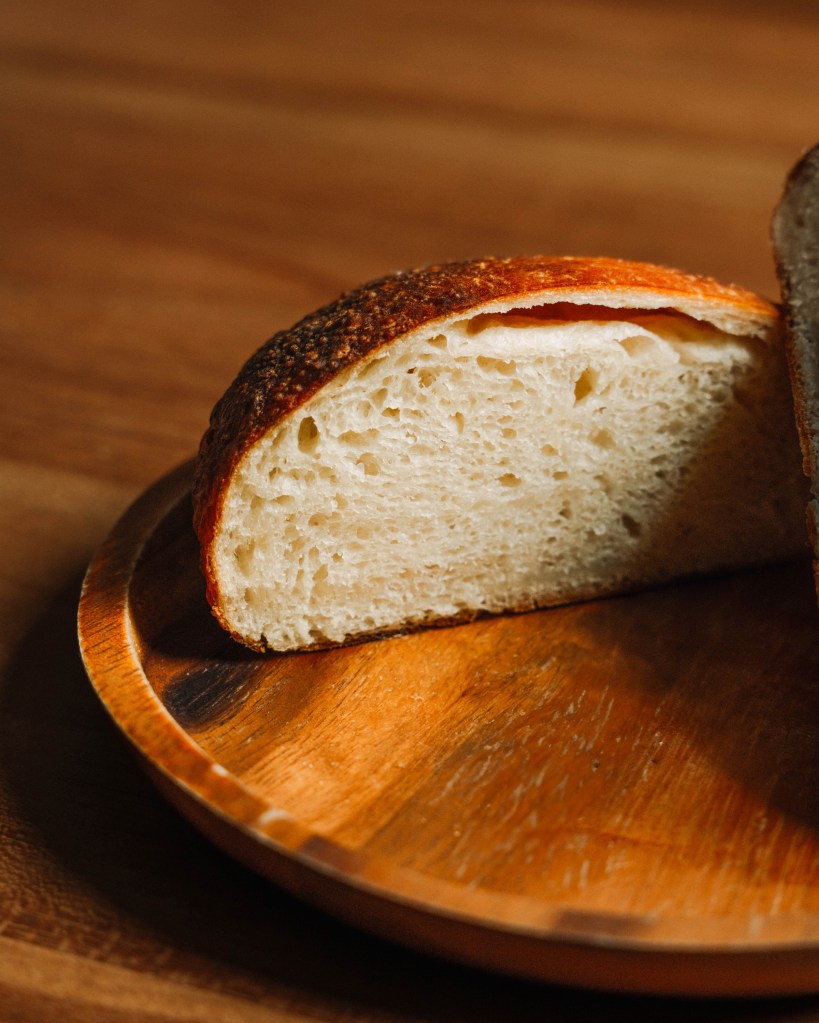
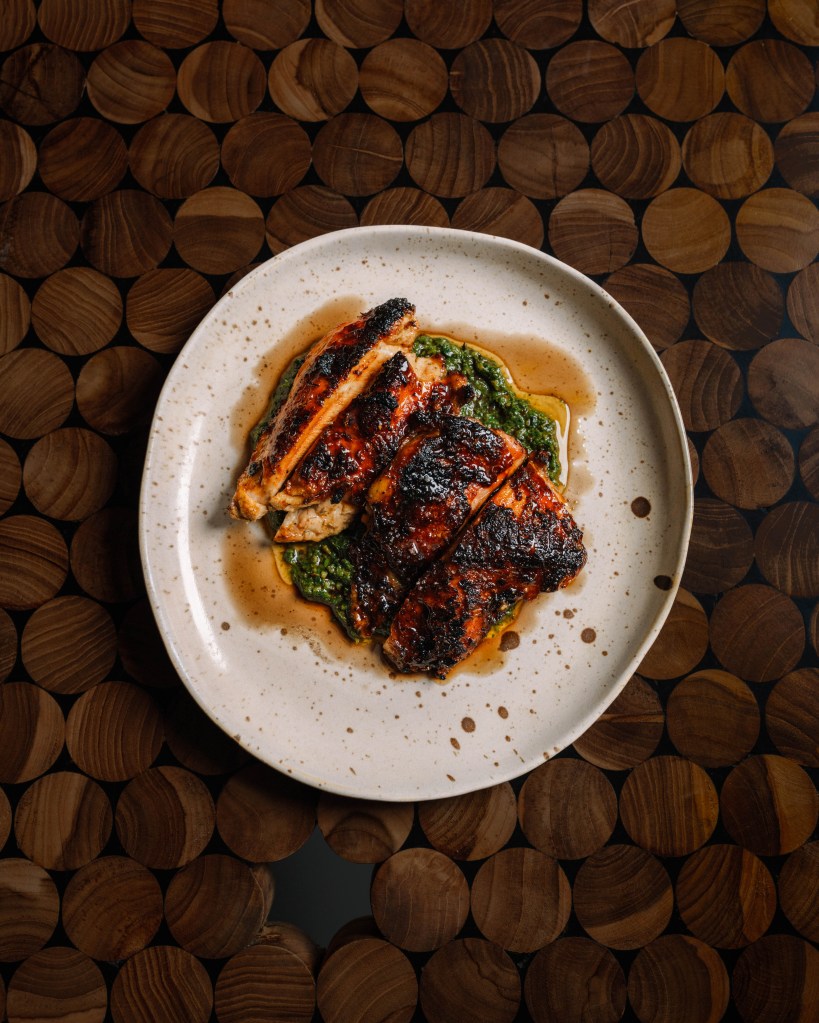
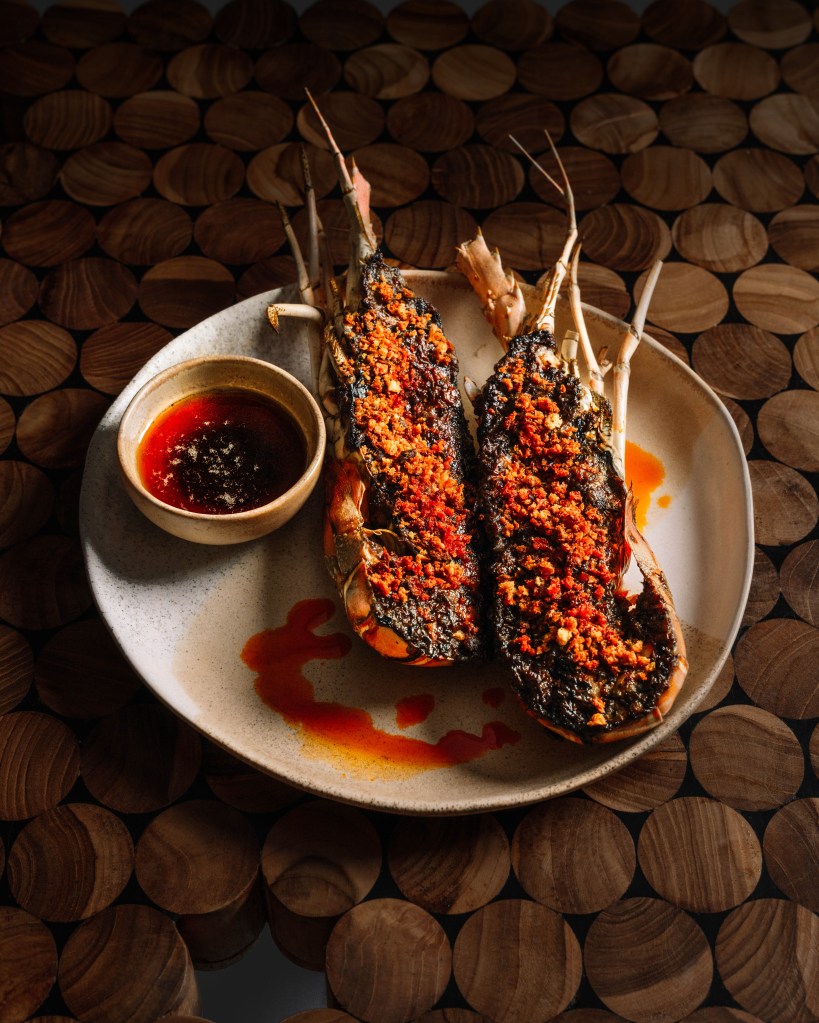
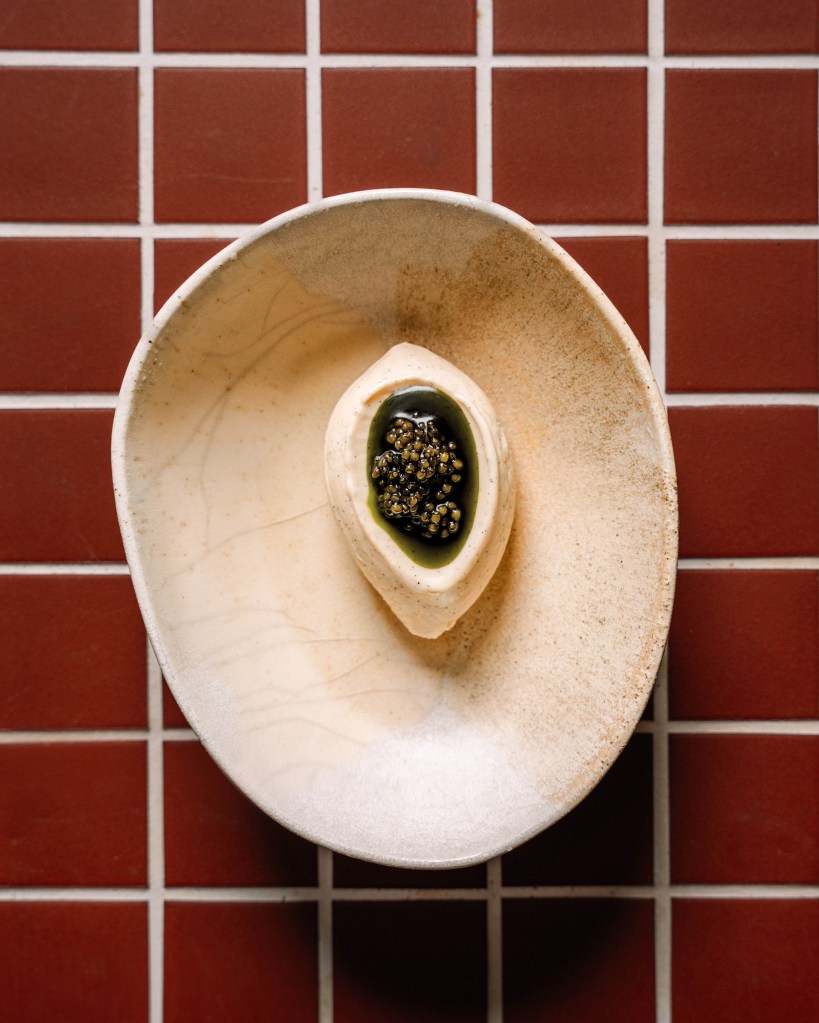
Dining at AIR begins with snacks and light bites such as the Crispy Oyster Mushrooms with exotic pepper emulsion and pickled chillies, while the mains lean hearty like the flame-kissed Kampong Chicken paired with chimichurri made from herbs of the garden and Andaliman peppers. Even the simplest of sides—rice—gets its upgrade, prepared and seasoned with house-roasted koji vinegar.
Expect inventive, fermentation-forward cuisine that is both elegant and daring. Nothing is wasted: fish bones are repurposed into lavash crackers, surplus herbs become infusions, and even the unexpected—like wormwood or mulberries—are transformed through fermentation and low-temperature extractions. The result is food that’s dynamic and layered, tasting slightly different with every visit, yet always true to its ingredients.
Read also: AIR CCCC Review: What It’s Like to Dine at Singapore’s Circular Campus
SUN(RISE) to SUN(SET)
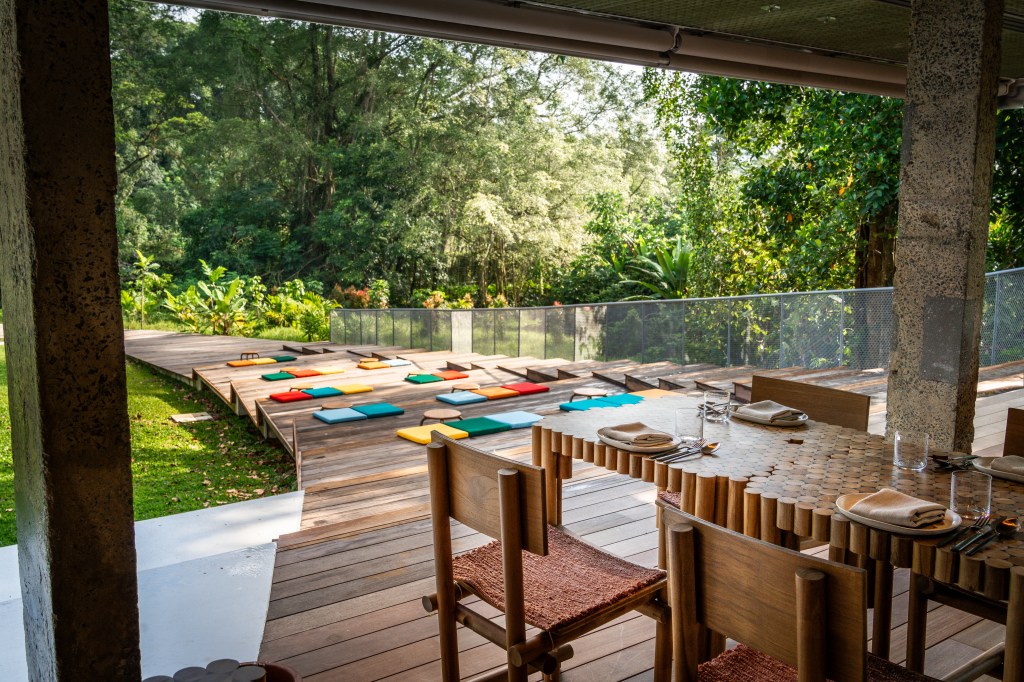
A recent addition to its operations, AIR is now welcoming guests from first light to golden hour with two distinct programmes every Friday to Sunday that make the most of its open-air lawn and indoor restaurant.
SUN(RISE) begins at 8 AM with two breakfast settings. At the Lawn, guests can enjoy a relaxed outdoor atmosphere with bakes like Kenari Sticky Buns and Chocolate Babka, paired with coffee by Maxi, kombucha by Wild Bucha, and juices from Antidote. Indoors at the Restaurant, a plated menu runs from 8 AM to 11 AM, offering hearty comfort like Indonesian Avocado Toast, Fermented Potato Croquettes, and a Breakfast Bundle that pairs one main with a bake and beverage.
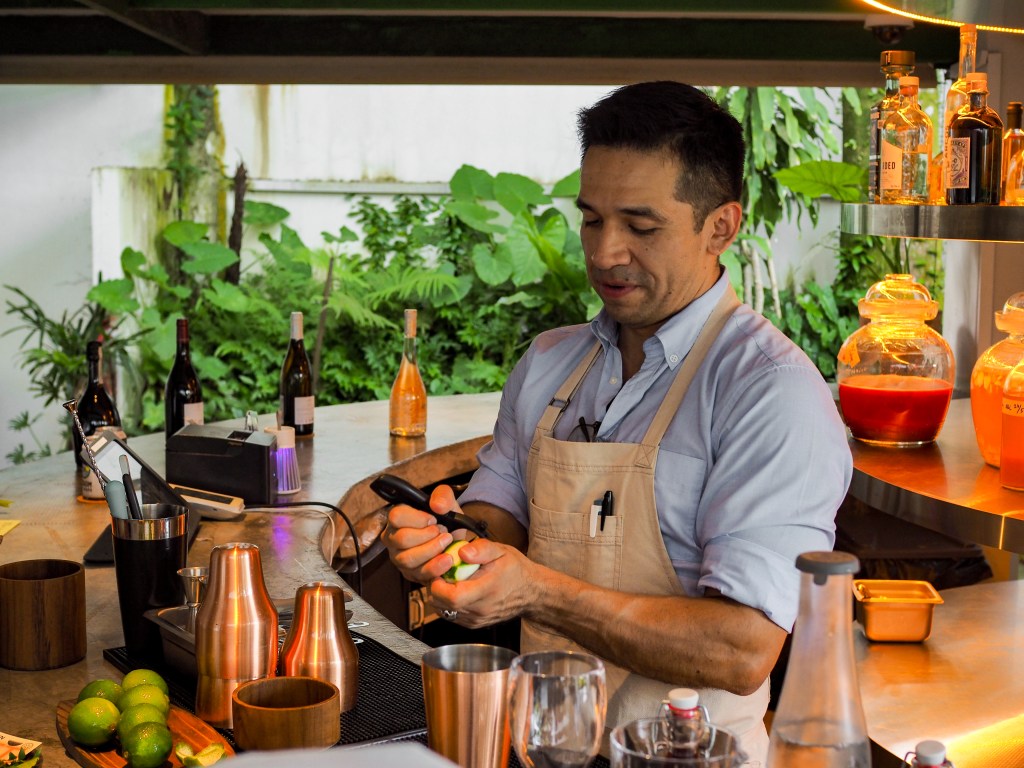
SUN(SET) between 3 and 9 PM is AIR’s open-air cocktail and snack experience. Curated by bar manager Elias Castro, the menu reflects AIR’s zero-waste and fermentation-driven ethos. Drinks like The Other Side and Cascara Libre incorporate upcycled ingredients and fermented elements from Elias Castro’s R&D fermentation stations, which are integrated into both the kitchen and pastry labs.
A quiet innovator, Elias is constantly developing new ways to repurpose ingredients—transforming citrus peels, coffee skins, and fruit by-products into complex syrups, ferments, and house-made infusions that redefine AIR’s approach to cocktails. Snacks include AIR Fries, Fried Chicken Bites, SUN(SET) Nuts, and Miso Caramel Rye Cookies.
Guests can walk in without reservations, and enjoy seasonal programming like Saturday garden tours at 5 PM, DJ sets, and outdoor chess on the lawn, adding an interactive, immersive insight to AIR.
The Takeaway
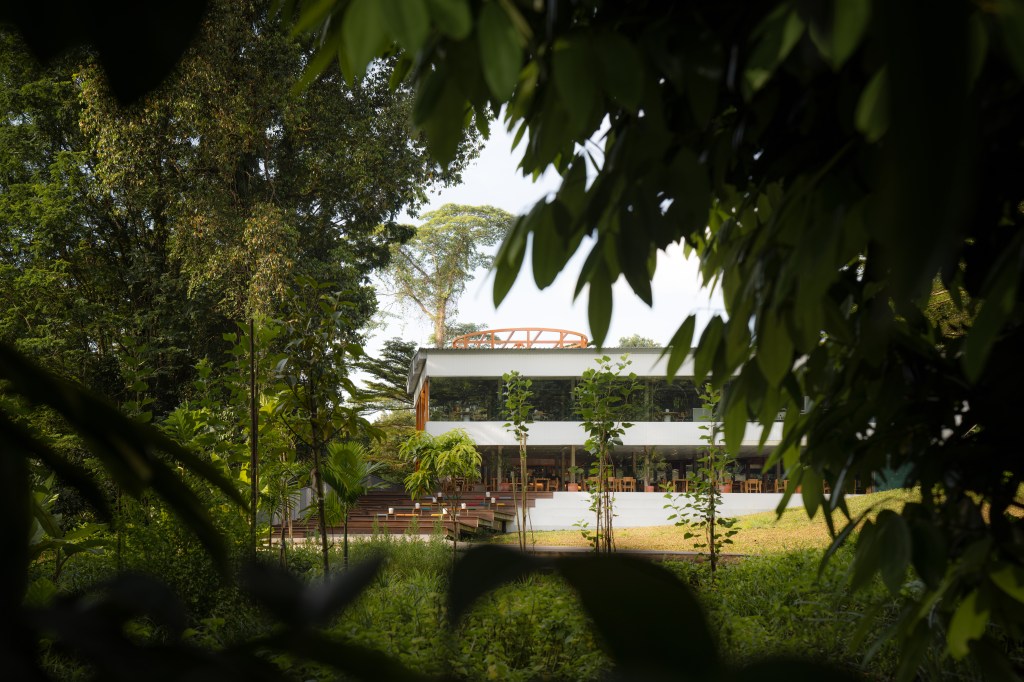
With AIR CCCC, the conventional boundaries of what a restaurant can be—physically, philosophically, and socially—are redrawn. It’s not just a place to eat; it’s an evolving dialogue between people, place, and purpose. Here, architecture shapes behaviour, and ingredients tell stories of soil, science, and seasonality. Each design gesture, menu decision, and programme offering speaks to a belief that food can—and should—nourish beyond the plate.
AIR is a living system—rooted, responsive, and resilient. It reminds us that the future of food is not in isolation, but in collaboration: with land, with craft, and with each other.
For more stories like this—on food that makes you think and places that stay with you—follow us on Instagram (@nacre.asia) and subscribe to nacre.asia.

 Nacre.
Leave a comment