
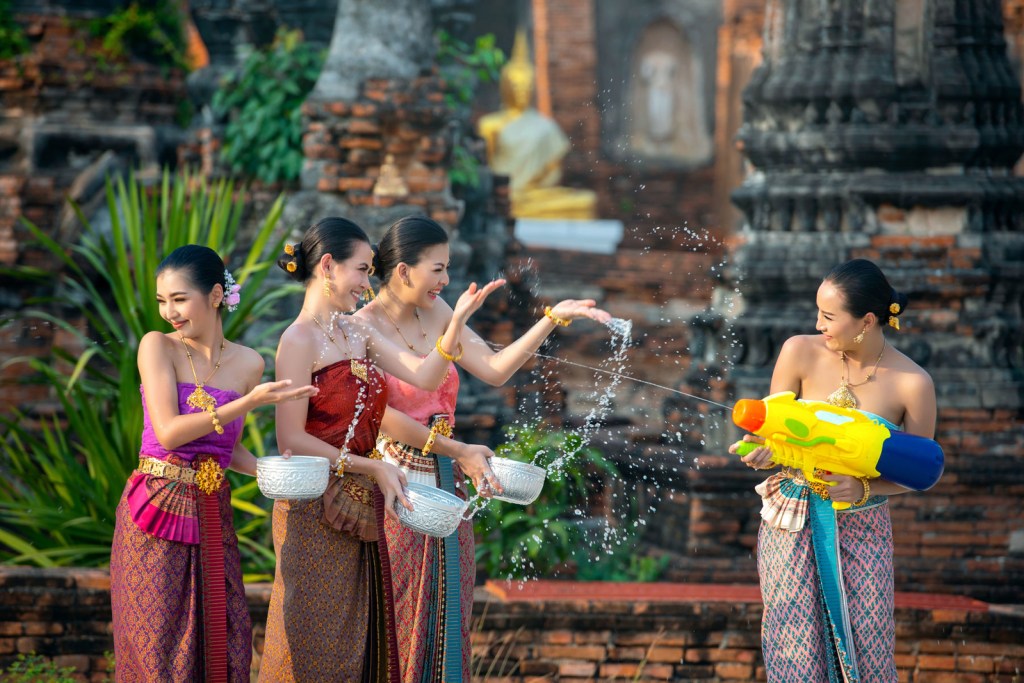
A festival of renewal, remembrance & ritual—preserved amid modern celebration.

Each 13-15 April, as the tropical sun scorches the golden pagodas and bustling streets of Thailand, a jubilant ritual cascades across the nation—Songkran, the Thai New Year.
What supposed to be as a deeply spiritual celebration of purification and renewal has, over time, morphed into a global spectacle: water fights, street-wide parties, and EDM festivals now headline the season. Yet beneath the high-pressure water guns and pulsating DJ sets lies a heritage that flows far deeper, linking centuries-old traditions with questions of authenticity, identity, and commodification.
Ancestral Waters: The Regional Roots of Songkran
Derived from the Sanskrit word saṅkrānti, meaning “astrological passage,” Songkran marks the traditional solar New Year and heralds a season of renewal. It is a moment to honour ancestors, cleanse one’s karma, and symbolically wash away the misfortunes of the past year.
In its earliest form, Songkran involved quiet merit-making, temple visits, and the gentle pouring of fragrant water over the hands of elders—a humble act of reverence and purification.

This sacred observance is not unique to Thailand. Across Laos, Cambodia, and parts of Myanmar, similar celebrations—Pi Mai Lao, Choul Chnam Thmey, and Thingyan respectively—reflect a shared cultural rhythm in mainland Southeast Asia. Though local customs and interpretations vary, they all orbit around the solar calendar, water as a symbol of rebirth, and the reaffirmation of community bonds. Together, they form a mosaic of interconnected traditions with a common spiritual heart.
A Heritage Recognised: UNESCO and the Preservation of Intangible Culture
In December 2023, UNESCO inscribed Songkran onto its Representative List of the Intangible Cultural Heritage of Humanity, celebrating it as a living tradition that fosters intergenerational dialogue and social cohesion. This recognition also extended to its regional counterparts in Laos, Cambodia, and Myanmar—affirming the interconnectedness of their shared heritage.
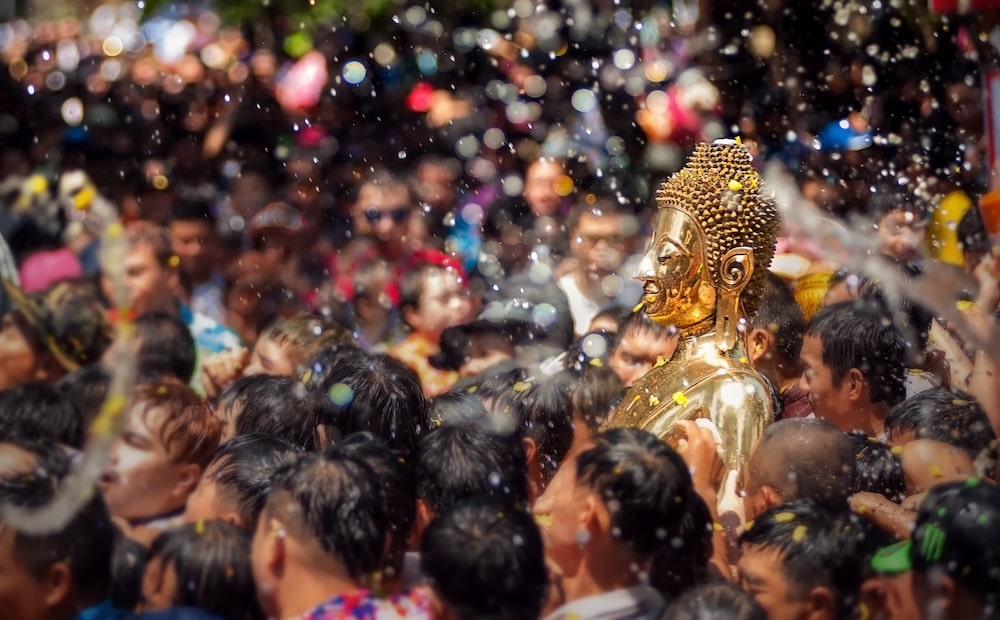
UNESCO’s recognition is more than symbolic. It is a call to safeguard the values that underpin Songkran: community, continuity, respect, and renewal. At a time when cultural expressions are increasingly shaped by global media and mass tourism, such recognition invites critical reflection on how traditions are performed—and for whom.
Read: UNESCO Songkran in Thailand, traditional Thai New Year festival
Transformation and Theatrics: Songkran as a Mega-Event
Over the past two decades, Songkran has undergone a dramatic transformation, particularly in Thailand’s urban centres. What was once a serene observance has become a nationwide festival of spectacle.
Streets in Bangkok, Chiang Mai, and Pattaya morph into water-soaked arenas, where revellers—locals and foreigners alike—arm themselves with high-powered soakers and waterproof smartphones. Festivals like S2O (an electronic dance music event) draw tens of thousands of partygoers, positioning Thailand as the epicentre of Southeast Asia’s festival circuit.
This contemporary iteration of Songkran is buoyed by aggressive tourism campaigns, celebrity appearances, influencer culture, and pop-up events sponsored by global brands.
The Thai New Year, once characterised by saffron robes and jasmine water, now often includes neon body paint, foam parties, and commercialised slogans promoting “the world’s biggest water fight.”
Between Culture and Commerce: The Commodification Debate
This rapid commercialisation invites difficult but necessary questions: What is the cost of packaging heritage for mass consumption? Who benefits, and who loses, when sacred rites become global entertainment?
On one hand, the Songkran festival now generates significant economic activity—supporting hotels, airlines, restaurants, and local entrepreneurs. It serves as a powerful cultural export, positioning Thailand as a vibrant and welcoming destination.

The Bangkok Post reported that in 2024, Thailand’s Songkran festival, celebrated over a 21-day period from April 1 to 21, significantly bolstered the nation’s tourism sector by generating approximately 140.335 billion baht (approximately 4.02 billion USD) in revenue, surpassing the projected 132 billion baht.
This substantial income was derived from both international and domestic tourism activities. During this period, Thailand welcomed 1,926,443 foreign tourists, marking a 37.54% increase compared to the same timeframe in the previous year. The Thai Tourism Ministry noted that international visitors contributed 90.208 billion baht to the economy.

On the other, cultural purists and heritage advocates caution against the dilution of meaning. When ritual becomes performance, and when spiritual symbolism is replaced by branded experience, something essential risks being lost. Furthermore, concerns over water waste, public safety, and cultural misinterpretation are growing, particularly as tourists increasingly participate without understanding the festival’s deeper significance.
Reframing Songkran: Restoration Through Reflection
Across Thailand and its neighbouring countries, efforts are emerging to reclaim the cultural core of these celebrations. Temples are creating educational programmes for younger generations. Communities are reviving traditional ceremonies and integrating sustainable practices—such as using recycled water or banning plastic water guns. In some regions, parallel festivals are held: one to preserve tradition, and another to accommodate festivity.
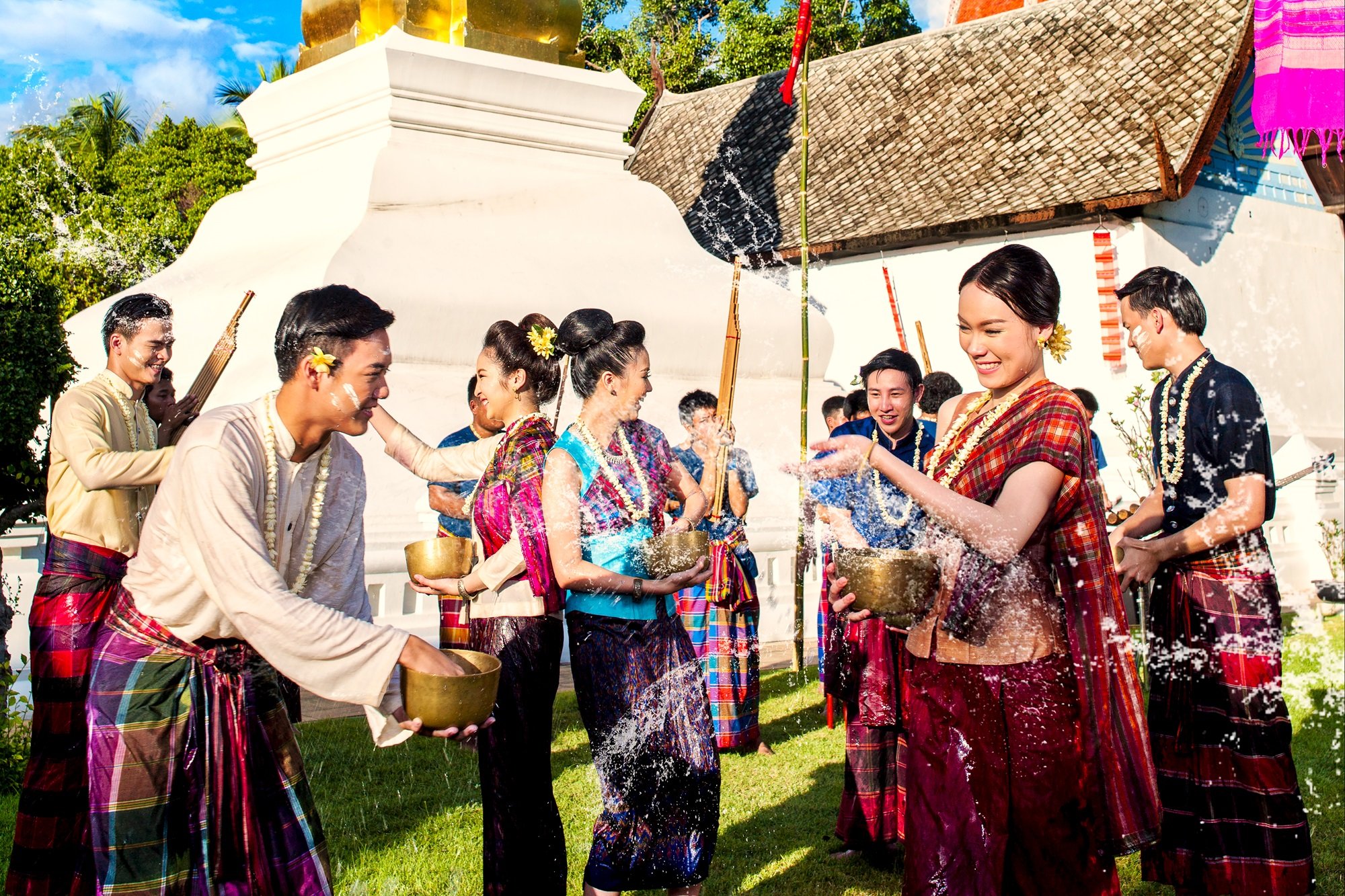
The inclusion of Songkran and its regional counterparts in UNESCO’s heritage list may well serve as a catalyst for recalibration—reminding both locals and visitors that beneath the revelry lies a deeply human desire to connect, cleanse, and begin again.
As we navigate the currents of modernity and tradition, perhaps the truest way to honour Songkran is not just with a splash, but with a sense of reverence—for the ancestors who gifted us this celebration, for the communities who sustain it, and for the generations who will inherit its legacy.
References
- Long Songkran generated B140bn in tourism income (Bangkok Post, 2024)
- Songkran generated 140 billion baht over 21 days, Tourism Ministry says (The Nation Thailand, 2024)

 Nacre.
Leave a comment