

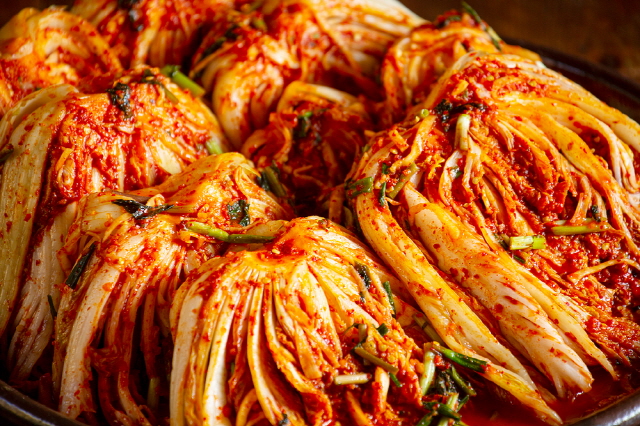
Few foods embody the spirit of a nation as wholly as kimchi does for Korea. To the unfamiliar, it may appear as a simple fermented side dish, yet for Koreans, kimchi is a living embodiment of heritage, memory, and identity.
With every pungent bite, it tells a story — of seasons passing, hands working together, and a people whose relationship with nature and nourishment is both practical and profound. As much a philosophy as it is a food, kimchi is a powerful symbol of Korea’s culinary ingenuity and communal values.
A Fermented Past: Origins and Evolution
The origins of kimchi predate the introduction of chilli — a fact often surprising to those accustomed to its characteristic heat. Historical records trace its earliest forms back over two thousand years to the era of the Three Kingdoms (57 BCE–668 CE), when fermented vegetables were a vital means of preservation through Korea’s harsh winters. Back then, kimchi was simpler: salted vegetables stored in earthenware jars, buried underground to ferment slowly.
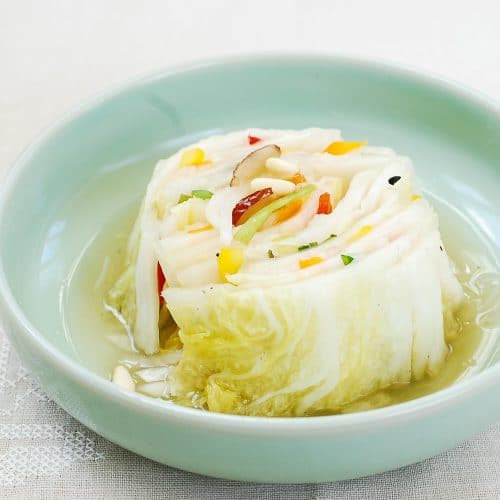
It wasn’t until the 16th century, following the introduction of chilli peppers from the Americas via Japan, that the kimchi we know today began to take form. The fiery red colour, now so closely associated with the dish, is a relatively recent yet transformative development. By the Joseon Dynasty (1392–1897), kimchi had become more varied and sophisticated, reflecting changes in agriculture, climate, and culinary technique.
Kimjang: Preserving More Than Food
Central to kimchi’s cultural life is kimjang — the communal tradition of preparing large quantities of kimchi for the winter months.
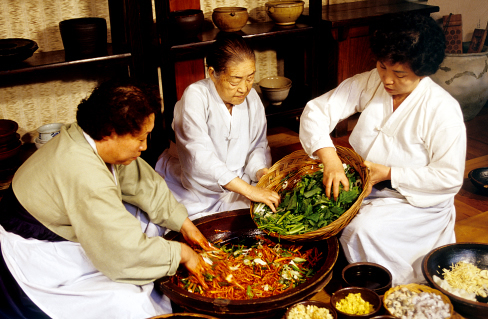
It is not merely a seasonal chore, but a social ritual deeply embedded in Korean life. Families, friends, and neighbours gather to chop, salt, season, and pack vegetables in a shared act of sustenance and solidarity. UNESCO recognised kimjang as an Intangible Cultural Heritage of Humanity in 2013, acknowledging its role in strengthening community bonds and transmitting knowledge across generations.
The practice of kimjang speaks to a uniquely Korean ethos: that food is not only nourishment, but a shared responsibility and a testament to resilience. Even today, in an age of convenience and mass production, many Korean families continue this ritual, affirming ties to tradition and kinship.
A Tapestry of Flavours: Varieties Across Regions
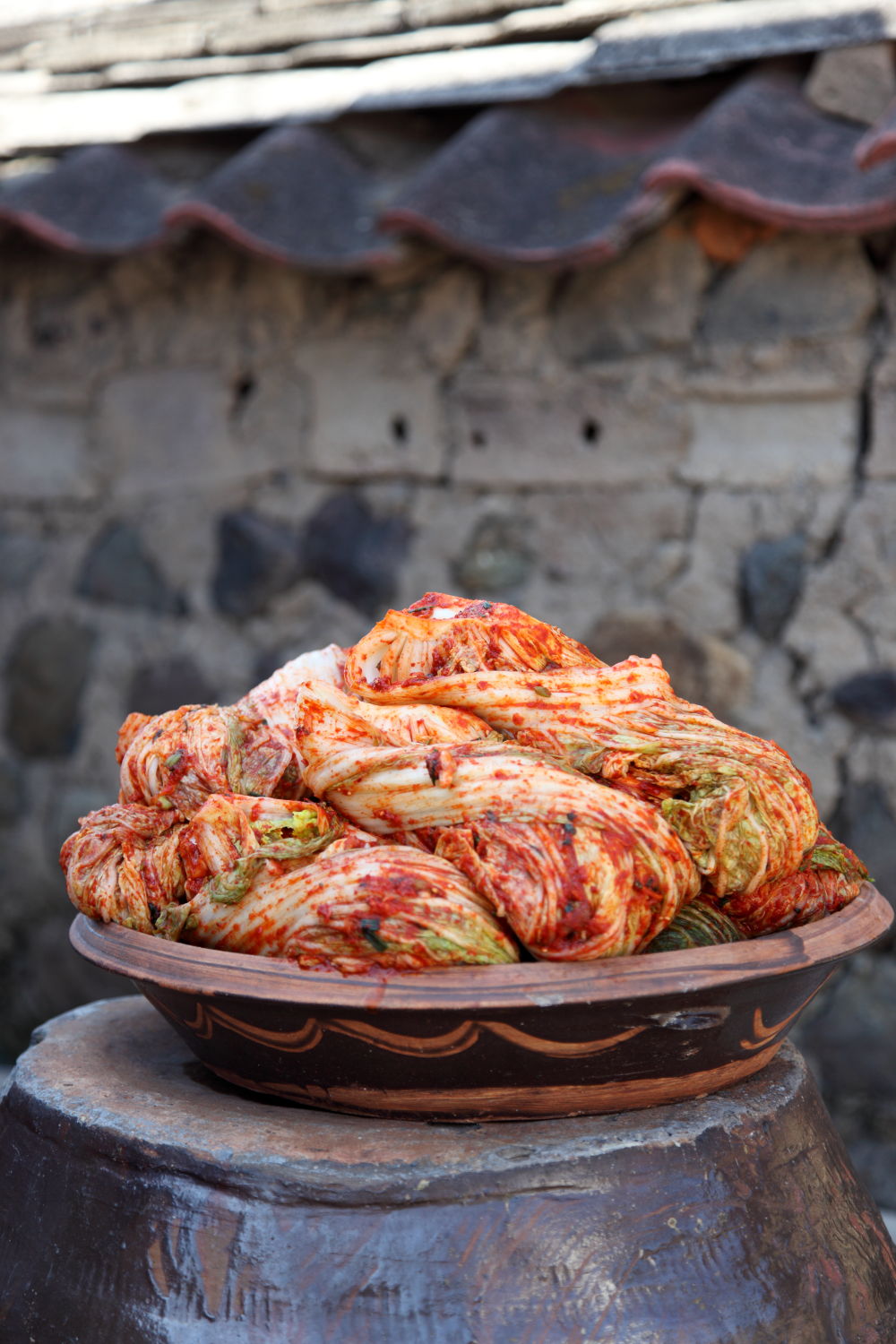
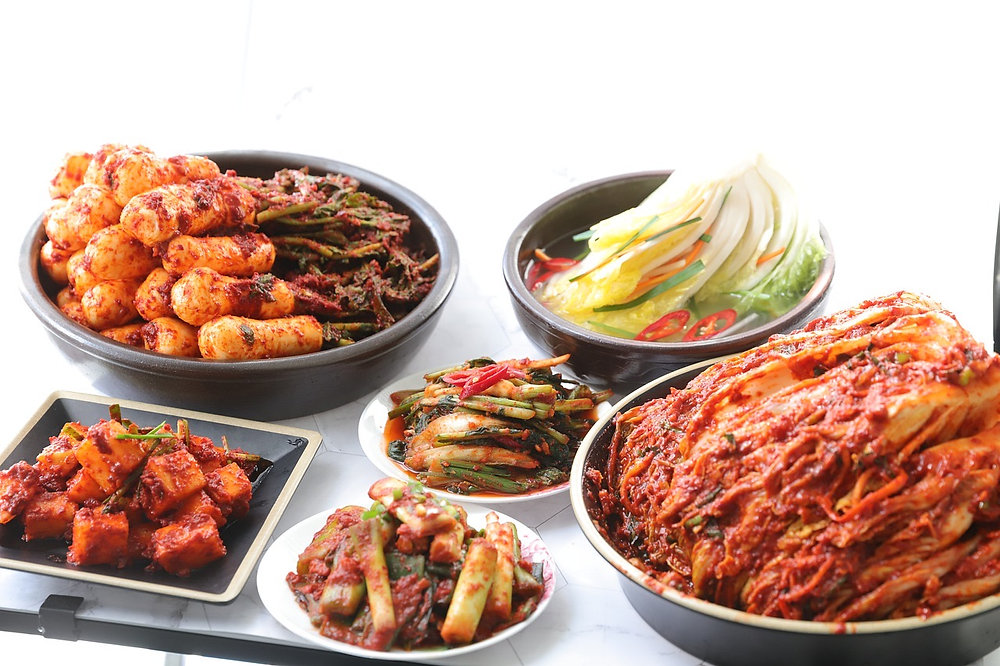
There is no single kimchi — rather, it is a category, encompassing over 200 varieties shaped by local ingredients, seasonal availability, and regional palettes.
Baechu kimchi, made from napa cabbage, is the most widely recognised, but there is also kkakdugi (cubed radish kimchi), oi sobagi (stuffed cucumber kimchi), nabak kimchi (a watery, refreshing version), and yeolmu kimchi (young radish kimchi), among many others.
The diversity reflects Korea’s varied geography: in the colder north, kimchi tends to be less salty and spicy, relying on minimal seasoning to let natural sweetness shine; in the south, it is more robust and fiery, with generous use of fermented seafood for depth. Each type tells the story of its land, shaped by environment and ingenuity.
Cultural Identity and Global Reach
Beyond its culinary dimension, kimchi carries symbolic weight in Korean identity — a constant through war, division, and modernisation. It is a staple on every table, from humble home meals to royal banquets.
In the diaspora, it serves as an edible link to home, and as Korean culture gains global traction — through K-pop, cinema, and cuisine — kimchi has found its way into fusion dishes, fine-dining menus, and supermarket shelves worldwide.

It also speaks to a contemporary movement toward health-conscious and sustainable eating. Rich in probiotics, vitamins, and antioxidants, kimchi is often praised as a superfood. But its deeper value lies not in trends, but in its layered story — one of adaptation, continuity, and care.
Kimchi is not simply a dish; it is a cultural artefact, continuously fermenting at the crossroads of memory and innovation. It tells of a people who, through necessity and creativity, transformed the humble act of preservation into a culinary art form.
In an age of rapid change, kimchi remains steadfast — a pungent, piquant reminder that the most profound stories are often those told at the table.

 Nacre.
Leave a comment